Kudzu Root Powder

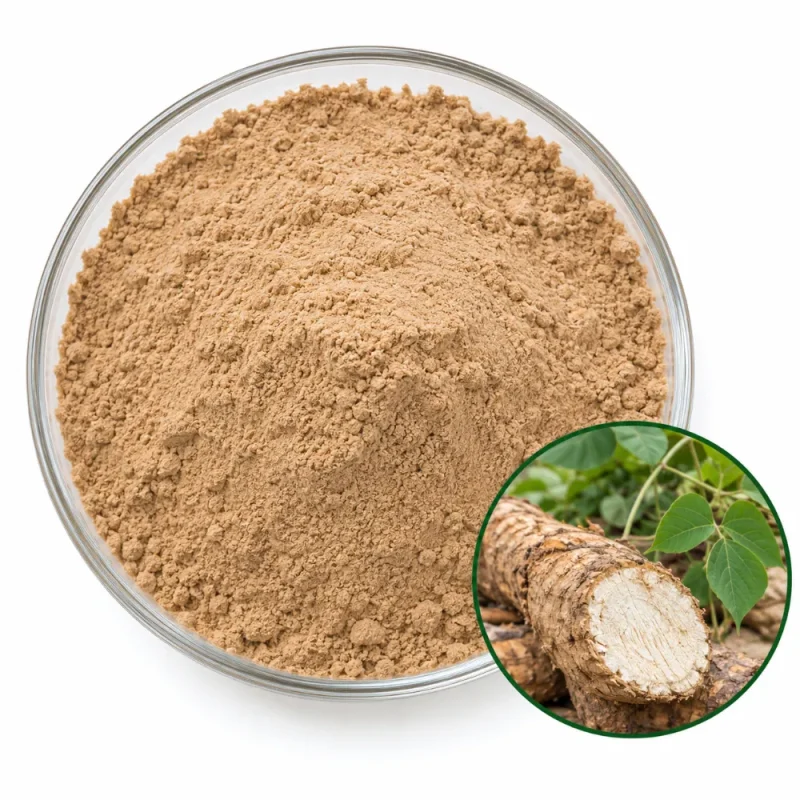
Starchy tuberous roots of kudzu, Pueraria lobata, are washed, sliced, dried and milled into this off-white powder with a bland, slightly sweet taste. The whole root is used, so the powder carries its starch and fiber together and is not a refined kudzu starch.

Kudzu root powder is supplied at 80 mesh, with 40, 60 and 100 mesh optional, and has a neutral, starchy odor with a mild, faintly bitter-sweet taste. It is raw milled root rather than an extract, so inclusion rates are higher and the starch gives body that extract forms do not.

Pueraria lobata Raw Material & Plant Part

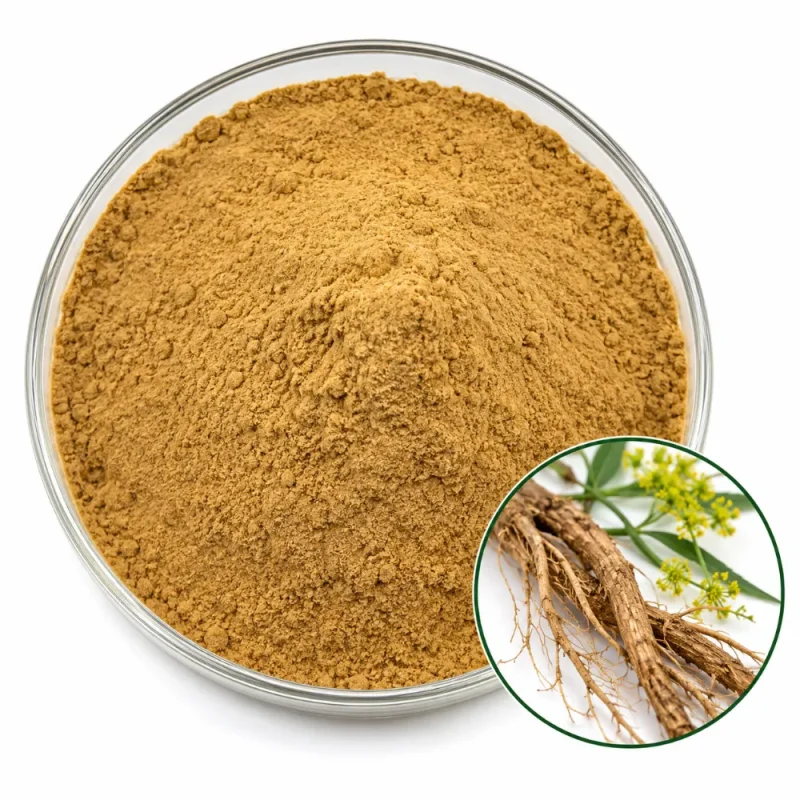
The botanical name is Pueraria lobata (Willd.) Ohwi, family Fabaceae, the climbing legume known as kudzu, ge gen or gegen. The raw material is the dried root, a large, fleshy taproot cut into slices or cubes before milling. Leaves, flowers, vines and seeds are not part of this powder.

Taxonomy databases list Pueraria lobata as a synonym of Pueraria montana, so labels may carry either name. Chinese pharmacopoeial practice separates Pueraria lobata (gegen) from Pueraria thomsonii (fenge), a related root with a different starch and isoflavone profile, and buyers who compare specifications should confirm which species the powder comes from.

Kudzu starch, sold as kuzu in Japanese cooking, is also confused with the whole root powder. Kuzu is a refined starch washed out of the root, whereas this product is the milled whole root with its fiber and isoflavone-bearing tissue. The root is known for isoflavones, mainly the C-glycoside puerarin and the glycoside daidzin, which are traits of the plant and not levels for this powder.

The fresh kudzu root is very large and heavy, so it is cut into slices or cubes to dry evenly before milling. Its pale interior is mostly starch, which explains the off-white color of the powder and its soft, floury feel.
Kudzu Root Powder vs Extract

FormWhat It IsChoose It When
Kudzu Root PowderMilled whole dried root with starch and fiberStarchy body and whole-root inclusion
Kudzu Extract PowderWater-extracted root with fiber and part of the starch removedA more soluble format at a lower inclusion rate
Kudzu Root Extract 10–40% PuerarinRoot extract standardized to a puerarin rangeA defined isoflavone marker is required
Puerarin 90–98%Purified single isoflavone C-glycosideAn isolated compound is needed

The whole-root powder holds the starch, the fiber and the isoflavones at their natural, lower concentration. Inclusion rates are therefore high, the powder gelatinizes and thickens when cooked in water, and the neutral taste lets it work as a bulk base.

The extract powder is a more soluble and more concentrated format, and the standardized extract is chosen for its puerarin content rather than its body. Puerarin 90–98% is a purified compound and sits in another product class. Choose the root powder when the starch, the texture and the whole root are what the recipe needs.

Cooking behavior separates the forms in practice. Kudzu root powder gelatinizes in hot water and sets to a soft gel on cooling, which the extract forms do not do because they carry little starch. A recipe that thickens, binds or gels therefore calls for kudzu root powder, while a recipe that needs only a soluble ingredient looks at an extract.

Typical Specifications

Specification ItemProduct Information
Latin NamePueraria lobata
Plant PartRoot & Rhizome
ProcessingMilled
Common NameKudzu, ge gen, gegen
Raw MaterialDried root
Ingredient TypeMilled Powder
AppearanceOff-White powder (natural color of the dried material)
Odor & TasteNeutral, starchy odor; mild, faintly bitter-sweet taste
Solubility / DispersibilityWater Dispersible
Quality Parameters
Moisture (LOD)≤8.0%
Particle Size80 mesh (40 / 60 / 100 mesh optional)
Heavy MetalsLead ≤2 ppm · Arsenic ≤1 ppm · Cadmium ≤1 ppm · Mercury ≤0.1 ppm
MicrobiologyTPC ≤10,000 cfu/g · Yeast & Mold ≤1,000 cfu/g · E. coli Negative · Salmonella Negative/25 g
Shelf Life24 months in unopened original packaging, cool and dry storage

Application Areas

Soup and sauce thickening

Kudzu root powder gelatinizes when heated in water, which makes it a clear-to-opaque thickener for soups, sauces and gravies. It is slurried in cold water first and then stirred into the hot liquid, so the starch does not clump in the pan.

Dessert and pudding mixes

Dry dessert mixes use the powder for a soft, gel-like body in puddings and jellies. The fiber leaves a slightly rustic, off-white texture, and the set strength depends on cooking time and on how much of the root fiber is present.

Instant drink bases

Drink mixes use the powder for a thick, warm, porridge-like beverage. It settles when left standing and is stirred before drinking, and a finer mesh gives a smoother body than the coarse grades. Cinnamon or ginger gives the kudzu base a familiar warm profile.

Capsule and tablet fills

Capsule fills take the powder as a free-flowing starchy material that is easy to compress. It also acts as a bulking agent for stronger botanical powders in blended fills, and its flow helps to even out a fill that contains stickier herb powders.

Handling & Blending Notes

Starch controls most of the behavior of kudzu root powder. It takes up moisture from air, cakes in humid rooms and clumps at the surface of cold liquids unless the powder is mixed with sugar or another dry powder first. Barrier bags, dry rooms and fast resealing protect flow, and fine dust is controlled with local extraction.

Mesh affects texture. The 80 mesh grade suits capsules and most dry blends, the 40 and 60 mesh grades leave a more rustic body in soups, and the 100 mesh grade gives the smoothest gel and the best dispersion in drink bases. Finer powder compacts in a hopper and flows less freely, so a gentle fill speed helps.

The mild taste makes kudzu easy to pair. Sweet and savory systems both accept it, and heat treatment develops the gel. Because the root is starchy, a cooked product can thicken further on cooling, and trials at the serving temperature confirm the final texture. Opened packs are resealed at once and kept in a cool, dry area. The pale color of kudzu is stable in dry storage, but heat and light add a yellowish cast over time, so opaque packs and cool rooms help, and sealed containers keep the starchy powder from taking up the smell of neighbors.

Packaging & Commercial Supply

Essencefield supports product evaluation, formulation trials, commercial orders, and ongoing ingredient supply. Packaging, storage, and shipping arrangements are determined by product characteristics, order quantity, stability requirements, and destination-market needs.

Supply ItemGeneral Information
SampleAvailable upon request for formulation, testing, and supplier evaluation
Order Quantities100 g · 1 kg · 5 kg · 25 kg · 100 kg · 500 kg · Bulk
Sample Lead TimeTypically 5–7 days after sample confirmation
Production Lead TimeTypically 15–30 days after order and specification confirmation
PackagingSuitable protective inner packaging with bags, cartons, drums, or other appropriate outer packaging
StorageStore in tightly sealed, suitable protective packaging in a cool, dry environment. Protect from moisture, heat, and direct sunlight. Specific storage conditions follow the approved product specification.
DocumentationCOA · Product Specification · TDS · SDS · Applicable declarations (as applicable)

Final order quantities, lead times, packaging, documentation, and shipping arrangements are confirmed according to the selected product and commercial requirements.

Request Ingredient Specifications & Quote

Share your target specification, application, quantity, and documentation needs. We’ll help confirm suitable options, samples, and commercial supply details.