Chamomile Flower Powder

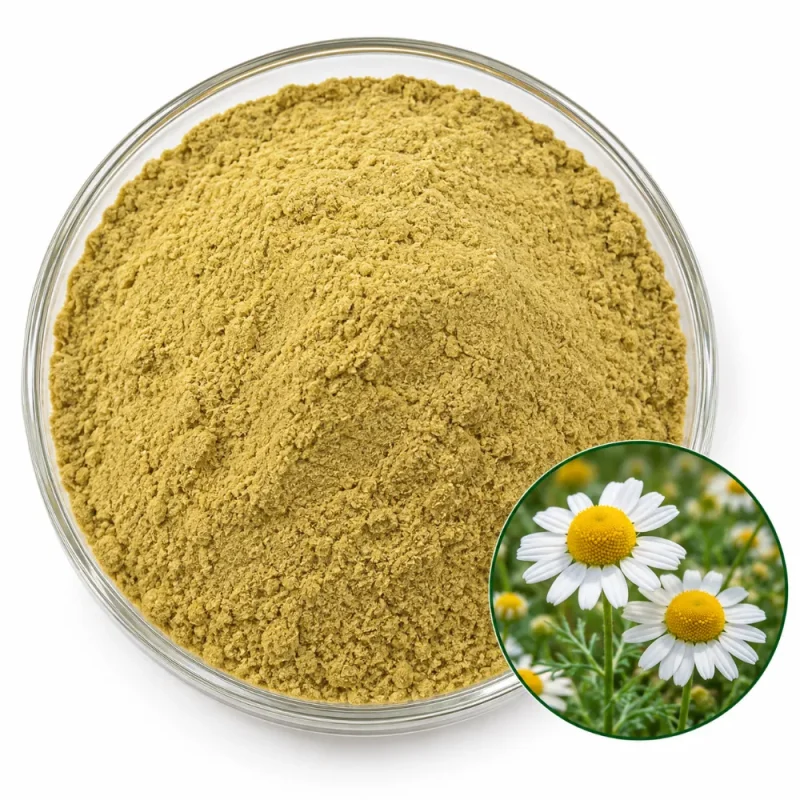
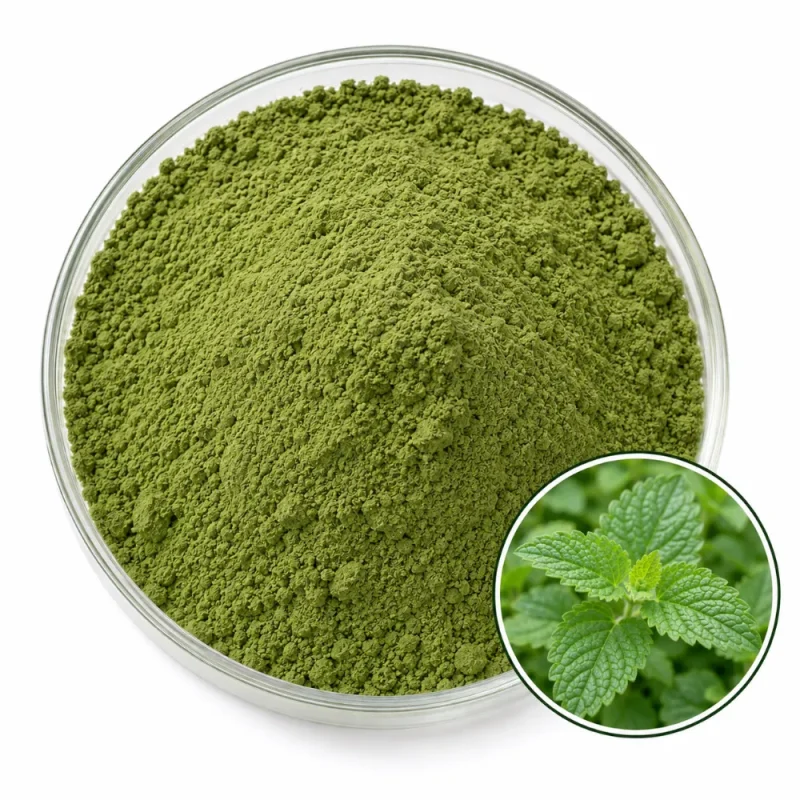
Chamomile flower heads from Matricaria chamomilla, the German or blue chamomile, are dried and milled into this light yellow powder with a sweet, apple-like floral aroma. The flower head is the material, so the stem and leaf of the plant do not dilute the flower profile.

Chamomile flower powder is supplied at 80 mesh, with 40, 60 and 100 mesh optional, and has a delicate, honey-like and apple-like odor with a gently bitter, floral taste. It is raw milled flower rather than an extract, so inclusion rates are higher and the aroma is fuller than in the extract forms.

Matricaria chamomilla Raw Material & Plant Part

The botanical name is Matricaria chamomilla L., family Asteraceae, known as German chamomile, blue chamomile or wild chamomile. The raw material is the dried flower head, a small daisy-like capitulum with a yellow center and white ray florets, picked at full bloom, dried and milled. Stems and leaves are not included.

Two plants carry the chamomile name in commerce. Roman chamomile, Chamaemelum nobile, is a different species, a creeping perennial with a stronger bitter note, and it has its own uses. A third product, dyer’s chamomile, belongs to yet another genus. Specifications that give the botanical name and the flower head separate German chamomile from those.

The flower heads are known for flavonoid glycosides, in particular glycosides of apigenin, for coumarins, for mucilage and for a volatile oil containing bisabolol and chamazulene. Much of the oil is lost in water extraction, which is why powder and extract smell different.

Harvesting takes place when the flowers are fully open, and the heads are dried at low temperature, since heat drives off the aroma and turns the pale yellow flowers brown.

The dried flower heads are pale yellow to tan with small white petals, and the milled chamomile flower powder is a light yellow, slightly fluffy powder. Darker, brownish tones point to heat during drying or to long storage.
Chamomile Flower Powder vs Extract

FormWhat It IsChoose It When
Chamomile Flower PowderMilled dried flower heads with their oil and fiberWhole-flower aroma and fiber in dry blends
Chamomile Extract PowderWater-extracted flowers with the fiber removedA soluble format at a lower inclusion rate
Chamomile Extract 0.5–5% ApigeninFlower extract standardized to an apigenin rangeA defined marker content is required
Apigenin 98%Purified single flavone reference gradeAn isolated compound is needed

The flower powder keeps the fiber, the mucilage and the volatile oil together at their natural, lower concentration. Inclusion rates are higher than for an extract, the aroma is rich, and the powder only disperses in liquids, with a pale yellow haze.

The extract powder is darker, dissolves more clearly and has a flatter aroma, because the volatile fraction is not carried into the water extract. The standardized extract is selected for apigenin content, and apigenin 98% is a pure compound. Choose chamomile flower powder when the aroma and the whole flower are the point.

In a cup, the powder leaves fine sediment and a light, floral body, while the extract leaves a clearer, amber liquid with a stronger bitter edge.

Chamomile flower powder is therefore chosen where aroma matters, in teas, pastry and dry drink bases, while chamomile extract suits blends where a stronger bitter note, a defined marker or a clear solution is needed.

Typical Specifications

Specification ItemProduct Information
Latin NameMatricaria chamomilla
Plant PartFlower
ProcessingMilled
Common NameChamomile, German chamomile, blue chamomile
Raw MaterialDried flower heads
Ingredient TypeMilled Powder
AppearanceLight Yellow powder (natural color of the dried material)
Odor & TasteSweet, apple-like floral odor; gently bitter taste
Solubility / DispersibilityWater Dispersible
Quality Parameters
Moisture (LOD)≤8.0%
Particle Size80 mesh (40 / 60 / 100 mesh optional)
Heavy MetalsLead ≤2 ppm · Arsenic ≤1 ppm · Cadmium ≤1 ppm · Mercury ≤0.1 ppm
MicrobiologyTPC ≤10,000 cfu/g · Yeast & Mold ≤1,000 cfu/g · E. coli Negative · Salmonella Negative/25 g
Shelf Life24 months in unopened original packaging, cool and dry storage

Application Areas

Floral tea and infusion blends

Chamomile flower powder rounds off tea blends with hibiscus, lemon balm or fennel. Coarser 40 and 60 mesh grades stay inside the filter bag, while finer grades cloud the cup, so the mesh follows the bag format.

Cookie and pastry flavor

Biscuits, shortbread and pastry doughs use the powder for a honeyed floral note with a faint yellow tint. The oil fades during baking, so a slightly higher dose or a late addition to fillings and glazes keeps the flavor present.

Capsule and tablet fills

Fills use the powder as a light, fibrous material with a pale color. Its bulk density is low, which limits the weight per shell, and a pilot fill shows the real figure before the formula is fixed. The pale color is a plus in light-colored capsules.

Dry drink sticks with floral partners

Powder sticks combine chamomile with elderflower, apple or vanilla for a soft, floral drink. The mucilage thickens the cup slightly, and a short stir is enough to spread the powder. Sweet partners cover the faint bitterness.

Handling & Blending Notes

Chamomile flower powder is light and fluffy, and fine particles float at open scoops and hoppers. Covered transfer and local extraction keep the dust out of the air, and anti-static tools help in dry rooms, where the fine fraction clings to plastic surfaces.

The aroma is the quality marker and the weak point. The volatile oil escapes with warmth, light and air, so a half-used pack that sits open loses its sweet apple note within weeks. Opaque, sealed packs, a cool store and short working periods after opening keep the character intact. The pale yellow color also fades toward tan under light and heat.

Moisture uptake is moderate, and the mucilage makes damp powder sticky. Barrier bags and dry weighing rooms prevent caking. Mesh follows the format, with 80 mesh for capsules and dry blends, 40 and 60 mesh for infusion bags and 100 mesh for drinks. Opened containers are resealed at once and kept away from strong odors, since the delicate aroma is easily overpowered.

Storage after opening is straightforward: seal, shield from light and use within a few weeks. A small working container is filled from the main pack in a dry room, and the main pack is closed at once, which protects the flavor of the rest of the lot.

Packaging & Commercial Supply

Essencefield supports product evaluation, formulation trials, commercial orders, and ongoing ingredient supply. Packaging, storage, and shipping arrangements are determined by product characteristics, order quantity, stability requirements, and destination-market needs.

Supply ItemGeneral Information
SampleAvailable upon request for formulation, testing, and supplier evaluation
Order Quantities100 g · 1 kg · 5 kg · 25 kg · 100 kg · 500 kg · Bulk
Sample Lead TimeTypically 5–7 days after sample confirmation
Production Lead TimeTypically 15–30 days after order and specification confirmation
PackagingSuitable protective inner packaging with bags, cartons, drums, or other appropriate outer packaging
StorageStore in tightly sealed, suitable protective packaging in a cool, dry environment. Protect from moisture, heat, and direct sunlight. Specific storage conditions follow the approved product specification.
DocumentationCOA · Product Specification · TDS · SDS · Applicable declarations (as applicable)

Final order quantities, lead times, packaging, documentation, and shipping arrangements are confirmed according to the selected product and commercial requirements.

Request Ingredient Specifications & Quote

Share your target specification, application, quantity, and documentation needs. We’ll help confirm suitable options, samples, and commercial supply details.