Artemisia annua Raw Material & Plant Part
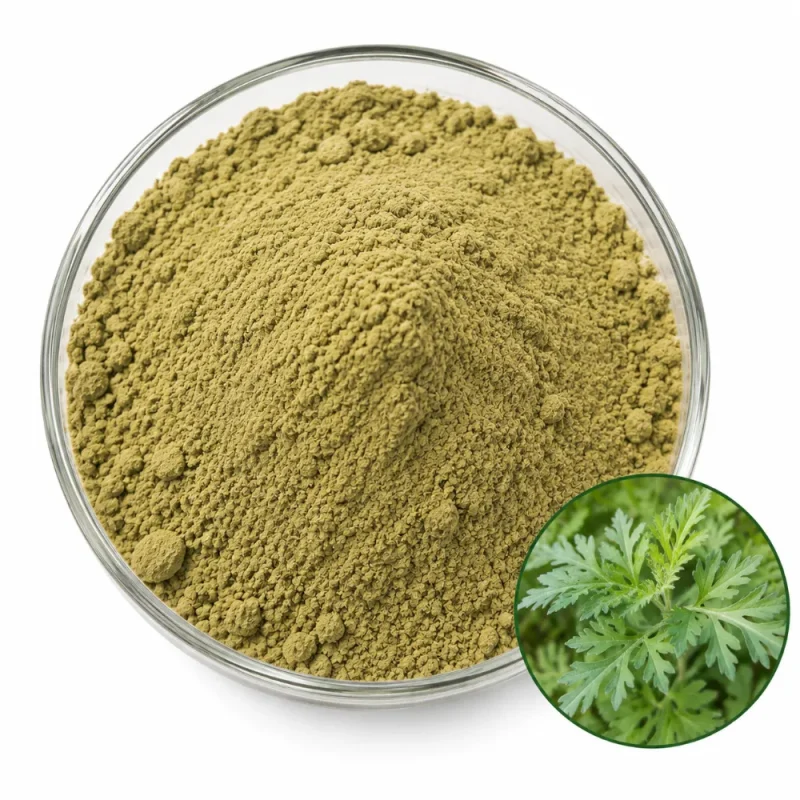
The botanical name is Artemisia annua L., family Asteraceae, known as sweet wormwood, sweet annie, annual wormwood or qing hao. The raw material is the dried aerial part of the plant, meaning the finely divided leaves and the flowering tips, harvested in summer, dried and milled. Roots and the thick, woody lower stems are not included.
The genus Artemisia includes many look-alikes. Artemisia absinthium is wormwood, the bitter herb of absinthe, with a different chemistry and a different regulatory status. Artemisia vulgaris is the common mugwort, and Artemisia argyi is the Chinese mugwort used for rice cakes and other spring foods. Artemisia apiacea, a close relative, is a separate plant in Chinese pharmacopoeial practice. The species name is what sets sweet wormwood apart.
The herb is known for sesquiterpene lactones, including artemisinin, which dissolve poorly in water, for flavonoids, for coumarins such as scopoletin and for an essential oil. The powder is a botanical raw material and carries no stated content of any single compound.
Harvest time shapes the aroma. The fine, feathery leaves are rich in oil before the plant is in full flower, while the late-season stem is woody and much less aromatic, so the leafy fraction defines the quality of the milled sweet wormwood herb powder.