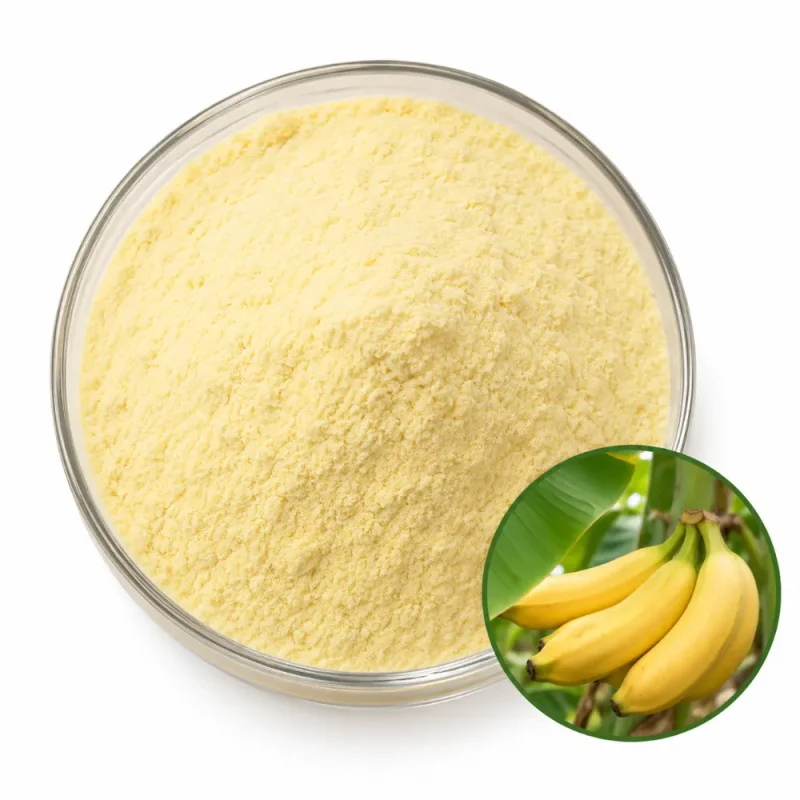
Banana Juice Powder Processing
The species is Musa acuminata Colla, family Musaceae, the wild ancestor of most dessert bananas. Commercial bananas are cultivars of this species or hybrids with Musa balbisiana, and plantains are starchier cooking types of the same group. The botanical name here identifies the dessert banana and not the plantain, which is why the cultivar group and the ripeness are the facts that matter on a banana specification.
The raw material is banana juice concentrate. Ripe bananas are pulped, the pulp is thinned and concentrated, the concentrate is mixed with maltodextrin and spray-dried to a fine powder. The pulp is thick, so the process includes an enzyme or heat step in practice to handle viscosity, and the carrier supports the powder so that the sticky fruit sugars do not fuse into a block.
Ripeness shapes the product. In a green banana the starch is dominant and the taste is bland and astringent. In a ripe banana the starch has converted to sugar, the aroma esters such as isoamyl acetate have formed, and the flesh has softened. A powder made from ripe fruit is therefore sweet and aromatic, and it behaves very differently from a starch-rich green banana powder.
Bananas are harvested green and ripened in controlled rooms, so ripeness at pulping is a processing decision. The riper the fruit, the more sugar and aroma the purée carries, and the less starch remains, which is why banana powder and green banana powder are two different ingredients from the same species.