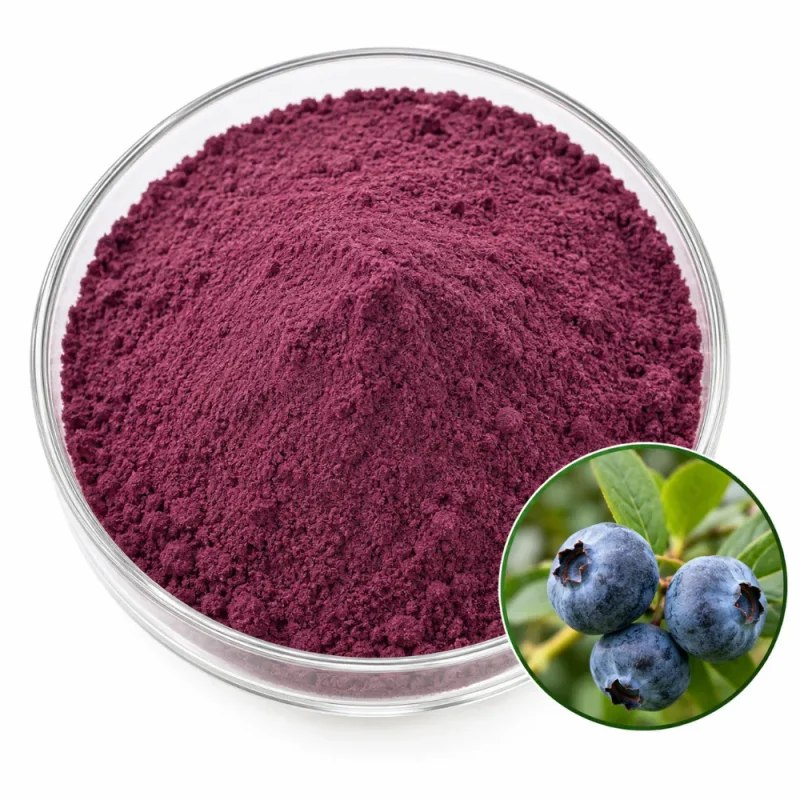
Blueberry Juice Powder Processing
The species is Vaccinium corymbosum L., family Ericaceae, the northern highbush blueberry, which is the main cultivated blueberry in many regions. Several lookalikes are sold under related names. Bilberry, Vaccinium myrtillus, is a European wild species with red to purple flesh and a different anthocyanin profile, and lowbush blueberry, Vaccinium angustifolium, is a smaller wild-harvested species. Blueberry and bilberry are not interchangeable on a specification.
The raw material is blueberry juice concentrate. The ripe berries are crushed and pressed, the juice is concentrated, mixed with maltodextrin and spray-dried to a fine powder. The carrier keeps the sticky fruit sugars from fusing, so the powder flows and dissolves, and it also dilutes the color per gram compared with an extract.
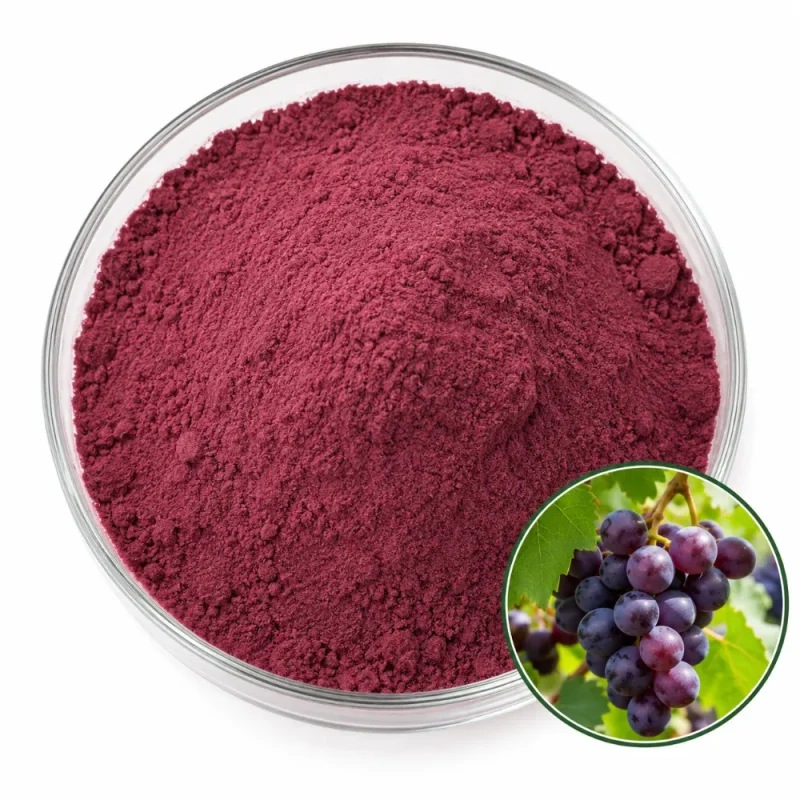
A fact specific to cultivated highbush blueberry is that the flesh is pale green-white and the pigment sits mainly in the skin. Because pressed juice includes skin pigments only partly, the color of a juice powder depends on how the berries are pressed, and it is typically a medium purple-red, lighter than that of a skin-rich extract or a freeze-dried whole-berry powder.
Highbush blueberries are harvested when fully blue and slightly soft, and the fruit is pressed soon after, because flavor and color decline as the berries soften. Early-season and late-season fruit differ in sweetness, and the juice powder shows this as a small change in sweetness and acidity from lot to lot.