Kiwi Powder

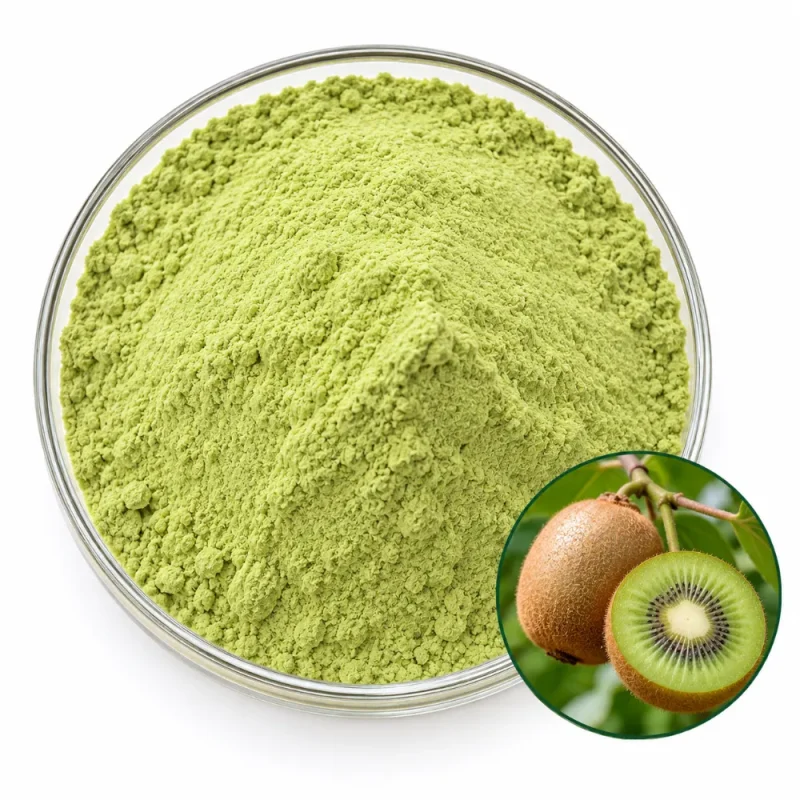
Kiwi powder is spray-dried from the juice of Actinidia chinensis fruit, the golden or Chinese kiwifruit, on a maltodextrin carrier. It is a light green, water-soluble powder with a sharp, sweet-tart flavor and a clean green-fruit aroma. Leaves, vine and seeds are not part of the product.

Kiwi flesh contains a protein-digesting enzyme, actinidin, and spray-drying heat largely takes that activity away. The powder is therefore a flavor and color ingredient, not an enzyme source. Maltodextrin carries the juice solids, and the finished powder suits drink mixes, confectionery coatings, dairy preparations and bakery icings.

Kiwi Juice Powder Processing

The species is Actinidia chinensis Planch., the Chinese kiwifruit, a vigorous climbing vine of the kiwifruit family (Actinidiaceae). Two taxa dominate trade. Green fuzzy kiwifruit is usually A. chinensis var. deliciosa (Hayward), while yellow or golden types are A. chinensis var. chinensis, and both are sold as kiwi. Hardy kiwi, Actinidia arguta, has small smooth-skinned fruit and is a separate species. The master data names A. chinensis, and that name is retained here.

The raw material is kiwi juice concentrate. The flesh and its tiny black seeds are pressed, and the juice is concentrated by evaporation, blended with maltodextrin, and atomized in a spray dryer. The carrier makes the powder soluble and free-flowing and gives some protection against the stickiness of the fruit’s acid solids.

Kiwifruit are harvested firm and ripened off the vine, and the fruit stores for months in cold rooms. Fruit used for pressing is usually at the soft ripe stage, where sugars are higher and the juice is easier to extract. The sourness left in the juice is part of the signature of the powder.

Actinidin is heat-sensitive. Concentration and spray-drying temperatures reduce its activity, which also explains why fresh kiwi spoils milk-protein desserts while processed kiwi products are better behaved. No enzyme activity is claimed or specified here.
Kiwi Flavor, Color & Forms

The powder is light green, a muted shade compared with the vivid green of the fresh fruit. Chlorophyll, which gives kiwi flesh its color, breaks down in acid and with heat, turning olive toward tan, so processing washes out the vividness. The taste is bright, tangy-sweet and distinctly kiwi, with a green, slightly grassy note. In water the powder gives a pale green to yellow-green, slightly cloudy liquid.

Compared with strawberry or mango powders, kiwi powder leans toward green, tart and slightly grassy notes, and it works as a counterpoint where the formula needs a sharp, refreshing top note instead of a rounded sweetness.

Characteristic constituents are citric and quinic acids, sugars, vitamin C, soluble and insoluble fibers, and the actinidin enzyme in the fresh fruit. Quinic acid, a specific acid of kiwifruit, adds to the sourness. No figure is given for any constituent.

FormWhat It IsChoose It When
Kiwi Juice PowderSpray-dried juice on a maltodextrin carrierA soluble kiwi flavor and pale green color are wanted
Freeze-Dried Kiwi PowderWhole fruit dried under vacuum without a carrierPulp solids and a fresher green are wanted

Typical Specifications

Specification ItemProduct Information
Latin NameActinidia chinensis
Plant PartFruit & Berry
ProcessingSpray-Dried Juice
Common NameKiwi
Raw MaterialKiwi juice concentrate
Ingredient TypeJuice Powder
CarrierMaltodextrin
AppearanceLight Green powder
FlavorTangy, sweet-tart, green fruit
Solubility / DispersibilityWater Soluble
Quality Parameters
Moisture (LOD)≤5.0%
Heavy MetalsLead ≤2 ppm · Arsenic ≤1 ppm · Cadmium ≤1 ppm · Mercury ≤0.1 ppm
MicrobiologyTPC ≤10,000 cfu/g · Yeast & Mold ≤1,000 cfu/g · E. coli Negative · Salmonella Negative/25 g
Shelf Life24 months in unopened original packaging, cool and dry storage

Application Areas

Green Fruit Drink Mixes

Powdered drink mixes use kiwi powder to deliver a recognizable green-fruit flavor with a bright tartness. It pairs well with apple, pineapple and cucumber, and it dissolves in cold water without cooking, which suits instant mixes and shaker bottles.

Gummies and Sour Candy

Candy makers use kiwi powder for flavor and a faint green tint in gummies and sour-coated sweets. Because the pigment fades with heat, add it late, and let the quinic and citric acids act as part of the sour coating.

Yogurt and Dessert Preparations

Fruit preps for yogurt and mousse use kiwi powder where whole fruit would weep or discolor. With the enzyme largely inactivated, milk proteins stay intact, so the powder is more forgiving than fresh kiwi in dairy and gelatin desserts.

Bakery Icings and Fillings

Dry icing mixes and cream fillings take kiwi powder for a tangy fruit note and a light green hue. The powder disperses easily into sugar and fat, and tests should check color after baking because chlorophyll darkens with heat.

Frozen Pop and Sorbet Bases

Frozen dessert bases use kiwi powder to deliver a fresh-tasting fruit layer without puree. The sugars lower the freezing point, so the full base needs balancing, and the pale green stays reasonably stable in frozen storage.

Moisture Pickup & Stability

Kiwi powder is a high-acid, sugar-bearing glass on a maltodextrin carrier, and it picks up moisture fast. After a short exposure the surface softens, and persistent exposure produces a sticky lump. Weigh in a dry room and close the liner immediately after each draw.

Color is the most visible stability point. The pale green shifts toward olive and yellow-brown with warm storage, with light exposure and in acidic wet systems, since chlorophyll converts to pheophytin when the pH drops. A formula with a green target should keep the powder away from heat steps and long holds in acid.

The vivid taste fades with oxidation of the volatile green notes. Cool, sealed storage and short open times keep the flavor closer to the received profile. Dry premixes with kiwi powder keep best when the sachet or drum is filled and sealed under dry conditions, since a kiwi mix that absorbs moisture first loses its pale green and then cakes. Acid also corrodes bare metal, so use stainless or food-grade plastic tools.

Packaging & Commercial Supply

Essencefield supports product evaluation, formulation trials, commercial orders, and ongoing ingredient supply. Packaging, storage, and shipping arrangements are determined by product characteristics, order quantity, stability requirements, and destination-market needs.

Supply ItemGeneral Information
SampleAvailable upon request for formulation, testing, and supplier evaluation
Order Quantities100 g · 1 kg · 5 kg · 25 kg · 100 kg · 500 kg · Bulk
Sample Lead TimeTypically 5–7 days after sample confirmation
Production Lead TimeTypically 15–30 days after order and specification confirmation
PackagingSuitable protective inner packaging with bags, cartons, drums, or other appropriate outer packaging
StorageStore in tightly sealed, suitable protective packaging in a cool, dry environment. Protect from moisture, heat, and direct sunlight. Specific storage conditions follow the approved product specification.
DocumentationCOA · Product Specification · TDS · SDS · Applicable declarations (as applicable)

Final order quantities, lead times, packaging, documentation, and shipping arrangements are confirmed according to the selected product and commercial requirements.

Request Ingredient Specifications & Quote

Share your target specification, application, quantity, and documentation needs. We’ll help confirm suitable options, samples, and commercial supply details.