Orange Juice Powder Processing
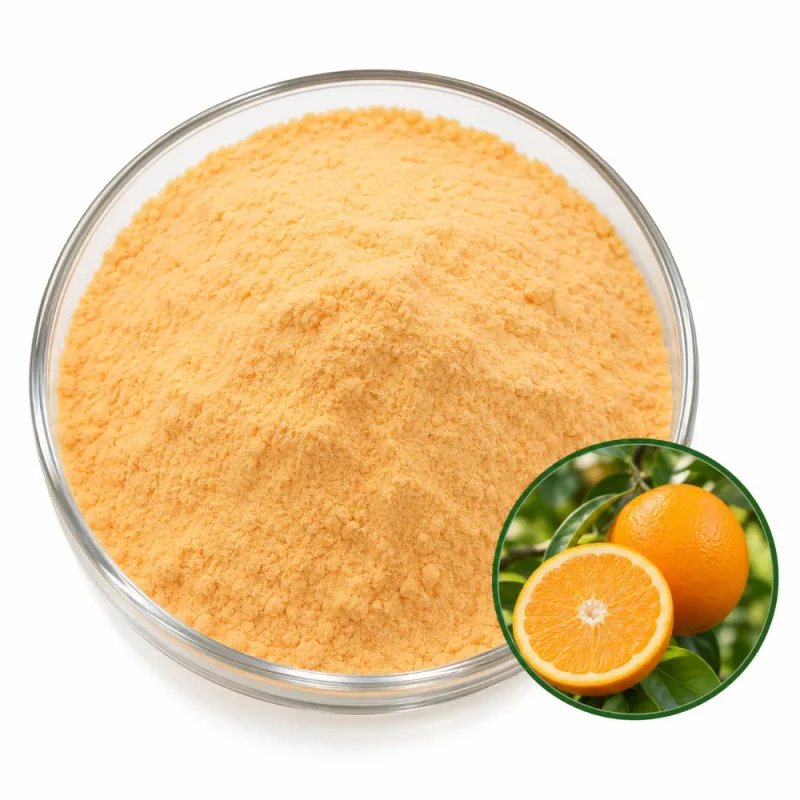
The species is Citrus sinensis (L.) Osbeck, the sweet orange, an evergreen tree of the rue family (Rutaceae) that arose as a hybrid of pomelo and mandarin ancestry. Bitter orange, Citrus × aurantium, is a related fruit used for marmalade and peel flavor, and mandarins and tangerines, Citrus reticulata, are separate species. Blood orange is a pigmented group of sweet orange and has its own freeze-dried product. The part used here is the juice of the ripe fruit.
The raw material is orange juice concentrate, produced by pressing or extracting juice from the fruit and removing water by evaporation. The concentrate is blended with maltodextrin and atomized in a spray dryer. The carrier makes the powder dissolve and flow, and it dilutes the juice solids, so the finished powder is paler and less intense than the concentrate it came from.
Citrus juice solids are acidic and sugar-rich, and they form sticky particles in a dryer, so orange powder generally calls for more carrier than juices from low-acid fruit. A higher carrier share compensates for the sticky, acid-rich solids of citrus juice, which is a general feature of the process and not a stated value.
Navel and Valencia are the two main commercial types. Navel oranges are eaten fresh and their juice turns bitter on standing, while Valencia oranges are the classic juicing orange with a stable flavor. A concentrate for powder is built mainly on juicing types, and the cultivar mix is not stated for this product.
Oranges ripen slowly and keep their quality on the tree for weeks, so juice for concentrate can be pressed at peak sweetness. Early-season fruit is sharper and greener, and late-season fruit is sweeter and flatter, which is why concentrate makers often blend lots across the season.