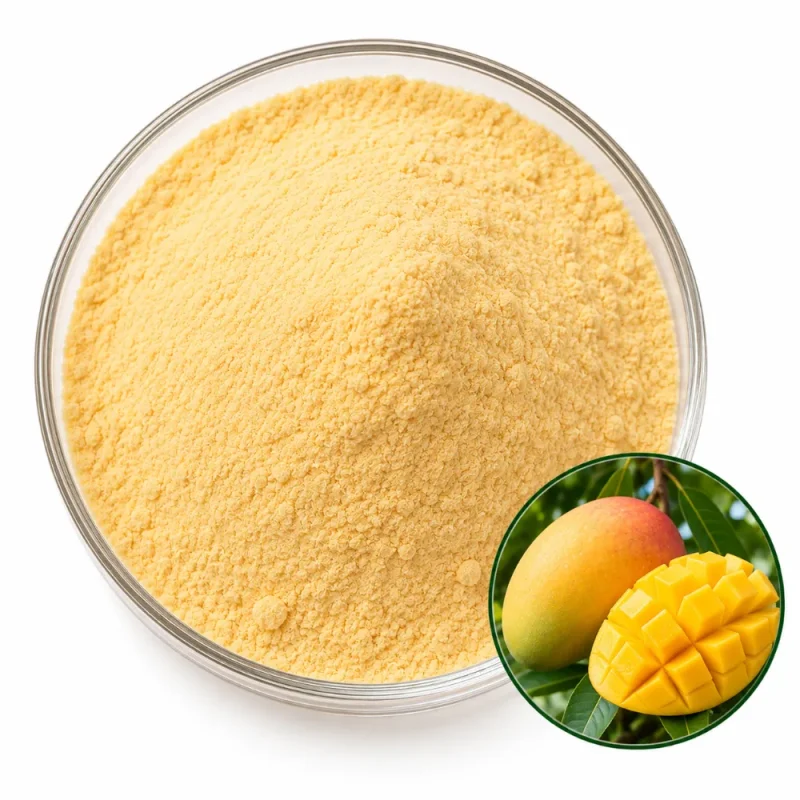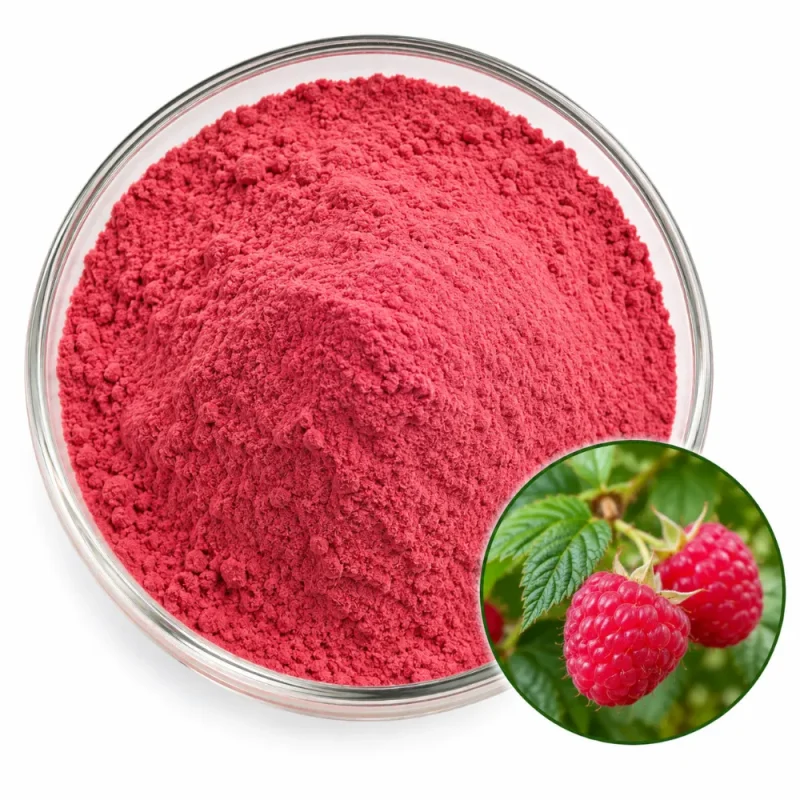
Raspberry Powder

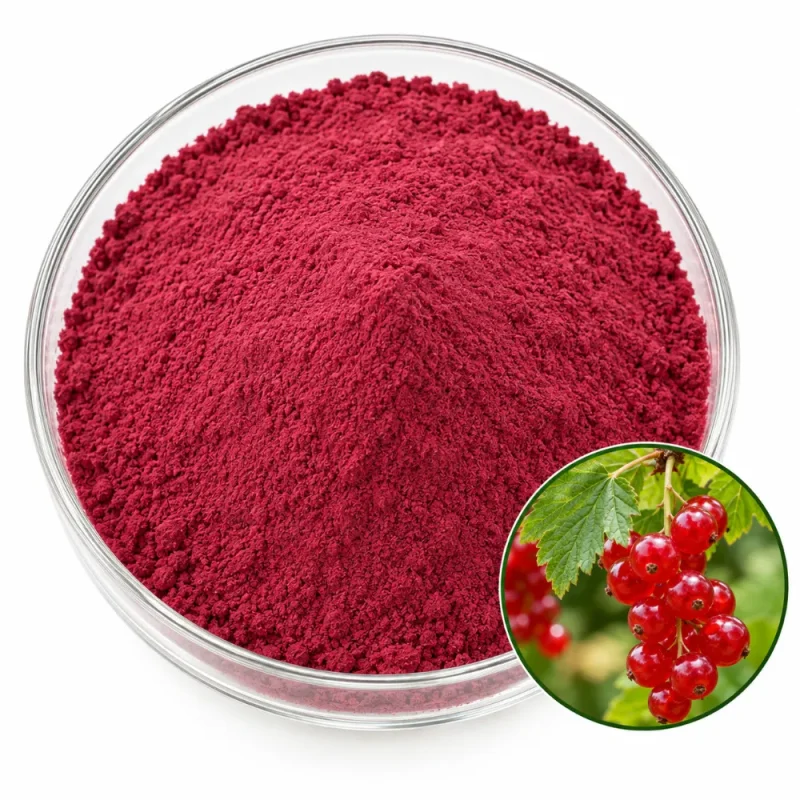
Raspberry powder is spray-dried from the pressed juice of red raspberries, Rubus idaeus, on a maltodextrin carrier. It is a purple red, water-soluble powder with a bright, sweet-tart berry taste. The seeds and fiber stay in the pomace, so the powder is free of the grit that whole raspberry powders carry.

Raspberries are an aggregate fruit made of many small drupelets, each with its own seed, and that structure matters in processing. Pressing removes the seed mass, which is a large share of the fruit, and leaves a juice with the pigment, acid and aroma.

Raspberry Juice Powder Processing

The species is Rubus idaeus L., the European red raspberry, a perennial cane shrub of the rose family (Rosaceae). Several look-alikes appear under similar names. The black raspberry, Rubus occidentalis, is a separate North American species with darker, more strongly pigmented fruit, and the Chinese Rubus chingii is a traditional medicinal fruit with a different use. Blackberries belong to other Rubus species and have a different flavor and color. The part used is the ripe fruit.

The raw material is raspberry juice concentrate. Berries are crushed and pressed, and the juice is clarified or lightly cloudy, concentrated and blended with maltodextrin before atomization in a spray dryer. The carrier makes the powder soluble and free-flowing and mellows the sharp acid of the pure juice.

Raspberries are fragile and perishable, and they mold within days of picking, so juice is pressed from fruit that is frozen soon after harvest. Frozen storage keeps the pigment and aroma intact until pressing, and the powder reflects the berry at its peak.

Summer-fruiting and autumn-fruiting cultivars both exist, and the fruit is delicate enough that it is usually picked by hand and chilled quickly. Frozen storage fixes the berry at peak ripeness, and pressing then happens at the processor on thawed fruit, which gives juice consistent in color and acid across the year.
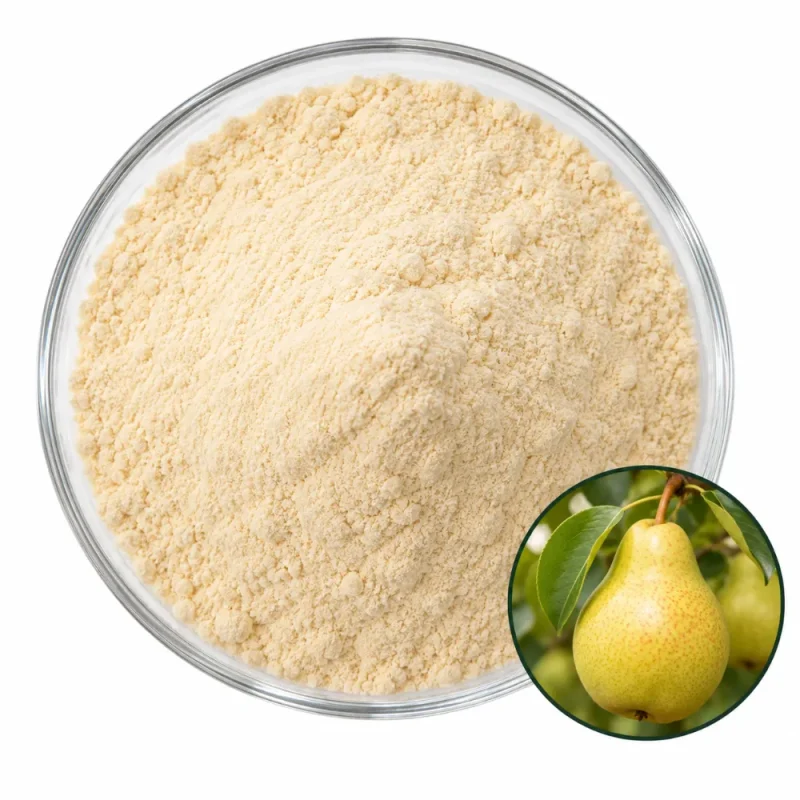
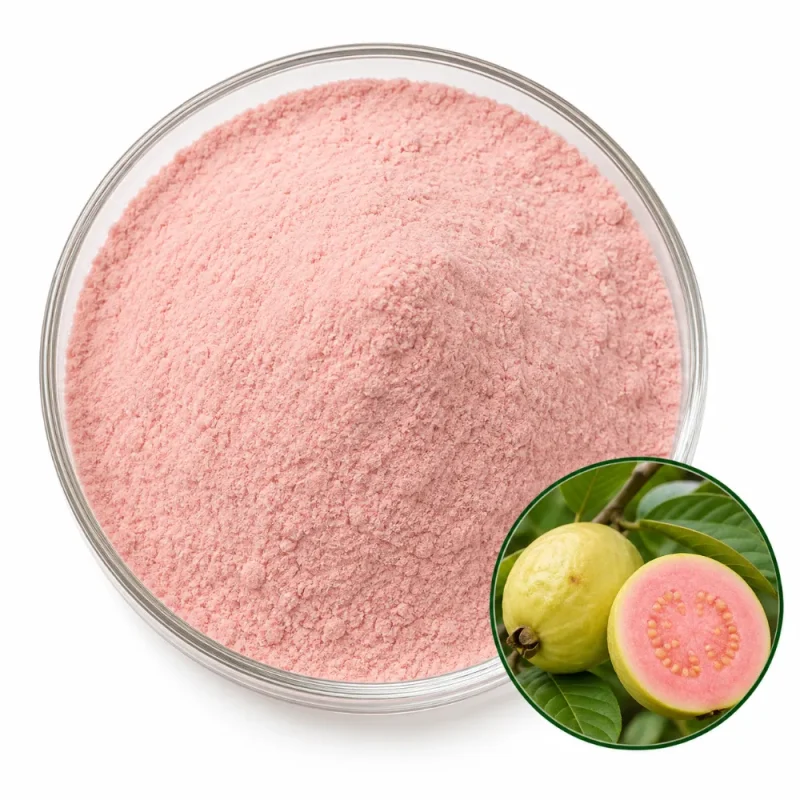
Raspberry Flavor, Color & Forms

The powder is purple red, and it dissolves to a bright red to ruby solution, pinker at low pH and purple in near-neutral systems. The pigments are mainly cyanidin glycosides. The flavor is sweet, tart and fragrant, with a floral background from ionone-type volatiles, and it reads clearly as raspberry even at low dose.

Characteristic constituents are anthocyanins, ellagitannins and ellagic acid, organic acids, mostly citric and malic, and sugars. No figure is given for any of them. Because the seeds are removed, the powder carries less of the ellagitannin and fiber fraction than a whole-fruit form, which is the main compositional difference between the two.

FormWhat It IsChoose It When
Raspberry Juice PowderSpray-dried juice on a maltodextrin carrierA soluble, seedless raspberry base is wanted
Freeze-Dried Raspberry PowderWhole berries dried under vacuumSeeds, fiber and full berry solids are wanted
Raspberry Extract PowderRatio extract of the fruitA concentrated extract is specified
Red Raspberry Extract PowderRatio extract of red raspberryA concentrated extract is specified

Typical Specifications

Specification ItemProduct Information
Latin NameRubus idaeus
Plant PartFruit & Berry
ProcessingSpray-Dried Juice
Common NameRaspberry
Raw MaterialRaspberry juice concentrate
Ingredient TypeJuice Powder
CarrierMaltodextrin
AppearancePurple Red powder
FlavorSweet-tart, fragrant berry
Solubility / DispersibilityWater Soluble
Quality Parameters
Moisture (LOD)≤5.0%
Heavy MetalsLead ≤2 ppm · Arsenic ≤1 ppm · Cadmium ≤1 ppm · Mercury ≤0.1 ppm
MicrobiologyTPC ≤10,000 cfu/g · Yeast & Mold ≤1,000 cfu/g · E. coli Negative · Salmonella Negative/25 g
Shelf Life24 months in unopened original packaging, cool and dry storage

Application Areas

Seedless Berry Drink Powders

Drink powders use raspberry powder for a clear red color and bright berry flavor without seeds. The solution stays smooth, which suits clear sports and flavored-water formats where seed fragments would show, and the color is bright enough to work at a very low dose.

Yogurt Swirls and Dairy Fruit Preps

Dairy preps take raspberry powder for vivid color and tartness. The pigment is stable in the acid range of yogurt, and the sharp fruit note stands up against milk fat, so a small inclusion delivers the identity of the fruit.

Macaron and Cake Fillings

Pastry makers use raspberry powder in buttercream, ganache and cake fillings to add flavor and color without extra moisture. It blends into fats and sugars as a fine powder, and the acid cuts through rich fillings, a classic raspberry pairing with chocolate.

Gummies and Pectin Confectionery

Confectioners add raspberry powder to gummies for a red color and a lively berry taste. Its acidity helps pectin set, and the aroma volatiles are fragile, so it is added after the cook to keep the fresh note.

Cereal and Bar Coatings

Coatings for cereal pieces and bars use raspberry powder to deliver pink-red color and sweet-tart flavor in a dry dusting or syrup. The pigment fades during long baking, so it is applied in the final coating stage. Because the powder is fine, it also clings to oiled surfaces well, which gives an even tint on cereal pieces.

Moisture Pickup & Stability

Raspberry powder is acidic and sugar-rich, and it takes up moisture quickly. In humid air it softens, clumps and finally sets into a hard mass that clings to the drum wall. Weigh it in a dry room, close the liner after every draw and sieve lumps before blending.

The aroma is the most delicate part. Ionone-type volatiles and other floral compounds oxidize and evaporate with warmth and air, leaving a sweet but flat fruit taste. Unopened drums should be stored cool, and the powder should be added late in dry blending to limit heat exposure.

The pigment follows the usual anthocyanin pattern. Acid keeps it red, near-neutral pH turns it purple, and alkaline salts push it toward blue-grey. Light bleaches it slowly, and iron contact darkens it, so use opaque packaging, stainless steel tools and a cool store. Strong color also stains equipment, so dedicated scoops simplify cleaning.

Moisture damage in raspberry powder is easy to spot, since the dark pigment concentrates in wet patches that look glossy and almost black. Scrape and discard such areas and never blend them back, and clean scoops between drums so that a damp scoop does not seed lumps in fresh powder.

Packaging & Commercial Supply

Essencefield supports product evaluation, formulation trials, commercial orders, and ongoing ingredient supply. Packaging, storage, and shipping arrangements are determined by product characteristics, order quantity, stability requirements, and destination-market needs.

Supply ItemGeneral Information
SampleAvailable upon request for formulation, testing, and supplier evaluation
Order Quantities100 g · 1 kg · 5 kg · 25 kg · 100 kg · 500 kg · Bulk
Sample Lead TimeTypically 5–7 days after sample confirmation
Production Lead TimeTypically 15–30 days after order and specification confirmation
PackagingSuitable protective inner packaging with bags, cartons, drums, or other appropriate outer packaging
StorageStore in tightly sealed, suitable protective packaging in a cool, dry environment. Protect from moisture, heat, and direct sunlight. Specific storage conditions follow the approved product specification.
DocumentationCOA · Product Specification · TDS · SDS · Applicable declarations (as applicable)

Final order quantities, lead times, packaging, documentation, and shipping arrangements are confirmed according to the selected product and commercial requirements.

Request Ingredient Specifications & Quote

Share your target specification, application, quantity, and documentation needs. We’ll help confirm suitable options, samples, and commercial supply details.