Sweet Potato Powder

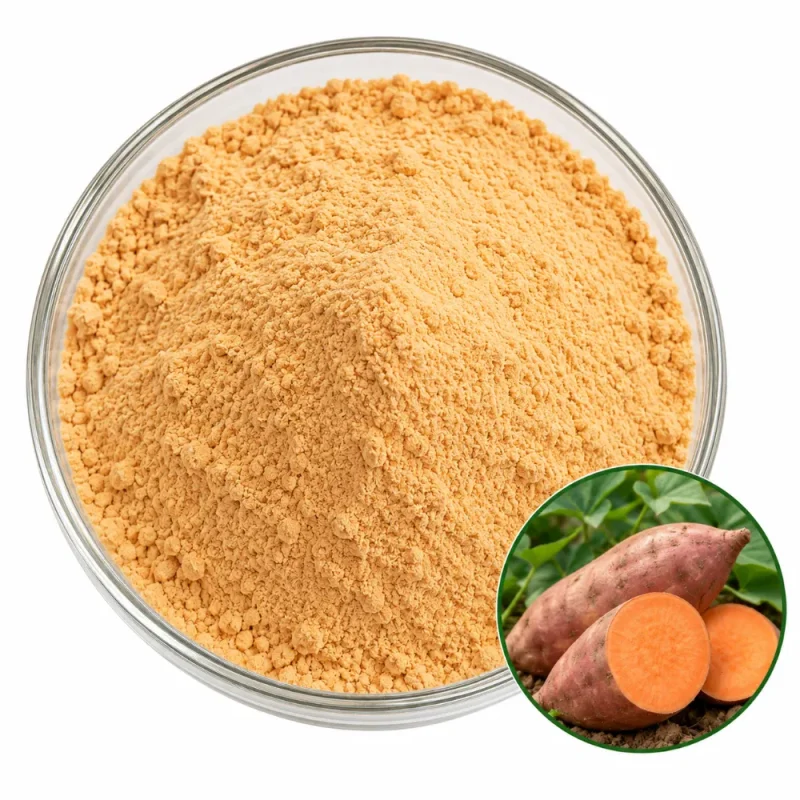
Roots of Ipomoea batatas with pale flesh are cooked, dried in warm air and milled to 80 mesh to give sweet potato powder. The powder is light yellow and tastes sweet, nutty and soft, with the baked-root character of cooked sweet potato. Leaves, vines and the purple-fleshed cultivar group are separate materials.

The root is a starchy storage organ, and the powder keeps its starch, sugars and fiber. Cooking gelatinizes the starch, so the powder hydrates easily and thickens liquids without the lumps of raw starch.

Dehydrated Sweet Potato Processing

The species is Ipomoea batatas (L.) Lam., a trailing vine of the morning glory family (Convolvulaceae). Sweet potato is not the common potato, Solanum tuberosum, which is a nightshade, and it is not the true yams of the genus Dioscorea, though “yam” is used for sweet potato in parts of North America. The part used is the swollen root, and the pale-fleshed type is used here.

The raw material is fresh sweet potato root. Roots are washed, peeled, cooked or steamed, cut and dried in warm air, then ground. Cooking activates beta-amylase, an enzyme that converts part of the starch to maltose, which is the reason baked sweet potato tastes sweeter than raw root. Drying then fixes that sweetness in the powder.

Sweet potatoes are harvested in autumn and cured at warm temperature to heal wounds and begin starch conversion, then stored. Curing increases sweetness, and fully cured roots give a more flavorful powder than fresh-dug roots. Cultivars vary from dry, pale types to moist, orange types, and the master color for this powder is a light yellow.

Because the powder is derived from the whole peeled root, it keeps the fiber and pectin as well as the starch. That mix is what gives the powder moisture-holding body in doughs and batters, and what makes it feel creamy when dispersed in warm liquid.
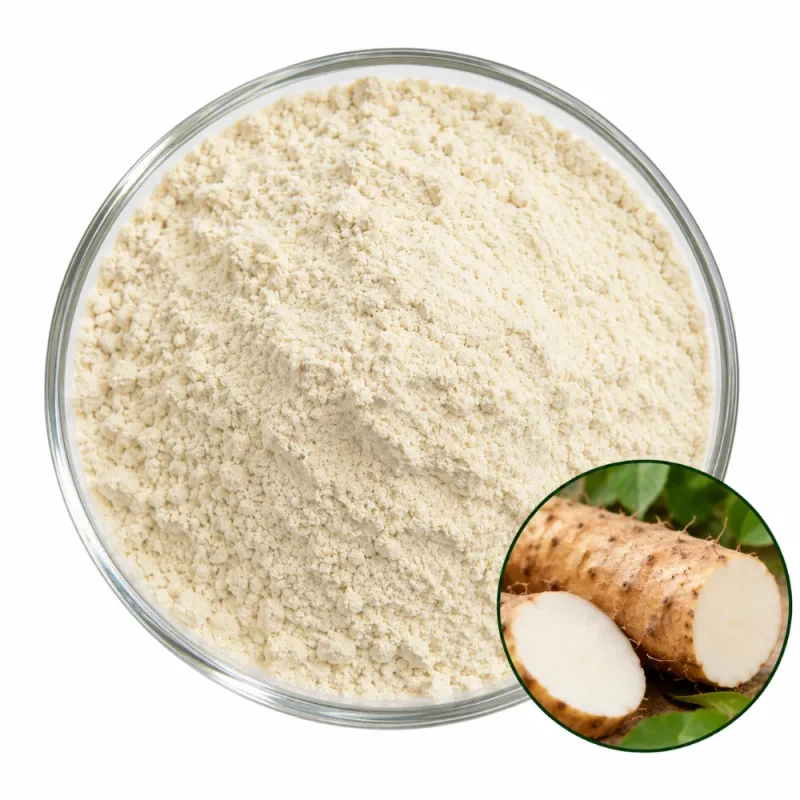
Sweet Potato Color, Flavor & Composition

The powder is light yellow with a soft, creamy tone and a biscuit-like roasted aroma. The flavor is sweet, nutty and mild, with a starchy softness. In warm water the powder swells and forms a smooth, pale gel-like suspension, because the starch has already been cooked and rehydrates quickly.

Characteristic constituents are starch, maltose and other sugars, pectin and dietary fiber, with small amounts of carotenoids in pale roots. No figure is given for any of them. The powder is a cooked-starch material, and its sweetness comes mainly from enzymatic conversion during cooking.

In formulation, sweet potato powder takes the place of part of the flour and part of the sweetener. Because its starch is already cooked, it absorbs cold liquid right away, so batters made with it thicken faster than standard flour batters and need a slightly higher water level.

FormWhat It IsChoose It When
Dehydrated Sweet Potato PowderHot-air dried and milled cooked rootA sweet, creamy, pale base is wanted
Purple Sweet Potato PowderDehydrated purple-fleshed rootAn anthocyanin-based purple color is wanted
Purple Sweet Potato Juice PowderSpray-dried juice from purple rootA soluble purple color is wanted
Sweet Potato Extract PowderRatio extract of sweet potatoA concentrated extract is specified

Typical Specifications

Specification ItemProduct Information
Latin NameIpomoea batatas
Plant PartRoot & Rhizome
ProcessingDehydrated
Common NameSweet potato
Raw MaterialFresh sweet potato root
Ingredient TypeDehydrated Vegetable Powder
AppearanceLight Yellow powder (natural color of the dried material)
FlavorSweet, nutty, soft
Solubility / DispersibilityWater Dispersible
Quality Parameters
Moisture (LOD)≤8.0%
Particle Size80 mesh
Heavy MetalsLead ≤2 ppm · Arsenic ≤1 ppm · Cadmium ≤1 ppm · Mercury ≤0.1 ppm
MicrobiologyTPC ≤10,000 cfu/g · Yeast & Mold ≤1,000 cfu/g · E. coli Negative · Salmonella Negative/25 g
Shelf Life24 months in unopened original packaging, cool and dry storage

Application Areas

Bakery, Pancake and Waffle Mixes

Baking and pancake mixes use sweet potato powder for natural sweetness, soft crumb and moisture retention. It blends with wheat and rice flours, and its pre-cooked starch swells quickly, so batters thicken within minutes and benefit from a short rest.

Porridge and Breakfast Cereal Mixes

Instant porridges and breakfast bases take sweet potato powder for creamy body and mild sweetness. It disperses in hot water or milk and thickens without cooking, and its nutty flavor pairs with cinnamon, oats and nuts.

Soup and Puree Bases

Dry soup and puree bases use sweet potato powder for velvety body and gentle sweetness. The pre-gelatinized starch thickens hot liquids smoothly, and the sweetness balances savory spice such as ginger, curry or smoked paprika in the finished bowl.

Noodle, Dumpling and Mochi Doughs

Noodle, dumpling and rice-cake makers add sweet potato powder to doughs for soft texture and subtle sweetness. The powder holds water, so hydration is adjusted, and the pale yellow tint is faint enough for a natural look.

Snack Bars and Drink Sticks

Snack bars and drink sticks use sweet potato powder as a creamy, sweet base that needs no added gums. It pairs with coconut, chocolate and spice, and in drinks it suspends well with stirring, so the base needs no added gum to stay creamy.

Handling Notes

Sweet potato powder is hygroscopic because of its sugars and starch. In humid air it clumps, and once damp, the starch swells and glues the powder into a firm cake. Keep weighing areas dry and close the liner after every draw.

Because the starch is pre-cooked, the powder hydrates the moment it meets water and forms lumps if poured into liquid. Pre-blend it with sugar or flour, or sprinkle it slowly while mixing, and let wet mixes rest so the fiber fully hydrates.

The light color darkens with warmth through browning reactions of the sugars, and aged powder develops a toasted, slightly stale note. Keep unopened drums cool, use opened ones promptly, and keep the powder away from strong odors, since the soft aroma picks up foreign notes easily.

Pre-gelatinized starch also ages differently from raw starch. In a humid store it stays soft, then sets into a hard, glassy lump, and once set it does not return to powder. Discard hardened material, and keep the liner closed to keep the rest free of lumps.

Packaging & Commercial Supply

Essencefield supports product evaluation, formulation trials, commercial orders, and ongoing ingredient supply. Packaging, storage, and shipping arrangements are determined by product characteristics, order quantity, stability requirements, and destination-market needs.

Supply ItemGeneral Information
SampleAvailable upon request for formulation, testing, and supplier evaluation
Order Quantities100 g · 1 kg · 5 kg · 25 kg · 100 kg · 500 kg · Bulk
Sample Lead TimeTypically 5–7 days after sample confirmation
Production Lead TimeTypically 15–30 days after order and specification confirmation
PackagingSuitable protective inner packaging with bags, cartons, drums, or other appropriate outer packaging
StorageStore in tightly sealed, suitable protective packaging in a cool, dry environment. Protect from moisture, heat, and direct sunlight. Specific storage conditions follow the approved product specification.
DocumentationCOA · Product Specification · TDS · SDS · Applicable declarations (as applicable)

Final order quantities, lead times, packaging, documentation, and shipping arrangements are confirmed according to the selected product and commercial requirements.

Request Ingredient Specifications & Quote

Share your target specification, application, quantity, and documentation needs. We’ll help confirm suitable options, samples, and commercial supply details.