Spinach Juice Powder

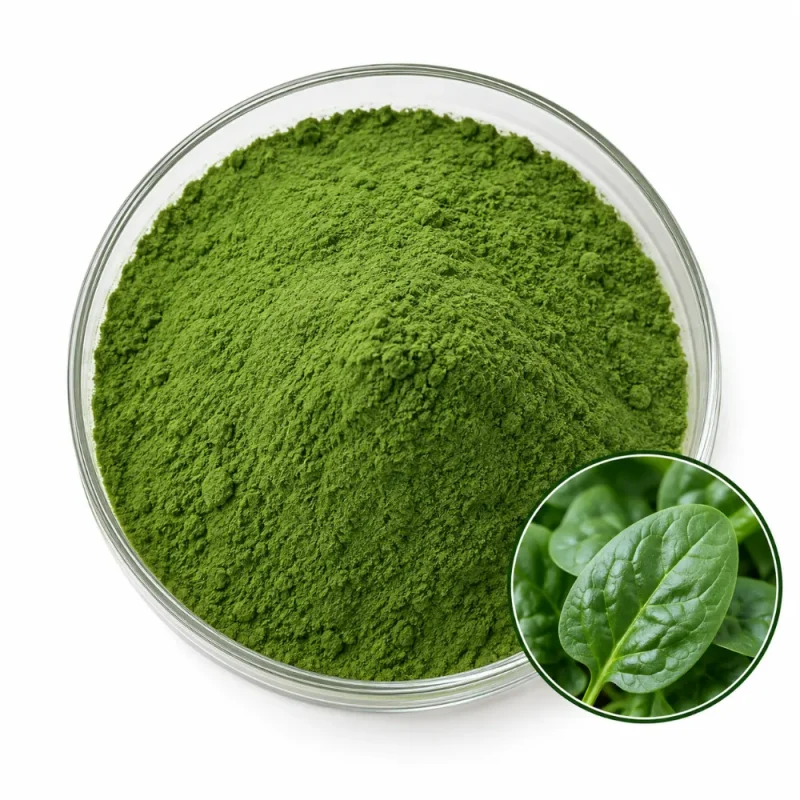
Pressed juice from the leaves of Spinacia oleracea is concentrated and spray-dried on a maltodextrin carrier to give spinach juice powder. The powder is green and disperses in water, and it carries the grassy, mildly mineral taste of cooked spinach without the fiber of the whole leaf. Roots, seeds and stems of the plant are not used.

A spinach juice powder is not a leaf powder. The press removes most of the insoluble fiber, so the powder is lighter and finer than a dehydrated whole-leaf product, and its color is paler and more olive than the dark green of the fresh leaf.

Spinach Juice Powder Processing

The botanical entity is Spinacia oleracea L., common spinach, a cool-season leaf crop in the amaranth family (Amaranthaceae). It is not water spinach, Ipomoea aquatica, nor New Zealand spinach, Tetragonia tetragonioides, which are unrelated plants sold under similar names. The part used is the leaf and its petiole, and the fresh leaf is the only raw plant material.

The raw material is spinach juice concentrate. Leaves are washed, macerated and pressed, and the green juice is concentrated by evaporation, blended with maltodextrin and atomized in a spray dryer. The carrier makes the powder flow and disperse, and it dilutes the chlorophyll so that the finished color is lighter than the pressed juice.

Heat and acid during concentration convert some chlorophyll to pheophytin, an olive-brown pigment, so the powder shows an olive-leaning green. Fresh spinach leaves are tender and spoil quickly, and processors press shortly after harvest, since wilting and bruising raise the grassy off-notes in the juice.

Spinach grows best in cool seasons, and spring and autumn crops give the lightest flavor. Summer-grown leaves bolt and turn bitter, so concentrate producers rely on cool-season fruit. The result is described by taste and color, not by cultivar.

Spinach juice is rich in water-soluble pigments and low in fiber, so the powder differs from the whole-leaf form in more than texture. The color is lighter, the flavor is cleaner and less hay-like, and the powder wets and dissolves faster, although it never becomes clear because chloroplast fragments stay dispersed.

Spinach Color, Flavor & Composition

The powder is green and gives a soft green to olive liquid in water, with fine pulp particles that stay dispersed. The taste is grassy, slightly sweet and mineral, with a faint astringency that comes from oxalic acid and phenolics. The aroma is of cooked green leaves and not of the sharp, vegetal freshness of raw salad leaves.

Characteristic constituents are chlorophylls, carotenoids such as lutein and beta-carotene, nitrate in the leaf, minerals, soluble sugars and organic acids. No figure is given for any of them. Spinach is a nitrate-bearing leafy vegetable, and the juice powder keeps the soluble fraction while the insoluble fiber stays in the pomace.

FormWhat It IsChoose It When
Spinach Juice PowderSpray-dried juice on a maltodextrin carrierA fine, fiber-light green is wanted
Spinach PowderHot-air dried and milled whole leafWhole-leaf fiber and a darker green are wanted
Freeze-Dried Spinach PowderWhole leaf dried under vacuumA fresher green and aroma matter most
Spinach Extract PowderRatio extract of the leafA concentrated extract is specified

Typical Specifications

Specification ItemProduct Information
Latin NameSpinacia oleracea
Plant PartLeaf & Herb
ProcessingSpray-Dried Juice
Common NameSpinach
Raw MaterialSpinach juice concentrate
Ingredient TypeJuice Powder
CarrierMaltodextrin
AppearanceGreen powder
FlavorGrassy, mildly sweet, mineral
Solubility / DispersibilityWater Dispersible
Quality Parameters
Moisture (LOD)≤5.0%
Heavy MetalsLead ≤2 ppm · Arsenic ≤1 ppm · Cadmium ≤1 ppm · Mercury ≤0.1 ppm
MicrobiologyTPC ≤10,000 cfu/g · Yeast & Mold ≤1,000 cfu/g · E. coli Negative · Salmonella Negative/25 g
Shelf Life24 months in unopened original packaging, cool and dry storage

Application Areas

Green Smoothie and Drink Mixes

Dry smoothie and drink mixes use spinach juice powder for green color and a mild leaf flavor that fruit masks easily. It disperses in cold liquid with shaking, and the light fiber content gives a smooth drink without a gritty finish.

Pasta and Noodle Coloring

Pasta makers add spinach juice powder to flour for green dough. The pigment tolerates neutral pH, but long boiling and acidic sauces push it toward olive, so recipes dose generously and use opaque packaging for the dried product.

Bakery Doughs and Crackers

Bakery mixes for breads, wraps and crackers use spinach juice powder for color and a vegetable note. The fine powder mixes evenly into flour, and baking darkens the green, so the target shade is judged on the baked product.

Savory Dips and Sauce Mixes

Dry spinach-dip and creamed-sauce mixes take spinach juice powder to restore green color and flavor. It hydrates in dairy bases, and the mild acidity of sour cream keeps the olive shift slow in a chilled product.

Plant-Based and Snack Seasonings

Snack seasonings and plant-based coatings use spinach juice powder for a vegetable note and green tint. It blends with onion, garlic and herbs, and its fine texture does not leave visible flecks on the product surface.

Handling Notes

Spinach juice powder is hygroscopic, since the carrier and soluble sugars hold water. In humid air it clumps and darkens, and a drum left open can form a crust within hours. Weigh in a dry room and reseal the liner after each draw to keep the powder loose.

Chlorophyll is sensitive to light, heat and acid. The green fades toward olive and brown over months, faster in warm, bright storage and in acidic blends, so opaque packaging and cool storage hold the shade, and acidic dry mixes are checked for color after storage.

The grassy aroma fades with air and turns hay-like in aged powder. Metal ions, especially copper and iron, also change color, so use stainless steel tools and avoid scoops that carry rust. Keep opened containers sealed, and use them within a short window.

Dissolve fresh batches of liquid mixes instead of storing them. A spinach drink that stands for hours separates as the dispersed particles settle and darkens as chlorophyll degrades, so mixes are made close to serving.

Packaging & Commercial Supply

Essencefield supports product evaluation, formulation trials, commercial orders, and ongoing ingredient supply. Packaging, storage, and shipping arrangements are determined by product characteristics, order quantity, stability requirements, and destination-market needs.

Supply ItemGeneral Information
SampleAvailable upon request for formulation, testing, and supplier evaluation
Order Quantities100 g · 1 kg · 5 kg · 25 kg · 100 kg · 500 kg · Bulk
Sample Lead TimeTypically 5–7 days after sample confirmation
Production Lead TimeTypically 15–30 days after order and specification confirmation
PackagingSuitable protective inner packaging with bags, cartons, drums, or other appropriate outer packaging
StorageStore in tightly sealed, suitable protective packaging in a cool, dry environment. Protect from moisture, heat, and direct sunlight. Specific storage conditions follow the approved product specification.
DocumentationCOA · Product Specification · TDS · SDS · Applicable declarations (as applicable)

Final order quantities, lead times, packaging, documentation, and shipping arrangements are confirmed according to the selected product and commercial requirements.

Request Ingredient Specifications & Quote

Share your target specification, application, quantity, and documentation needs. We’ll help confirm suitable options, samples, and commercial supply details.