Dehydrated Celery Processing
The species is Apium graveolens L., a biennial of the carrot family (Apiaceae) grown in three main forms. Stalk celery, the type used here, is bred for crisp petioles. Celeriac, Apium graveolens var. rapaceum, is grown for its swollen root, and leaf celery, or smallage, is grown for its aromatic leaves and seeds. Celery seed is a spice, and celery seed powder is a different material from stalk powder.
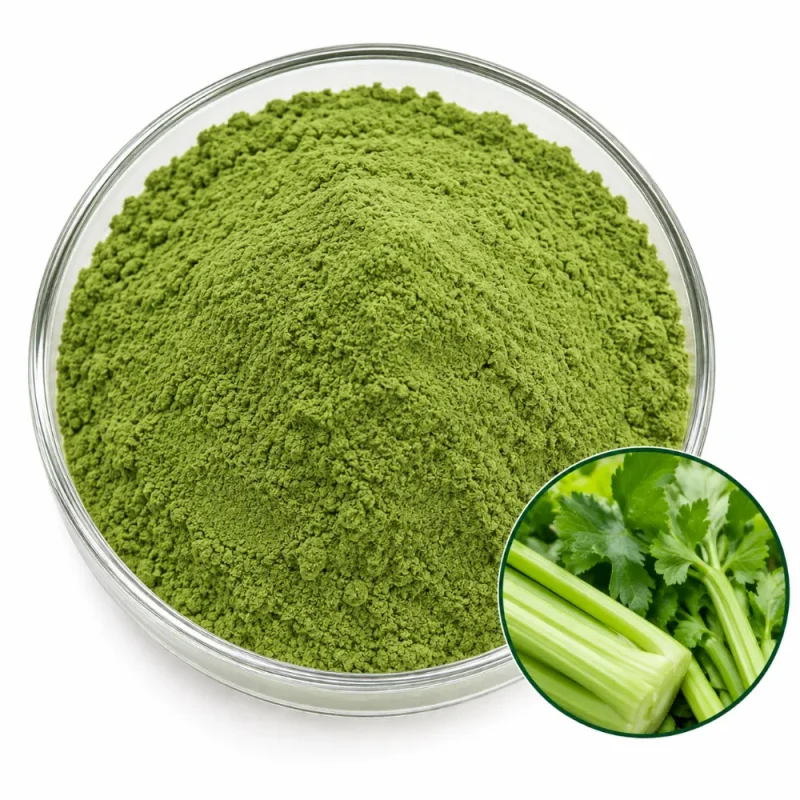
The raw material is fresh celery stalk. Stalks are washed, trimmed, sliced and dried in warm air, then ground into powder. Drying concentrates the savory-sweet base and drives off much of the water, which makes up the majority of the fresh stalk. Hot-air dehydration gives a deeper, more cooked flavor than freeze-drying, with less of the raw crispness in the aroma.
Celery is a cool-season crop that needs steady water and is often blanched or grown for tender, pale stalks. Darker green stalks are more strongly flavored and a little more bitter than pale ones, and they give a greener powder. The powder is described by shade and flavor, and the cultivar and stalk color are not stated.
The aroma of celery comes from phthalides such as sedanolide and 3-n-butylphthalide, which are present in the stalk and survive drying in part. These volatile compounds are what separate celery from other green vegetables and make a small inclusion recognizable in a blend.