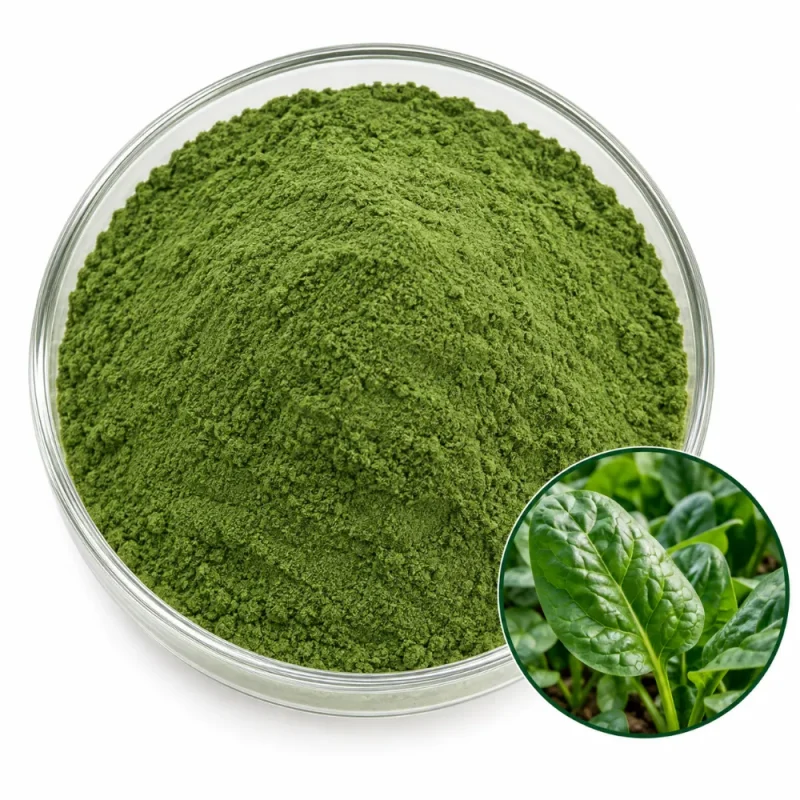
Dehydrated Kale Processing
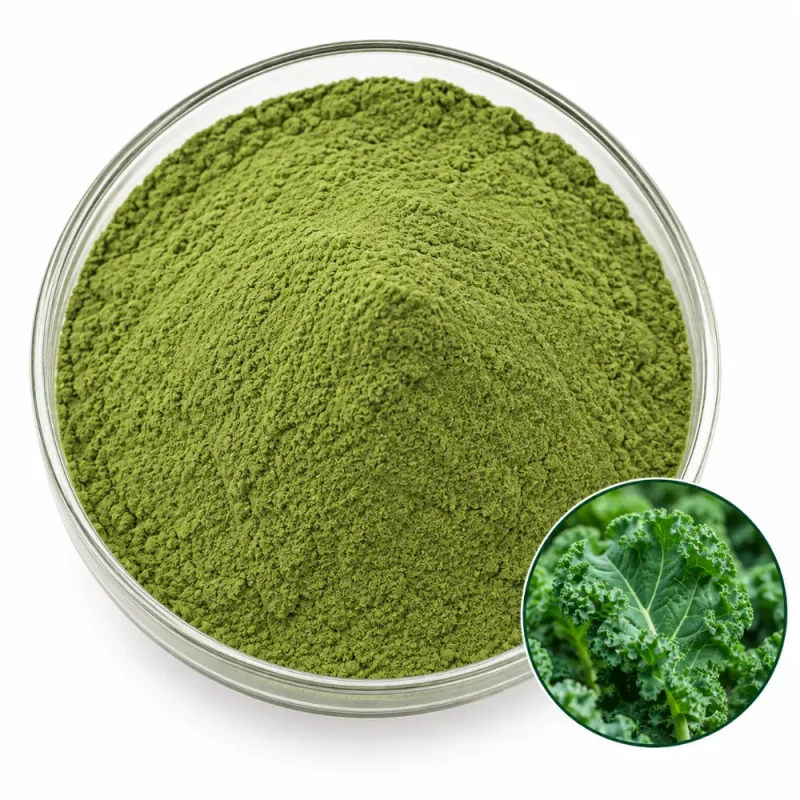
The botanical entity is Brassica oleracea var. sabellica L., the curly kale cultivar group of wild cabbage. Kale shares its species with broccoli, cabbage, cauliflower and kohlrabi, and the botanical group names mark how breeders reshaped one plant. Lacinato or dinosaur kale is another cultivar group, Brassica oleracea var. palmifolia, with flatter, darker leaves. The part used here is the leaf blade with its stalk trimmed.
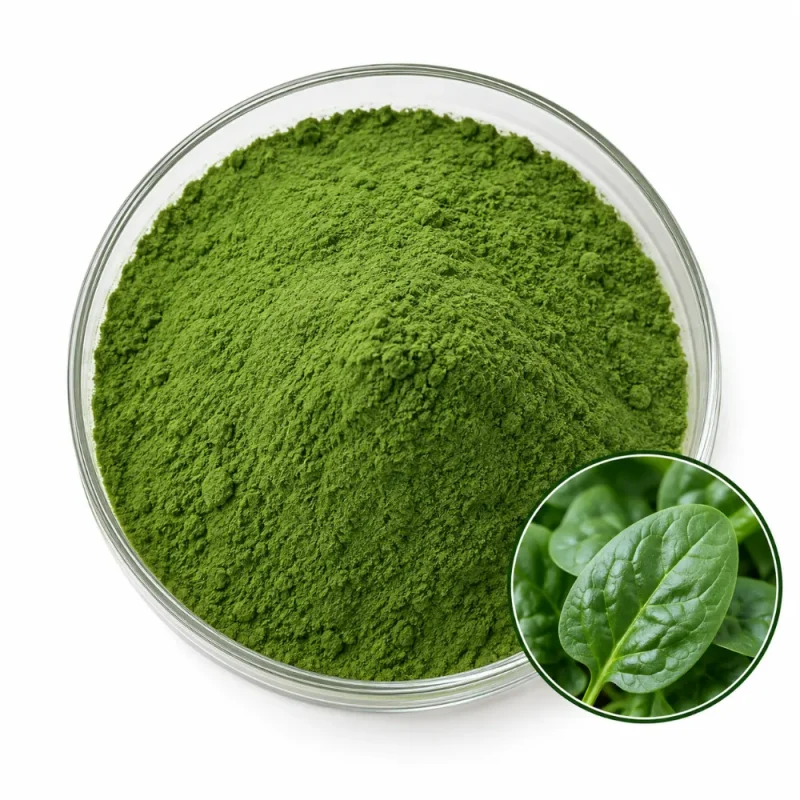
The raw material is fresh kale leaf. Leaves are washed, de-ribbed or trimmed, dried in warm air and ground to powder. Thick leaf veins stay in part, which adds fiber and a coarser, greener mouthfeel than a spinach powder gives. Heat inactivates the enzyme that turns glucosinolates into sharp isothiocyanates, so the powder tastes of cooked greens and not of the raw leaf.
Kale is a cool-season crop that sweetens after frost, because the plant converts starch to sugar to protect itself from cold. Leaves harvested after frost are milder and less bitter than leaves from warm weather. The cultivar and season are not stated, so the powder is described by character and not by origin.
Kale leaves are tougher than most salad greens, and they survive drying with more of their structure intact. The powder is therefore firmer and slower to hydrate than a tender-leaf powder, and it tolerates cooking steps in dry mixes better.