Black Sesame Powder

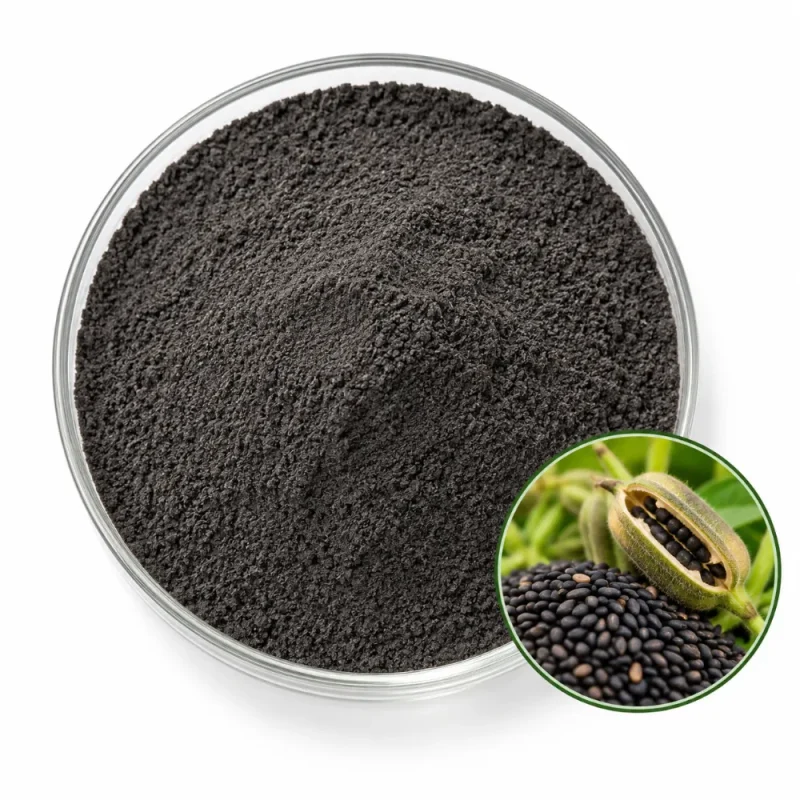
Milled from the black-seeded type of Sesamum indicum, black sesame powder is a dry, brown, oil-rich powder with a nutty, toasted-seed aroma. It disperses in water without dissolving, and it behaves as a seed solid in batters, drinks and fillings.

The specification covers the species, the black-seeded raw material, a brown appearance and moisture limited to ≤8.0%. It is supplied for bakery, plant-based foods, cereal bars and dry blends, where seed flavor and color matter, and it is handled as an oil-rich ingredient that needs protection from oxidation.

Black Sesame Raw Material Profile

Black sesame powder is made from the seed of Sesamum indicum L., the cultivated sesame, in its black-seeded form. The seed is the raw material: the pod, stalk and leaf are not used. Sesame is native to warm regions of Africa and Asia and is grown as an oilseed, and black and white seeds belong to the same species and differ in seed-coat pigment and in flavor intensity.

The black color sits in the seed coat. It comes from dark pigments that survive roasting and milling, which is why black sesame powder appears dark brown or grey-brown and not the creamy tone of powders from white seed. The coat also carries more fiber than the kernel, so black seed gives a coarser, more fibrous powder than hulled white seed does.

Sesame is harvested as the pods dry on the plant and split, and the seeds are cleaned of pod material, stones and dust before milling. Black seed is often sold unhulled, so it carries the full seed coat, and cleaning removes sand and pod fragments that would otherwise show as grit in the powder.

A large share of a sesame seed is oil, and the seed also holds protein, fiber and a group of lignans, the best known being sesamin and sesamolin, which are the cause of the unusual oxidative stability of sesame oil. The powder keeps the oil in the matrix, so its handling is closer to that of a nut paste than of a cereal flour.
Black Sesame Composition & Milling

FormWhat It IsChoose It When
Black Sesame PowderMilled black sesame seedSeed flavor and dark color in dry blends
Sesame Seed PowderMilled sesame seedA lighter-colored seed powder is wanted
Black Sesame Extract PowderWater extract of black sesame seed, 10:1 ratioSoluble seed notes without seed solids
Sesame Seed Extract PowderWater extract of sesame seed, 10:1 ratioA soluble extract not tied to black seed

The central fact about milling sesame is that the oil smears. A seed this rich in oil does not break into dry particles: grinding releases oil that coats the surfaces, so the product turns from a powder into a cohesive, paste-like mass if the mill heats up or the grind is pushed too fine. Milling therefore depends on cooling, short residence time and a measured particle size, and no particle size is published for this powder.

Composition decides how the powder behaves afterward. Oil makes it cling to surfaces and absorb odors, protein and fiber make it absorb water readily, and the seed coat gives a gritty edge that shows in clear liquids. In use, the powder wets slowly in cold water, because oil repels water, and it forms lumps that need warm liquid or pre-blending with sugar.

The comparison table distinguishes the black seed powder from two relatives. Sesame Seed Powder is the same plant in a different seed form, and the extract carries the water-soluble part only, so neither is a substitute for the dark, oil-bearing seed solids.

Typical Specifications

Specification ItemProduct Information
Latin NameSesamum indicum
Plant PartSeed & Grain
ProcessingMilled
Common NameBlack sesame
Raw MaterialSeed (black-seeded type)
Ingredient TypeMilled Powder
AppearanceBrown powder
FlavorNutty, toasted sesame aroma
Solubility / DispersibilityWater Dispersible
Quality Parameters
Moisture≤8.0% (LOD)
Heavy MetalsLead ≤2 ppm · Arsenic ≤1 ppm · Cadmium ≤1 ppm · Mercury ≤0.1 ppm
MicrobiologyTPC ≤10,000 cfu/g · Yeast & Mold ≤1,000 cfu/g · E. coli Negative · Salmonella Negative/25 g
Shelf Life24 months in unopened original packaging, cool and dry storage

Application Areas

Black Sesame Baked Goods

In biscuits, cakes and steamed buns the powder gives a grey-black crumb and a nutty flavor. Because it holds oil, it softens doughs, so fat in the recipe is reduced slightly and the dough rested before baking to let the seed solids hydrate.

Cereal and Seed Bars

Binder syrups carry the powder in cluster bars and seed bars, adding dark color and a toasted note. The oil can soften the binder and shorten shelf life, so bars are tested for hardness and oxidation after a month of storage.

Plant-Based Drink Bases

Dispersed in warm oat or rice drinks, the powder gives a grey, nutty beverage that needs a stabilizer to hold the seed solids. Heating and homogenization help the powder wet and stay suspended, and a stir before serving redistributes sediment.

Dry Blended Mixes

In dry porridge and dessert mixes, black sesame powder adds color and aroma. It is blended with sugar or starch first to dilute the oil, and the finished mix is packed in barrier film to guard against oxidation and odor pickup.

Handling Notes

Black sesame powder is an oil-rich ingredient and oxidizes more quickly after milling than the whole seed does, because milling exposes oil to air. Oxidation shows as a stale, painty or bitter note, so the powder should be kept sealed, cool and dark, and used promptly after opening.

Moisture and odors are the second concern. The powder absorbs water, which causes caking and encourages microbial growth, and it picks up strong smells from the environment through its oil. Containers should be resealed after each use, and storage areas kept free of spices, cleaning agents and fuels.

Handling in production is a matter of wetting and dispersion. The powder floats on cold liquid and forms dry-centered lumps, so it is dispersed in warm liquid with shear, or pre-blended with sugar. Equipment that handles black sesame powder will pick up dark pigment, so cleaning schedules and color changeovers should allow for it.

Powder color deepens or dulls with storage, because pigments in the seed coat react with oxygen over time. A sealed, dark container keeps the shade close to the retained reference sample, and a first-in, first-out rotation avoids long holds of open packs.

Packaging & Commercial Supply

Essencefield supports product evaluation, formulation trials, commercial orders, and ongoing ingredient supply. Packaging, storage, and shipping arrangements are determined by product characteristics, order quantity, stability requirements, and destination-market needs.

Supply ItemGeneral Information
SampleAvailable upon request for formulation, testing, and supplier evaluation
Order Quantities100 g · 1 kg · 5 kg · 25 kg · 100 kg · 500 kg · Bulk
Sample Lead TimeTypically 5–7 days after sample confirmation
Production Lead TimeTypically 15–30 days after order and specification confirmation
PackagingSuitable protective inner packaging with bags, cartons, drums, or other appropriate outer packaging
StorageStore in tightly sealed, suitable protective packaging in a cool, dry environment. Protect from moisture, heat, and direct sunlight. Specific storage conditions follow the approved product specification.
DocumentationCOA · Product Specification · TDS · SDS · Applicable declarations (as applicable)

Final order quantities, lead times, packaging, documentation, and shipping arrangements are confirmed according to the selected product and commercial requirements.

Request Ingredient Specifications & Quote

Share your target specification, application, quantity, and documentation needs. We’ll help confirm suitable options, samples, and commercial supply details.