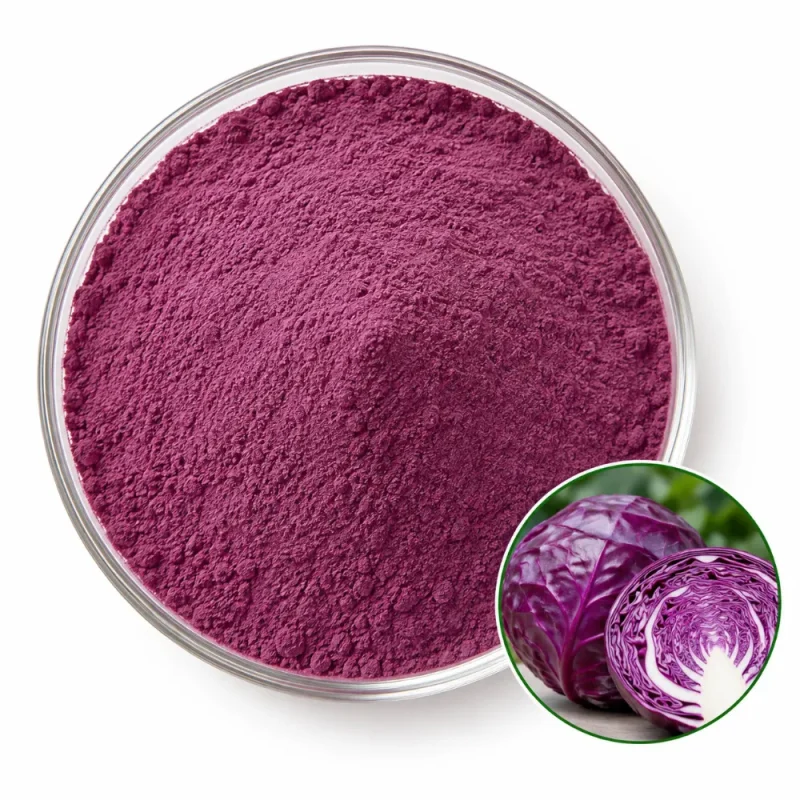
Dehydrated Red Cabbage Processing
The botanical entity is Brassica oleracea var. capitata L., the head cabbage group of wild cabbage, grown in red, white and green forms. The red form is the one used here, and it is bred for anthocyanin-rich leaves. Kale, broccoli, cauliflower and kohlrabi are other groups of the same species. The part used is the tight leaf head, trimmed of its outer wrapper leaves and core.
The raw material is fresh red cabbage leaf. Heads are cored, shredded, dried in warm air and ground to a fine powder. Drying is the only step that changes the vegetable, and the powder keeps the pigments, fiber and sulfur flavor precursors of the head. Heat inactivates the enzyme that turns glucosinolates into sharp isothiocyanates, so the flavor is of cooked cabbage and not of the raw, peppery leaf.
The anthocyanins of red cabbage are largely acylated and built on cyanidin, which gives them better stability to light and heat than the simple anthocyanins of berries. Their color range is wide, and a powder that is purple red in dry form can show pink, purple, blue or green in a finished food, depending on pH and the other ingredients.
Heads are harvested in late summer through autumn, and cabbage stores well for months in cool rooms. The depth of the leaf color depends on cultivar and growing temperature, since cool weather deepens pigment. Which cultivars go into a lot is not stated, and the shade is the guide, not a pigment number.