Dehydrated Carrot Processing
The species is Daucus carota L., a biennial of the carrot family (Apiaceae). Cultivated carrot is the subspecies sativus, and wild carrot, or Queen Anne’s lace, is the same species in its unimproved form. Orange carrots are the common type, and purple, yellow and white carrots are other cultivar groups. The orange root carries beta-carotene, and the purple-black type carries acylated anthocyanins, so root color decides the pigment chemistry.
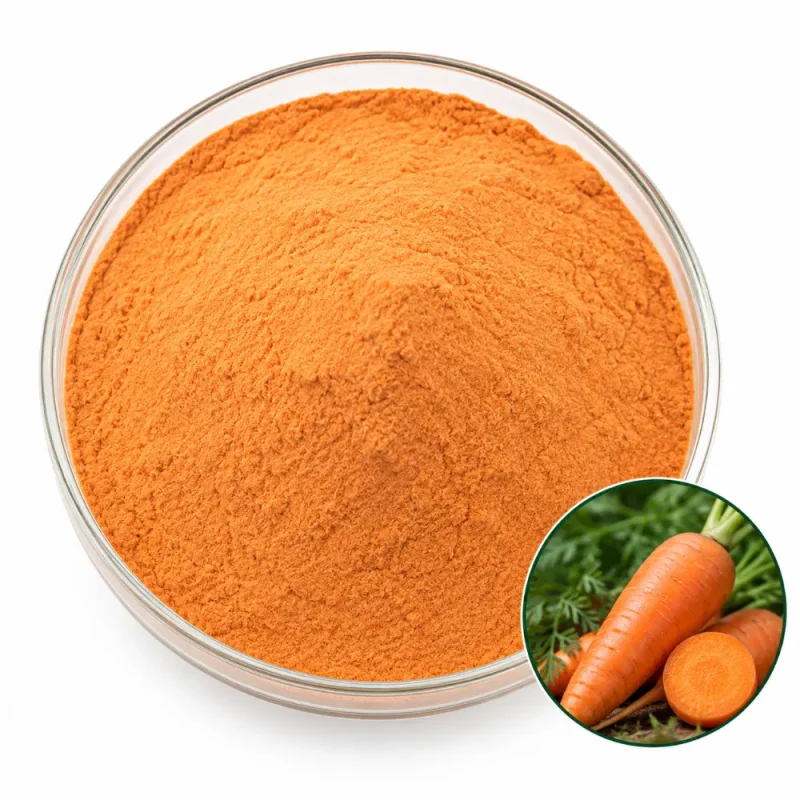
The raw material is fresh carrot root. Roots are washed, trimmed, sliced or shredded, dried in warm air and ground. The powder is simply the dried root, with no pressing, extraction or added carrier. Hot-air dehydration gives a deeper, more cooked orange than freeze-drying, and a flavor closer to roasted carrot than to raw.
Carrots store well after harvest, and processing runs through the year from cold-stored roots. Sweetness depends on cultivar and growing temperature, since cool weather pushes sugars up. Because the cultivar mix is not stated, the powder is described by shade and flavor and not by sugar level.
The core of the root is lighter and starchier than the outer ring, and trimming removes the crown where the tops attach. The remaining root gives a smooth, even powder, with fine fiber that settles slowly in liquids and gives a gentle body.
Carrots grown for processing are often chosen for deep color and uniform shape, and the roots used for powder are sorted for color. Small differences in root maturity change both the depth of the carotenoid and the sugar level, which is why the color is described as a shade and not as a fixed strength.