Dehydrated Zucchini Processing
The species is Cucurbita pepo L., a trailing or bush plant of the gourd family (Cucurbitaceae) with a very wide range of cultivated groups. Summer squashes such as zucchini, courgette and yellow crookneck are eaten immature. The same species also includes the jack-o’-lantern pumpkin, acorn squash and many ornamental gourds, which are ripened and used differently. Butternut and tropical pumpkins belong to a different species, Cucurbita moschata.
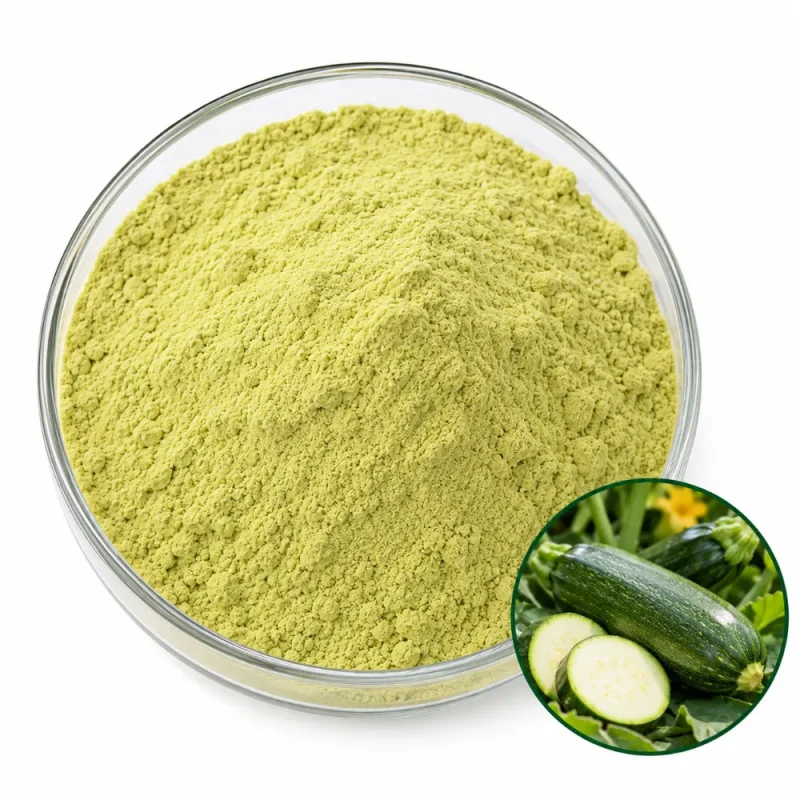
The raw material is fresh zucchini. Fruit is harvested at a small, tender stage, washed, trimmed, sliced with the skin and dried in warm air, then ground to a fine powder. Because the flesh is mostly water, the dry yield is low, and the finished powder reflects the skin and thin flesh more than a thick pumpkin flesh would. Skin supplies the green tint through chlorophyll and some carotenoids.
Zucchini plants produce fruit continuously in warm weather, and fruit grows quickly. A zucchini can double in size in a day or two, and large fruit becomes seedy, tough and watery. Processors take fruit at a young size for the best flavor, and powder from oversized fruit tastes blander and more fibrous.
The mild flavor is the main property. Zucchini has little of the bitterness, sulfur or earthy notes of other vegetable powders, so it works as a neutral vegetable base that adds bulk, fiber and a slight green tint to a formula without altering its flavor.