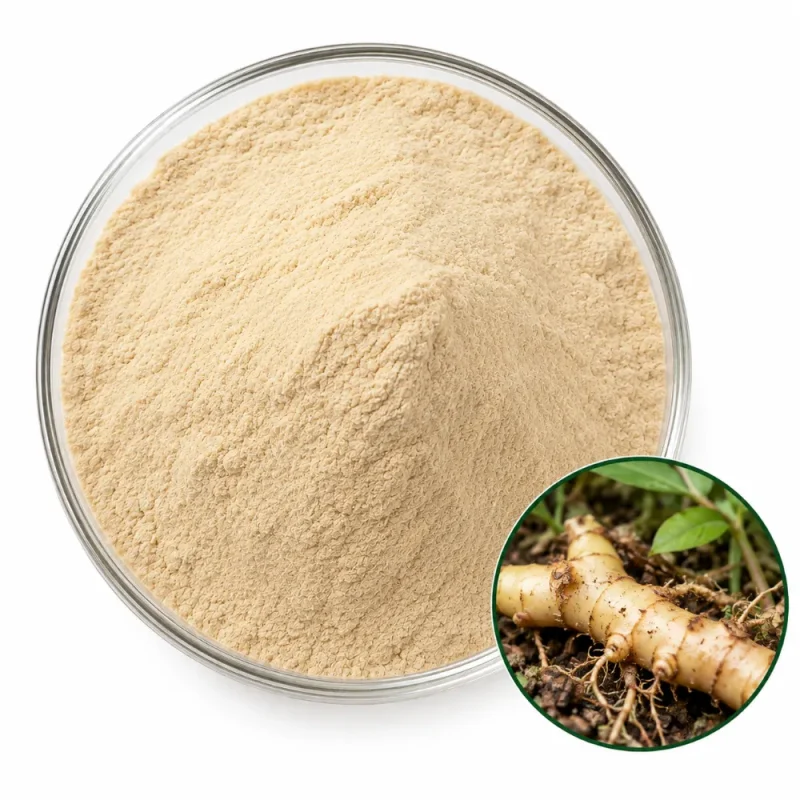
Polygonatum Polysaccharide Identity
Polygonatum spp. polysaccharide powder is specified from the rhizome of Polygonatum sibiricum Redouté, a woodland perennial known as Solomon’s seal or Huangjing. The rhizome is the only part used. In the Chinese trade the name Huangjing covers several related species, including Polygonatum kingianum and Polygonatum cyrtonema, and the “spp.” in the product name reflects that naming, while the specified species here is P. sibiricum.
The rhizome is a storage organ, and its polysaccharides are a mixture. Fructan-type chains, in which fructose units form the bulk of the polymer, are reported alongside heteropolysaccharides containing galactose, glucose, mannose and uronic acid. Their proportions depend on species, rhizome age and processing, and for this reason the term polysaccharide here describes a group of chain types.
Traditional processing of the rhizome includes repeated steaming and drying, which changes taste and sugar content. This Polygonatum spp. polysaccharide powder is defined by its water-extracted carbohydrate fraction and not by the steaming history of the rhizome used. Hot-water extraction and ethanol precipitation remove most free sugar and saponin and keep the large polymers.
Rhizomes are dug after several years of growth, washed, sliced and dried before extraction. The raw rhizome is sticky and sweet, and the carbohydrate share changes with age and drying, so purification from dried material sets the profile of the finished powder rather than the raw root.
Related products from the same plant differ in form. Polygonatum Rhizome Powder is the milled rhizome, Polygonatum Rhizome Extract Powder is a ratio extract, and Polygonatum Peptide Powder is a protein hydrolysate.