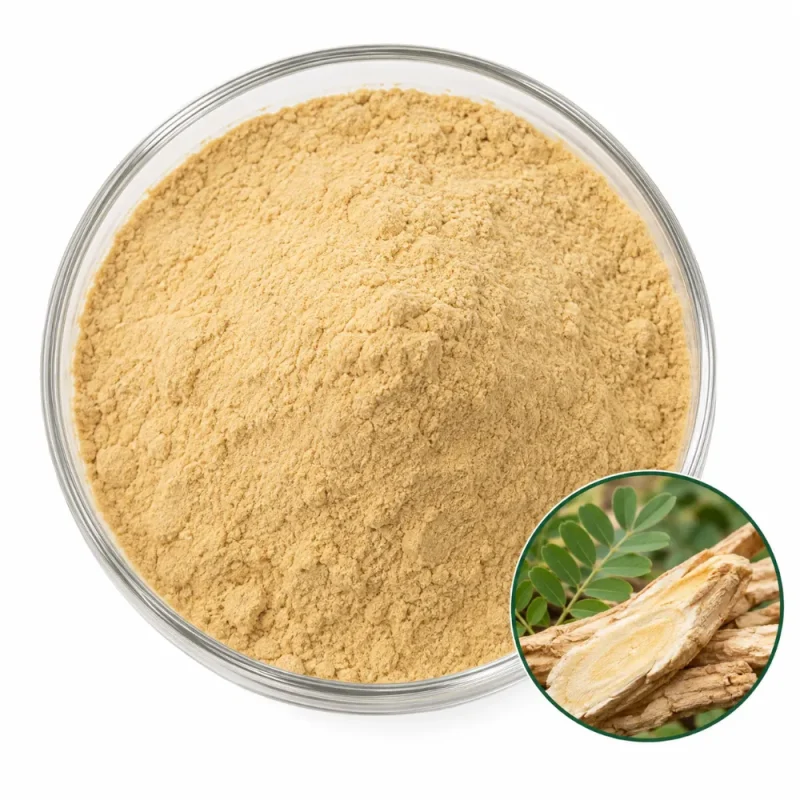
Angelica sinensis Polysaccharide Powder

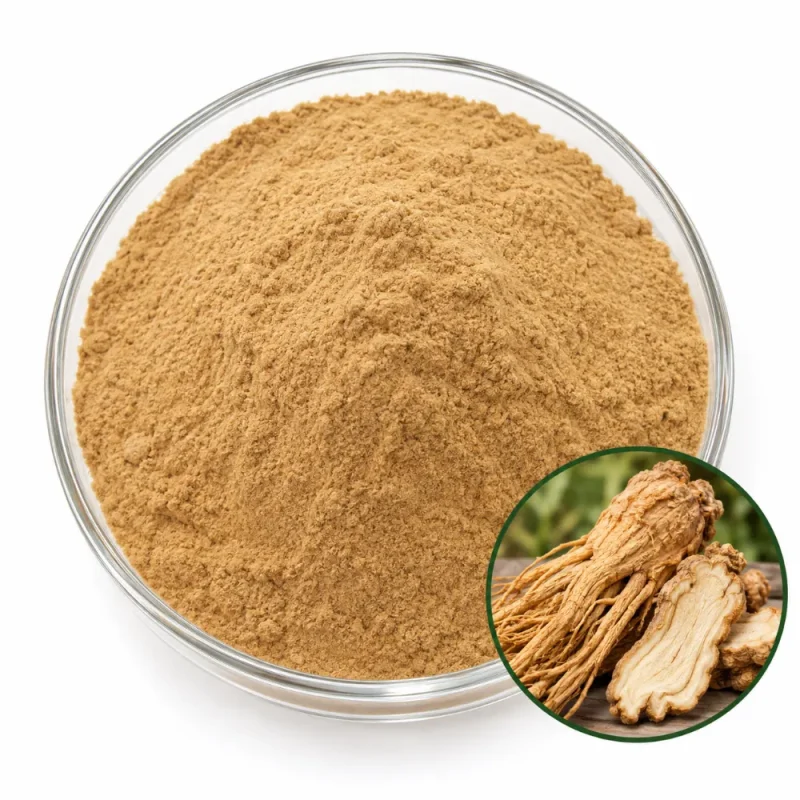
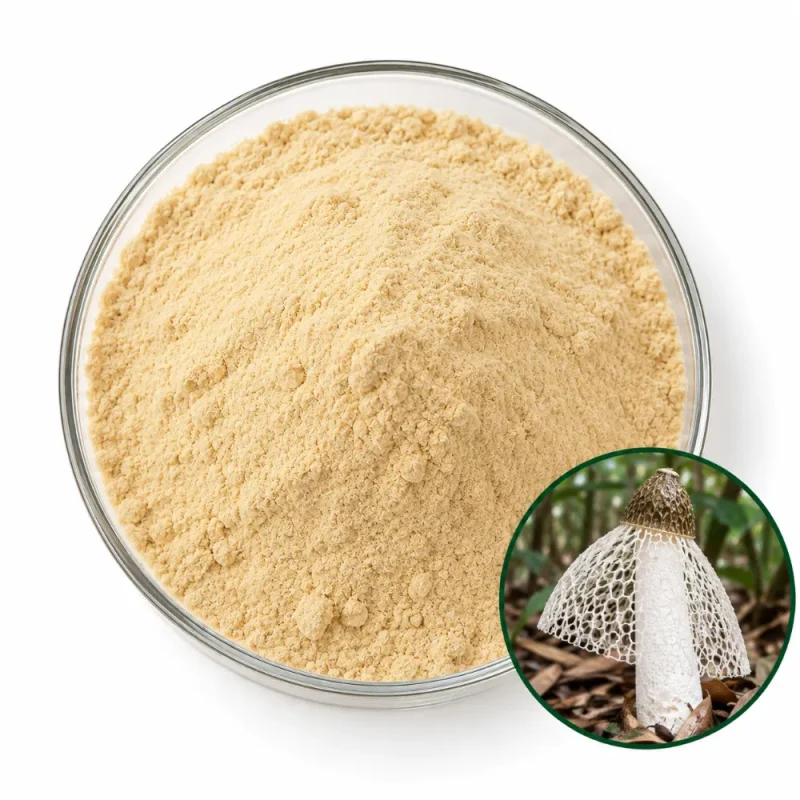
Water-extracted from the root of Angelica sinensis, this polysaccharide powder holds the water-soluble carbohydrate fraction of dong quai, apart from the volatile oil and phthalide fraction that gives the root its aroma. It is purified, dried and milled to a fine light yellow powder.

Polysaccharide content is ≥30% by UV-Vis (phenol–sulfuric, as glucose), moisture and total ash are each ≤5.0%, and particles are milled to 80 mesh. The powder dissolves in water and is supplied for dietary supplements, functional beverages and functional foods.

Angelica sinensis Polysaccharide Identity

Angelica sinensis polysaccharide powder is made from the root of Angelica sinensis (Oliv.) Diels, known as dong quai or danggui. Angelica sinensis root is the only part used. Other Angelica species are easily confused with it, including Angelica acutiloba from Japan, Angelica archangelica from Europe and Angelica dahurica, which is a different drug with a different chemistry, and none of them is included here.

Angelica sinensis root carries a mixed carbohydrate pool. A glucan fraction and pectic-type heteropolysaccharides, containing galacturonic acid, arabinose and galactose, are the polymers reported most often for this root. Starch and small sugars add to the total. Hot-water extraction brings out the soluble polymers, and ethanol precipitation concentrates them while leaving most small sugars in the supernatant.

The signature volatile components of dong quai, such as ligustilide, and its phenolic acid ferulic acid are separate compounds. Ligustilide is oily and dissolves poorly in water, so it stays largely in the residue, and the polysaccharide powder carries only a faint, sweet-herbal note of the root.

Related dong quai products have different functions. Angelica sinensis Root Powder is the milled root, Dong Quai Extract Powder and Angelica Root Extract Powder are ratio extracts, and none is specified by a carbohydrate assay.
Polysaccharide Content & Test Method

The stated content is polysaccharides ≥30% by UV-Vis, a total-carbohydrate measurement. In the phenol–sulfuric method, hot sulfuric acid hydrolyses the polymers, phenol turns the released monosugars into a colored product, and absorbance is compared with glucose. The percentage is a glucose equivalent.

With Angelica sinensis root, the first question is how much of that sugar is starch and free sugar and how much is the intended polymer. Angelica sinensis root holds appreciable soluble sugar, and these respond identically to polymer-bound sugar. That is why extraction is followed by ethanol precipitation, and why the 30% figure applies only to the dried, purified powder and not to the crude water extract.

Sample preparation influences the number as well. A water extract of Angelica sinensis root is turbid, so it is filtered and diluted to a range that the colored product can be read in, and the glucose standards are run in the same sulfuric acid conditions to keep results comparable between lots.

Pectic polymers also contain uronic acids, which react differently in this assay from neutral sugars and can give a slightly distorted reading against a glucose curve. A gravimetric precipitate would include protein, and enzymatic methods are not used for this grade. Compare the figure only with other UV-Vis values, and not with ferulic acid or ligustilide percentages.

Typical Specifications

Specification ItemProduct Information
Latin NameAngelica sinensis
Plant PartRoot & Rhizome
ProcessingWater Extraction & Purification
Common NameDong quai (Danggui)
Ingredient TypePolysaccharide Extract
Polysaccharide TypeGlucan and pectic-type heteropolysaccharides
ContentPolysaccharides ≥30% (UV-Vis, as glucose)
AppearanceLight Yellow powder
Solubility / DispersibilityWater Soluble
Quality Parameters
Moisture≤5.0% (LOD)
Total Ash≤5.0%
Particle Size80 mesh
Heavy MetalsLead ≤2 ppm · Arsenic ≤1 ppm · Cadmium ≤1 ppm · Mercury ≤0.1 ppm
MicrobiologyTPC ≤1,000 cfu/g · Yeast & Mold ≤100 cfu/g · E. coli Negative · Salmonella Negative/25 g
Shelf Life24 months in unopened original packaging, cool and dry storage

Angelica sinensis Polysaccharide Solution Behavior

Angelica sinensis polysaccharide dissolves in water to a pale yellow, lightly hazy solution. Pectic chains hydrate into a modest viscosity without gelling at ordinary use levels, and the viscosity increases with concentration. Dissolution is faster in warm water, and sifting the powder into a vortex avoids surface lumps.

The uronic acid groups give the chain a negative charge, so it binds calcium and basic proteins. In calcium-fortified or milk-based drinks this can cause light haze or sediment, and a trial at the intended mineral level is advisable. Plain and mildly acidic beverages generally stay clear.

The backbone tolerates standard pasteurization, whereas long boiling in acid shortens the chains and thins the liquid. The aroma left in the powder is faint and slightly sweet, and it is less noticeable in Angelica sinensis polysaccharide than in the milled root. A trace of phenolic color can darken with iron or copper in the water, so demineralized water is preferred in sensitive clear drinks. No viscosity values are stated for this grade.

Over shelf life the powder behaves like other dry carbohydrates: it is stable to light and mostly sensitive to moisture. An open bag draws water and caking begins at the surface, so the practical advice is a sealed liner with a desiccant. In liquid systems, a preservative that works at mildly acidic pH leaves the polymer intact, and viscosity should be rechecked after a week of storage.

Application Areas

Instant Herbal Drink Powders

Angelica sinensis polysaccharide dissolves in water and blends with tea, jujube or citrus flavors. Its faint sweet-herbal note is covered by the flavor system, and the pale tint suits lightly colored drink powders. Dissolution is quicker in warm water, though cold water works with stirring.

Capsule Fills with Root Extracts

In capsules, the fraction combines with a root extract to give a wider water-soluble profile. A flow agent keeps the denser polysaccharide powder evenly distributed through the blend, and the fill weight should be checked at the start and end of the run.

Tablet Granulates

Granulation with common fillers is straightforward, but the powder takes up moisture during wet granulation, and hardness should be checked after storage in humid air. Drying granules to a controlled endpoint protects hardness through storage, and disintegration time should be checked after humid storage.

Single-Dose Sachets

Blending the powder with soluble fiber or sweetener gives a free-flowing sachet that dissolves without lumps. Barrier film protects the contents during humid transport, and a quick flow check before filling avoids bridging in the sachet hopper.

Syrup-Based Concentrates

Added to syrup concentrates, the polysaccharide contributes soluble solids and a mild tint, and viscosity should be checked after a week at room temperature. Acidic concentrates remain stable, and dairy-based versions need a lower inclusion or stabilizer. Trials should cover the full storage period.

Packaging & Commercial Supply

Essencefield supports product evaluation, formulation trials, commercial orders, and ongoing ingredient supply. Packaging, storage, and shipping arrangements are determined by product characteristics, order quantity, stability requirements, and destination-market needs.

Supply ItemGeneral Information
SampleAvailable upon request for formulation, testing, and supplier evaluation
Order Quantities100 g · 1 kg · 5 kg · 25 kg · 100 kg · 500 kg · Bulk
Sample Lead TimeTypically 5–7 days after sample confirmation
Production Lead TimeTypically 15–30 days after order and specification confirmation
PackagingSuitable protective inner packaging with bags, cartons, drums, or other appropriate outer packaging
StorageStore in tightly sealed, suitable protective packaging in a cool, dry environment. Protect from moisture, heat, and direct sunlight. Specific storage conditions follow the approved product specification.
DocumentationCOA · Product Specification · TDS · SDS · Applicable declarations (as applicable)

Final order quantities, lead times, packaging, documentation, and shipping arrangements are confirmed according to the selected product and commercial requirements.

Request Ingredient Specifications & Quote

Share your target specification, application, quantity, and documentation needs. We’ll help confirm suitable options, samples, and commercial supply details.