Botanical extraction methods determine which compounds are recovered from plant material, how concentrated they become and how the extract behaves in processing and formulation. Water, ethanol, water–ethanol mixtures and supercritical CO₂ create different extraction environments, while maceration, percolation, ultrasound, microwave and pressurized techniques change mass transfer, temperature exposure, time and selectivity. The right process depends on the botanical matrix, desired chemical profile, solvent compatibility, compound stability, scale and finished specification — which is why two botanical extracts from the same plant can differ substantially in composition, physical properties and performance.
What Are the Main Botanical Extraction Methods?
The main methods are water extraction, ethanol and hydroalcoholic extraction, supercritical CO₂ extraction, maceration, percolation, ultrasound-assisted extraction, microwave-assisted extraction and pressurized extraction. Each pairs an extraction medium with process conditions that govern which constituents move from the plant matrix into the extract. A 2025 Frontiers in Chemistry comparative analysis of extraction technologies sets conventional processes (maceration, percolation, reflux, Soxhlet) against intensified ones (ultrasound, microwave, pressurized liquid and supercritical fluid extraction).
Botanical Extraction Methods at a Glance
| Method | Extraction Medium | Commonly Suited For | Main Strength | Main Limitation |
|---|---|---|---|---|
| Water extraction | Water | Polar and water-soluble constituents | Simple, non-flammable medium | Limited recovery of many lipophilic compounds |
| Ethanol extraction | Ethanol | Moderately polar and selected less-polar compounds | Broad botanical applicability | Requires solvent recovery and control |
| Hydroalcoholic extraction | Water + ethanol | Broad phytochemical profiles | Adjustable solvent polarity | Ratio requires optimization |
| Supercritical CO₂ | Supercritical CO₂ | Oils, terpenes and lipophilic fractions | Tunable selectivity | High-pressure equipment |
| Ultrasound-assisted extraction | Depends on solvent | Depends on solvent and matrix | Enhanced mass transfer | Requires process optimization |
| Maceration | Suitable liquid solvent | Broad use depending on solvent | Simple equipment | Relatively slow |
| Percolation | Suitable liquid solvent | Solid-liquid extraction | Continuous solvent contact | Flow and bed packing matter |
| Microwave-assisted extraction | Microwave-compatible medium | Suitable plant-solvent systems | Rapid extraction | Heating and scale-up require control |
| Pressurized extraction | Water or suitable solvent | Intensified solid-liquid extraction | Efficient mass transfer | Specialized equipment |
In practice, selection starts from the desired constituent profile, then weighs solvent compatibility, efficiency, downstream handling and the finished specification. Steam distillation, hydrodistillation and mechanical pressing matter for essential oils and oil-rich materials but are outside the scope of this article, which covers solvent-derived and concentrated extracts.
Extraction Solvents and Technologies: What’s the Difference?
The solvent sets the chemical environment in which compounds dissolve; the technology sets how that solvent interacts with the plant matrix. Water and ethanol are solvents, while ultrasound and microwave are process technologies — an ultrasound process might use water in one case and aqueous ethanol in another and produce different extracts on similar equipment. Broadly, solvent composition decides what dissolves and physical variables such as ultrasound, microwave energy and pressure decide how efficiently; a review of selective extraction of plant bioactive compounds likewise stresses that solvent properties and process parameters together set recovery and selectivity. A label such as “ultrasound extracted” therefore does not define the solvent system or chemical profile.
Key Factors That Affect Botanical Extraction
Target Compound Chemistry
Plant matrices contain polysaccharides, polyphenols, alkaloids, saponins, terpenes, lipids and volatiles that differ in polarity, stability, molecular characteristics and solubility. A solvent suited to a polysaccharide-rich fraction — the kind found in ingredients such as Panax Ginseng Polysaccharide Powder — may be poorly matched to lipophilic terpenes, and a broad-spectrum extract may need a different process from a standardized extract built around a defined marker.
Plant Material and Matrix
Species, plant part, moisture, cell structure, oil content, drying and particle size all affect extraction. Size reduction improves solvent access by increasing surface area, but material that is too fine can cause filtration and handling problems.
Temperature and Compound Stability
Heat can raise solubility and speed mass transfer, but more is not always better: thermolabile or oxidation-sensitive constituents can suffer from prolonged exposure to heat, oxygen or unsuitable conditions. A good extraction system balances efficiency, selectivity, stability and manufacturability rather than optimizing one variable.
Water Extraction
Water remains important wherever the target fraction is polar or water-soluble, whether as cold water, hot water, decoction or pressurized-water systems. Being highly polar, it can recover hydrophilic constituents such as some polysaccharides, glycosides, organic acids, proteins, peptides and phenolics, though actual recovery depends on the molecule, matrix, temperature, pH and time. Water is readily available, non-flammable and compatible with many food-oriented systems; its polarity limits recovery of many lipophilic constituents, large volumes raise the energy needed for concentration and drying, and hot-water processes add thermal exposure. It is most useful when its extraction profile matches the desired ingredient. For a head-to-head comparison, see Water vs Ethanol Extraction.
Ethanol and Hydroalcoholic Extraction
Ethanol is widely used because it recovers a broad range of constituents and can be blended with water to adjust behavior. Depending on concentration and conditions, ethanol systems may recover polyphenols, flavonoids, selected alkaloids, glycosides and other moderately polar compounds, with results still governed by matrix, temperature, time, solvent composition and target chemistry.
Why the Water–Ethanol Ratio Matters
Adding water changes solvent polarity, so 30%, 50% and 70% aqueous ethanol are not equivalent media: the ratio can alter compound recovery, total dissolved solids, impurity profile and concentration behavior, and no single percentage is optimal for every botanical. That is why our Processing & Standardization service treats manufacturing as a complete sequence — raw-material preparation, extraction, filtration, concentration, purification where required, standardization, drying, testing and scale-up according to the finished grade.
Supercritical CO₂ Extraction
CO₂ becomes supercritical above roughly 31.1°C and 7.38 MPa, where its properties can be tuned through pressure and temperature to extract suitable plant fractions selectively. Being relatively non-polar, it suits many oils, terpenes, sterols, volatiles and other lipophilic fractions and is less suited to strongly polar compounds. Temperature and pressure govern CO₂ density and extraction behavior, and a modifier or co-solvent such as ethanol can widen the polarity range. Advantages include relatively moderate temperatures, adjustable selectivity and easy CO₂ removal by depressurization; limitations include high-pressure equipment, capital cost, process development and throughput. See Supercritical CO₂ Extraction for detail.
Ultrasound-Assisted Extraction
Ultrasound-assisted extraction (UAE) is a process-intensification technology, not a solvent. Acoustic cavitation can disrupt plant structures, improve solvent penetration and enhance mass transfer, potentially shortening extraction or improving recovery under suitable conditions. The solvent still matters — a water-based ultrasound process behaves differently from an aqueous-ethanol one — and performance depends on acoustic conditions, solvent, temperature, time, botanical loading and equipment, so optimization has to consider the whole system rather than ultrasound intensity alone.
Other Botanical Extraction Methods
Maceration
Maceration keeps botanical material in contact with a solvent for a defined period. It needs simple equipment and accommodates many solvents but can be slow — see Maceration Extraction of Botanicals.
Percolation
Percolation passes solvent through a packed bed of material; continuous contact with fresh solvent supports efficiency, but particle size, bed uniformity and flow control are important.
Reflux and Soxhlet Extraction
Reflux uses heated solvent with condensed vapor returning to the vessel, and Soxhlet repeatedly exposes solids to freshly condensed solvent. Both can be effective but involve prolonged heating and solvent use, which can rule them out for heat-sensitive constituents or some production-scale processes.
Microwave-Assisted Extraction
Microwave energy accelerates heating and mass transfer in suitable plant-solvent systems and can shorten extraction, with solvent properties, temperature control, equipment design and scale remaining important.
Enzyme-Assisted Extraction
Enzymes such as cellulases or pectinases break down cell-wall components to improve release of selected compounds, with performance depending on enzyme activity, pH, temperature and reaction time.
Pressurized and Subcritical Water Extraction
Elevated temperature and pressure modify solvent behavior and enhance mass transfer. In subcritical water extraction, water kept liquid under pressure at high temperature changes its solvent properties and extends the range of recoverable compounds.
Emerging Green Solvents
Research is examining natural deep eutectic solvents (NADES) and other alternatives whose adjustable properties make them interesting for selected phytochemicals. Laboratory performance alone does not establish commercial suitability: viscosity, downstream separation, solvent recovery or retention, regulatory suitability, cost and scale all still apply. The literature increasingly treats alternative solvents and process intensification as one effort to improve selectivity, solvent use, energy demand and efficiency.
Combined and Sequential Extraction Systems
Some processes apply different solvents or technologies in sequence when target fractions differ chemically. Multi-stage routes can widen recovery or improve selectivity but add complexity, validation work, cost and downstream separation.
Is a Higher Extraction Yield Always Better?
No. Yield describes how much material was recovered; selectivity describes what was recovered. A process can give a high dry-extract yield by pulling out sugars, organic acids, pigments, proteins, minerals or other soluble solids, while another yields less total extract but enriches the desired markers more effectively — and for a defined or standardized ingredient, the second may be the better process. Research on selective extraction draws the same line: overall yield helps evaluate process performance, but selective recovery matters more when the goal is enriching specific metabolites while limiting unwanted co-extractives. The real test is whether the process consistently produces the required chemical profile.
From Extraction to Finished Botanical Extract
Extraction is one stage of a longer route: raw material, pretreatment, extraction, separation, concentration, solvent recovery, drying, milling, standardization and finished ingredient. The full sequence is described in How Botanical Extracts Are Made.
Raw Material Preparation and Pretreatment
Reliable processing starts with clearly identified material; species, plant part, condition, moisture, drying history and particle size all affect extraction. Preparation may include grinding, defatting, enzyme inactivation, microbial reduction or other pretreatment, which can change solvent access, process stability, co-extractives and composition. These upstream controls belong to a wider Quality & Testing process in which identity, assay, contaminants, physical characteristics, methods and batch acceptance criteria are considered together.
Separation, Concentration and Drying
Dissolved constituents are separated from plant solids, the liquid may be concentrated, and the product may stay liquid or be dried to a powder. Drying conditions and carrier choice affect flow, stability, density, dispersibility and handling.
Standardization
Extraction alone does not produce a standardized extract; later steps may include blending, milling, particle-size adjustment, carrier addition, enrichment or marker standardization. USP <565> Botanical Extracts describes extraction with water, alcohol, alcohol–water mixtures or other suitable solvents, solvent removal, possible carriers, pretreatment and further processing to increase characterized constituents or reduce unwanted ones, and distinguishes native extracts from materials with added inert substances. Extraction should be evaluated together with downstream processing.
How to Choose a Botanical Extraction Method
Required Extract Specification
Start with what the finished ingredient must be: a broad chemical profile, a defined ratio, a marker or assay target, particular physical characteristics or specific formulation behavior. Materials sold under the same botanical name can differ in plant part, ratio definition, assay, method, carrier, particle size and physical behavior, which is where our Specification & Grade Matching service applies. Grades such as Rosemary Extract 5–20% Carnosic Acid or Green Tea Extract 40–98% Polyphenols are defined by their marker assay, so ask for solvent-system details alongside the specification when they matter to your project.
Commercial Scale and Process Economics
A process that works in the lab does not automatically translate to production. Scale-up changes heat and mass transfer, solvent circulation, throughput, energy demand, recovery and reproducibility, so equipment investment, cleaning, capacity and process control must be weighed with extraction performance.
Residual Solvents and Quality Requirements
Where organic solvents are involved, residual-solvent control may become part of the specification. USP <467> Residual Solvents defines residual solvents as volatile organic chemicals used or produced in manufacturing and gives a control framework for applicable pharmaceutical, excipient, dietary-ingredient and supplement contexts; actual limits and testing still depend on ingredient, process, category, market and specification.
Process Efficiency and Sustainability
“Green extraction” should be judged across the whole process, not by technology name: solvent type and volume, energy, processing time, solvent recovery, equipment and downstream steps all count. Water is not automatically lowest-impact if evaporation and drying use a lot of energy, and ultrasound, microwave, supercritical CO₂ or newer solvents should likewise be assessed over the complete route.
Final Application
The extract has to perform in its formulation. Capsules, tablets, gummies, powdered foods and liquids can need different physical characteristics from the same botanical, and for Functional Beverages solubility, dispersion, turbidity, sedimentation, flavor, color and processing behavior matter alongside assay.
Why Extraction Method Alone Does Not Define Extract Quality
Two suppliers can use the same botanical and nominally the same solvent and still make materially different extracts, because of differences in identity and plant part, raw-material condition, solvent composition, extraction parameters, concentration and drying, carrier, standardization and analytical testing. “Water extracted” or “70% ethanol extracted” is therefore not a complete specification; quality assessment must connect identity, process, composition, physical properties, analytical method and acceptance criteria. This is especially true for standardized extracts: a total flavonoid value by UV-Vis and a specific flavonoid measured by HPLC are different analytical definitions, so identical percentages are not automatically equivalent.
Evaluating a Commercial Botanical Extract
Review the extraction process together with the ingredient specification. Depending on the material, that may cover Latin name and plant part, solvent system, extract ratio, marker or active compound and assay, analytical method, carrier or excipient, physical properties, solubility or dispersibility, residual solvents where applicable, contaminant and microbiological limits, and a batch-specific COA. Not every ingredient needs every parameter; the aim is to define the material clearly enough for its use.
Analytical Method Matters
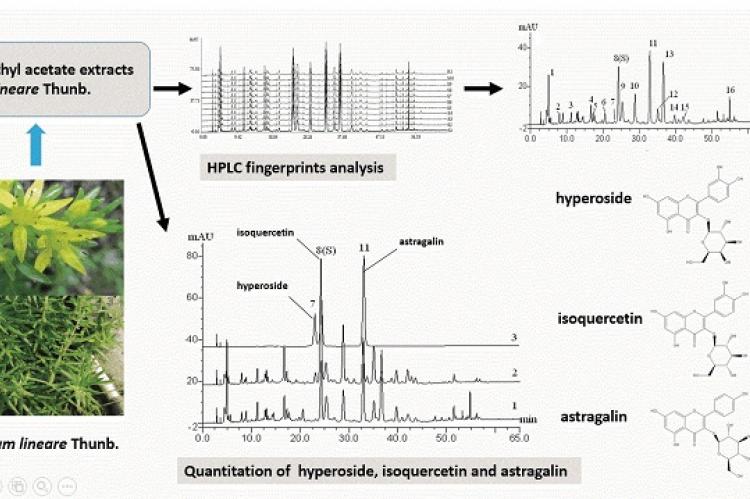
HPLC, UV/UV-Vis, GC, gravimetric and other procedures can measure different analytes or groups, so products with the same percentage claim are not automatically equivalent if their analytical definitions differ. For complex extracts, chromatographic fingerprinting also captures a broader profile than any single marker assay.
Extract Ratio, Native Extract and Standardization Are Different
A plant-to-extract ratio relates starting material to resulting extract on a defined basis and says nothing by itself about marker concentration, finished-powder composition or equivalence. The native extract is the extracted material before inert carriers or excipients; if 10 kg of botanical yields 2 kg native extract the ratio is 5:1, and adding 0.5 kg excipient makes 2.5 kg finished powder with a different plant-to-finished-extract ratio. Technical literature on plant-to-extract ratios in botanical extracts stresses this and notes that solvent, excipients, markers and fingerprinting may all be needed to describe an extract. A standardized extract, by contrast, is controlled to a defined level of specified constituents. A “5:1 extract” and a “25% standardized marker” describe different properties, and neither is automatically stronger; see Botanical Extract Ratios Explained. Where a project starts from a botanical name rather than a full specification, our Ingredient Sourcing service establishes identity, plant part, target grade, documentation and availability before grade comparison and sampling.
Choosing a Method for Your Extract
No extraction method should be evaluated in isolation. A useful assessment links the target constituent profile to solvent choice, process conditions, downstream treatment, analytical definition, reproducibility and application. The aim is an ingredient that can be clearly specified, analytically evaluated, formulated as intended and reproduced consistently — maximum yield and the newest technology matter only insofar as they serve that. For an overview of extract types, see Botanical Extracts Explained.
Discuss Your Extract Specification
Browse our Botanical Extracts, Standardized Extracts and Botanical Polysaccharides, then contact Essencefield Botanicals to request a specification, solvent-system information, representative COA or sample.