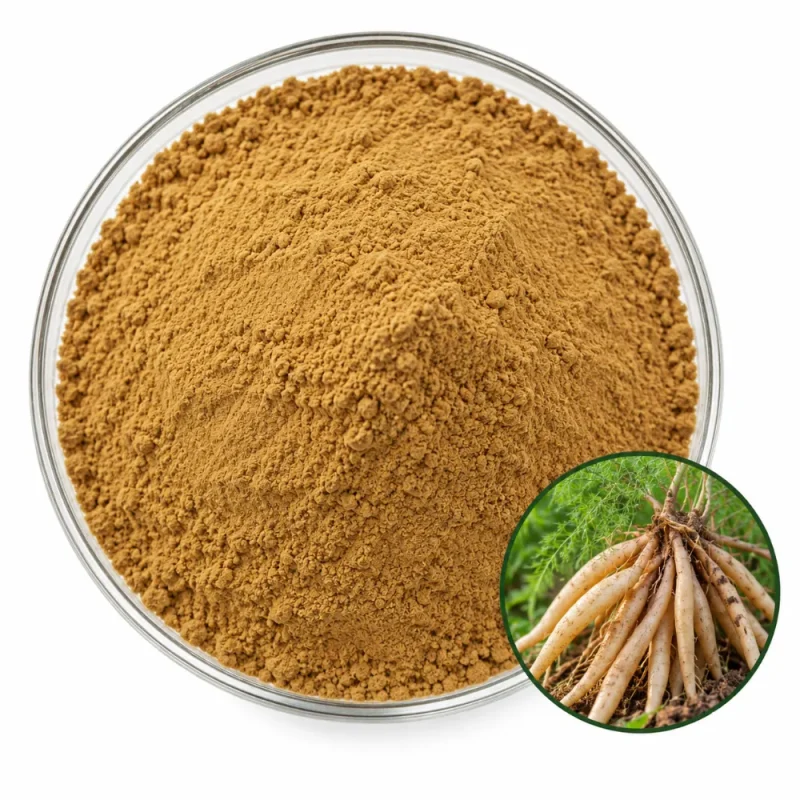
Shatavari Root Extract Powder

Shatavari root extract starts from the tuberous roots of Asparagus racemosus, a climbing relative of garden asparagus. Water extraction concentrates the soluble root fraction, and the liquor is dried to a light brown 10:1 powder. Shoots, berries and the needle-like cladodes are left out of this shatavari extract.

The 10:1 ratio carries no saponin percentage. The powder is light brown, ground to 80 mesh and water dispersible. A saponin-graded shatavari extract and the plain root powder are separate products, and the vegetable asparagus, Asparagus officinalis, is a different plant.

Asparagus racemosus Identity & Plant Part

The botanical entity is Asparagus racemosus Willd., a spiny climbing perennial of the asparagus family, Asparagaceae. The part used is the cluster of fleshy tuberous roots, which are dug, cleaned and dried before extraction. Shoots, berries and cladodes are not part of this shatavari root extract.

The common name shatavari is applied to more than one asparagus species in trade, so a specification that gives only the common name does not fix the species. The roots hold steroidal saponins known as shatavarins, together with mucilaginous polysaccharides that make the water extract slippery. Each plant bears many such roots in a cluster, which is why the dried material is sold as pieces or slices before milling, and why root identity is fixed at the raw-material stage rather than corrected afterwards.

Shatavari Extract vs Powder & Standardized Grades

FormWhat It IsChoose It When
10:1 Shatavari Root ExtractWater-extracted, concentrated and dried A. racemosus rootA dispersible root extract without a marker is wanted
Shatavari Extract 20–60% Total SaponinsExtract with a defined total saponin rangeThe specification names a saponin figure
Shatavari Root PowderDried, milled whole rootRoot fiber and whole-root bulk are wanted

On a shatavari label the 10:1 is a concentration ratio of the starting root. It does not state saponin content, and the mucilage that comes through water extraction is part of what separates this powder from a saponin-enriched grade.

When saponins have to be declared, the graded shatavari extract is the product to use. The ratio extract suits blends that want root identity in a low-fiber, water-dispersible form, while the milled root brings fiber for formats where bulk is acceptable.

Typical Specifications

Specification ItemProduct Information
Latin NameAsparagus racemosus
Plant PartRoot & Rhizome
ProcessingWater Extraction
Common NameShatavari, Wild Asparagus
Ingredient TypeRatio Extract
Extract Ratio10:1
AppearanceLight Brown powder
Solubility / DispersibilityWater Dispersible
Quality Parameters
Moisture (LOD)≤5.0%
Total Ash≤5.0%
Particle Size80 mesh
Heavy MetalsLead ≤2 ppm · Arsenic ≤1 ppm · Cadmium ≤1 ppm · Mercury ≤0.1 ppm
MicrobiologyTPC ≤1,000 cfu/g · Yeast & Mold ≤100 cfu/g · E. coli Negative · Salmonella Negative/25 g
Shelf Life24 months in unopened original packaging, cool and dry storage

Application Areas

Stirred Drink Powders

Shatavari root extract is mixed into drink powders that are stirred into warm or cold liquid. Saponins make the drink foam when shaken, and the mucilage thickens it slightly, so flavored bases are tested for mouthfeel before the dose is set. A defoamer or a slower mixing step is used in bottled ready-to-shake formats where foam would be a complaint.

Capsule Blends for Root Extracts

Capsule fills use the extract in blends with other root extracts. The mucilage makes the powder pick up moisture and cling to hoppers, so flow aids are usually added and the filling room is kept dry. Because the root extract is bulky and light, fill weight per capsule is checked on a trial batch before the size is chosen.

Sachet and Stick Packs

Single-serve sachets pair the extract with sweetener and a light carrier. The light brown color and mild root taste fit milk-style and spiced drink flavors better than clear fruit drinks. A sachet liner with a moisture barrier matters here because the mucilage-rich powder softens in humid storage.

Soft Chew Premixes

Chew premixes take shatavari extract after cooking, once the base has cooled. The mucilage adds body to the chew, and a lightly tinted brown base hides its color. The extract is dosed as a fine powder into the cooled mass so that the mucilage does not thicken the syrup while it is still being deposited into molds.

Formulation Notes

The powder is light brown with a faint earthy aroma and a mildly sweet, slightly bitter taste. In water it disperses to a pale brown, lightly foaming liquid. The foam comes from saponins, so high-shear mixing and bottle shaking generate more froth than gentle stirring does. Foam collapses within minutes in a plain water base but lasts longer once protein or gum is present, which matters for blends that also carry milk powder.

Disperse the powder into a small part of the dry base before the main mix to avoid sticky lumps. The mucilage and soluble solids make the powder hygroscopic, so it softens and clumps when left exposed. After opening, press out the air, close the liner tightly and keep the drum away from damp areas.

Packaging & Commercial Supply

Essencefield supports product evaluation, formulation trials, commercial orders, and ongoing ingredient supply. Packaging, storage, and shipping arrangements are determined by product characteristics, order quantity, stability requirements, and destination-market needs.

Supply ItemGeneral Information
SampleAvailable upon request for formulation, testing, and supplier evaluation
Order Quantities100 g · 1 kg · 5 kg · 25 kg · 100 kg · 500 kg · Bulk
Sample Lead TimeTypically 5–7 days after sample confirmation
Production Lead TimeTypically 15–30 days after order and specification confirmation
PackagingSuitable protective inner packaging with bags, cartons, drums, or other appropriate outer packaging
StorageStore in tightly sealed, suitable protective packaging in a cool, dry environment. Protect from moisture, heat, and direct sunlight. Specific storage conditions follow the approved product specification.
DocumentationCOA · Product Specification · TDS · SDS · Applicable declarations (as applicable)

Final order quantities, lead times, packaging, documentation, and shipping arrangements are confirmed according to the selected product and commercial requirements.

Request Ingredient Specifications & Quote

Share your target specification, application, quantity, and documentation needs. We’ll help confirm suitable options, samples, and commercial supply details.