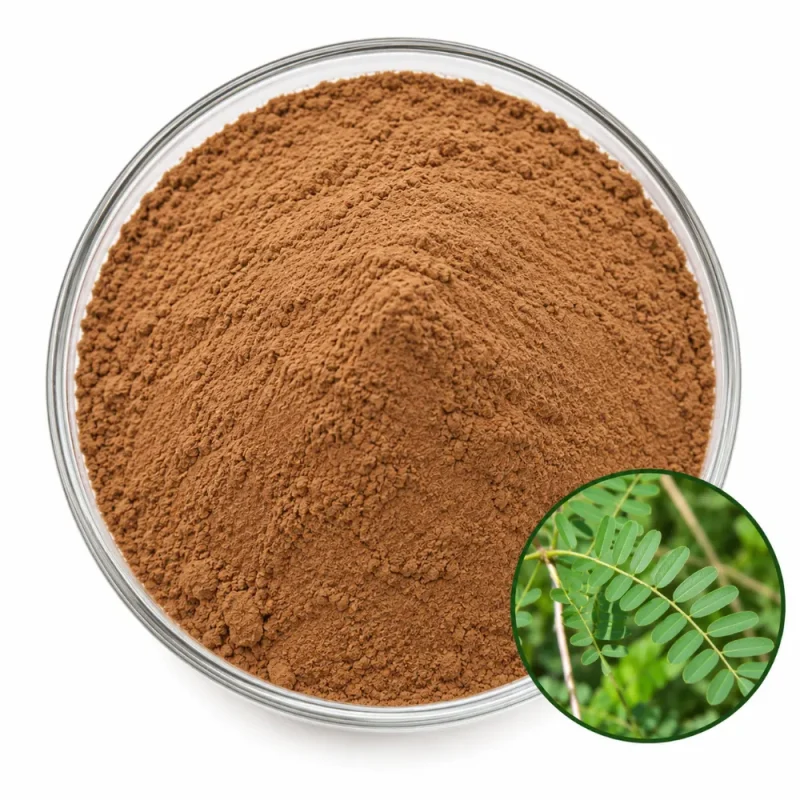
Abrus Cantoniensis Extract Powder

Abrus cantoniensis extract powder comes from the whole plant of a small Chinese legume, not from the seeds of the better-known rosary pea. The plant is extracted with water, concentrated and dried to a light brown powder with a mild herbal character.

The product is a 10:1 ratio extract with no marker percentage attached. It is water dispersible and milled to 80 mesh. The data for this botanical lists no powdered or standardized sibling, so the ratio extract is the only form described, and the species name carries the identity.

Abrus cantoniensis Identity & Plant Part

The botanical entity is Abrus cantoniensis Hance, family Fabaceae, known in Chinese herbal trade as ji gu cao. The part used in this Abrus cantoniensis extract is the whole plant as recorded in the master data, meaning stems and leaves together; roots are not a separate part here.

Identity matters because the genus carries a recognized risk. The seeds of the related Abrus precatorius, the rosary pea, contain the toxic protein abrin, and the two species share a genus name and a similar leaf form. A buyer comparing sources should look for the species name cantoniensis and not rely on the genus alone. Current databases treat this name as a synonym of Abrus melanospermus, but trade still uses A. cantoniensis. Because Abrus cantoniensis is rarely seen outside herbal trade, a buyer is unlikely to meet competing offers that state a plant part, and the whole plant as recorded here is the only part named for the ingredient.

What 10:1 Means for Abrus cantoniensis

A 10:1 ratio tells a buyer how concentrated the powder is relative to the starting plant and nothing else. For Abrus cantoniensis no standardized grade, powder or isolated compound is listed among the siblings, so there is no marker-based alternative to compare against, and the ratio extract is the single profile described.

Choose it when species identity and a whole-plant water extract are the requirement. Because the genus has a toxic member, the species name on the specification is the first item a buyer checks, and the botanical entity is stated in full in the table below. Formulation decisions for Abrus cantoniensis should rest on identity and on the physical behavior described here, since the ratio says nothing about chemistry.

Typical Specifications

Specification ItemProduct Information
Latin NameAbrus cantoniensis
Plant PartWhole Plant
ProcessingWater Extraction
Common NameJi Gu Cao
Ingredient TypeRatio Extract
Extract Ratio10:1
AppearanceLight Brown powder
Solubility / DispersibilityWater Dispersible
Quality Parameters
Moisture (LOD)≤5.0%
Total Ash≤5.0%
Particle Size80 mesh
Heavy MetalsLead ≤2 ppm · Arsenic ≤1 ppm · Cadmium ≤1 ppm · Mercury ≤0.1 ppm
MicrobiologyTPC ≤1,000 cfu/g · Yeast & Mold ≤100 cfu/g · E. coli Negative · Salmonella Negative/25 g
Shelf Life24 months in unopened original packaging, cool and dry storage

Application Areas

Light-Colored Capsules

The light brown powder is easily hidden by standard capsule shells. Run a flow check on the lot before filling, because fine herbal extracts can bridge in the hopper, and weigh capsules at set intervals to catch variation during the run.

Herbal-Style Drink Powders

In drink powders the extract gives a pale brown, herbal-style liquid with a mild grassy note. It blends easily with honey, citrus and chrysanthemum flavors. Taste a plain-water sample first, since mild plant extracts can taste flat on their own.

Tea-Style Sachets

Powder sachets let buyers present Abrus cantoniensis extract in a tea-style format without brewing. Premix the extract with a carrier sugar or filler and screen it to keep the sachet uniform, and compare the first and last sachets of each run.

Tablets for Legume-Family Extracts

Tablets use a dry binder and a disintegrant around the extract. Check hardness and disintegration on finished tablets, since herbal extracts can soften with moisture picked up before compression. Bind gently, since fibrous whole-plant powders can laminate under high compression force.

Formulation Notes

The extract is a light brown powder with a faint herbal, grassy aroma and a mildly sweet-bitter taste. In water the powder gives a light brown liquid with slight haze. Judge clarity after the liquid has stood, because plant material of this kind can leave slight haze.

Reseal the container after each use, since the powder draws moisture from room air. Start with a premix: mix it into a share of the filler and screen the premix. An opened lot should be compared with a retained sample before it is used in a pale product, because brown shades deepen with air and moisture.

Packaging & Commercial Supply

Essencefield supports product evaluation, formulation trials, commercial orders, and ongoing ingredient supply. Packaging, storage, and shipping arrangements are determined by product characteristics, order quantity, stability requirements, and destination-market needs.

Supply ItemGeneral Information
SampleAvailable upon request for formulation, testing, and supplier evaluation
Order Quantities100 g · 1 kg · 5 kg · 25 kg · 100 kg · 500 kg · Bulk
Sample Lead TimeTypically 5–7 days after sample confirmation
Production Lead TimeTypically 15–30 days after order and specification confirmation
PackagingSuitable protective inner packaging with bags, cartons, drums, or other appropriate outer packaging
StorageStore in tightly sealed, suitable protective packaging in a cool, dry environment. Protect from moisture, heat, and direct sunlight. Specific storage conditions follow the approved product specification.
DocumentationCOA · Product Specification · TDS · SDS · Applicable declarations (as applicable)

Final order quantities, lead times, packaging, documentation, and shipping arrangements are confirmed according to the selected product and commercial requirements.

Request Ingredient Specifications & Quote

Share your target specification, application, quantity, and documentation needs. We’ll help confirm suitable options, samples, and commercial supply details.