Two botanical extracts can both be labeled “standardized to 5%” and still be different commercial ingredients. They may use different plant parts, define the marker differently, rely on different assay methods, contain different carrier levels or report results on different calculation bases, so an identical percentage can hide a different specification. For buyers, formulators and QA teams, standardization is about more than reaching a marker percentage: it means defining what is measured, how it is measured, what the ingredient must meet, and whether that profile can be reproduced across commercial batches. The American Herbal Products Association’s White Paper on Standardization of Botanical Products likewise treats standardization as a system of raw-material, manufacturing and analytical controls rather than control of one constituent.
Quick Answer: What Is Botanical Extract Standardization?
Botanical extract standardization is the controlled production and testing of an extract so that successive batches meet defined identity, chemical and quality specifications. A marker percentage means something only when the marker definition, assay method, reporting basis, specification and actual lot result are known.
| Term | What It Tells You |
|---|---|
| Marker | Which constituent or group of constituents is being monitored |
| Assay | How much of the defined analyte is measured |
| Specification | The acceptance requirement for the commercial material |
| Batch result | What was actually measured in a specific lot |
For a full introduction, see What Is a Standardized Botanical Extract? This article focuses on comparing standardized grades and keeping them consistent from lot to lot.
What Does Botanical Extract Standardization Mean?
A standardized extract is produced to meet one or more defined chemical or quality criteria. Commercial examples include Turmeric Extract (95% curcuminoids), Ashwagandha Extract (5% withanolides), Green Coffee Bean Extract (50% chlorogenic acids), Ginseng Extract (20% ginsenosides) and Bilberry Extract (25% anthocyanins). These descriptions are useful, but the percentage does not fully define the ingredient; a complete specification may also give species, plant part, analytical method, carrier, extraction solvent, reporting basis and physical properties. That is why standardization is better seen as a specification system than a concentration claim. Our Standardized Extracts are organized by botanical source, marker identity, assay level and analytical method.
Standardization Is Not the Same as Extract Ratio
A 10:1 extract expresses a relationship between starting material and extract under a manufacturing convention; a 5% standardized extract controls a specified constituent or group to a defined level. Neither substitutes for the other: a 10:1 extract is not automatically higher in a marker than a 5:1 extract, and a higher marker level does not automatically make an ingredient more suitable. The right grade depends on formulation, target specification, use and technical requirements — see Botanical Extract Ratios Explained.
When Are Two Standardized Botanical Extracts Actually Comparable?
Matching the headline percentage is not enough; the defining characteristics must be aligned.
| Comparison Factor | Why It Matters |
|---|---|
| Botanical species | Related species may have different phytochemical profiles |
| Plant part | Root, leaf, fruit, seed, and bark can contain different constituent patterns |
| Marker definition | One compound is not equivalent to a broad chemical class |
| Assay method | Different methods may measure different analytical populations |
| Reference system | Quantitative results depend on how the assay is calibrated |
| Reporting basis | Dry-basis and as-is results may differ |
| Carrier/excipient | Finished powder composition may differ even if the assay matches |
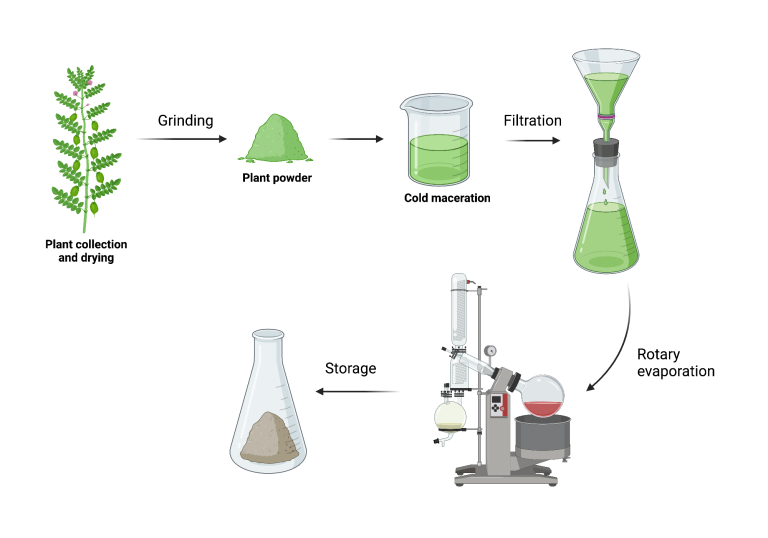
| Extraction system | Solvent and processing conditions influence the extract profile |
| Identity/profile data | One marker does not characterize the complete extract |
As a practical rule, do not treat two extracts as technically equivalent until identity, marker definition, assay method, reporting basis and commercial composition are sufficiently aligned. This matters most when qualifying a second source, replacing a material or transferring a formula, and it is what our Specification & Grade Matching service compares across plant part, extract type, assay, method, carrier, particle size and other attributes.
What Is a Marker Compound?
A marker compound is a chemically defined constituent or group used to identify, characterize, quantify or control a botanical material. It is not automatically responsible for the activity of the whole extract. The European Medicines Agency’s guideline on quality of herbal medicinal products distinguishes active markers, which have a recognized relationship to the activity of the preparation, from analytical markers chosen because they are characteristic, stable, measurable or useful for control. “Marker compound: 5.0%” therefore means 5.0% of a defined chemistry was measured — not that 5.0% of the ingredient’s biological activity was. See Active Compounds vs Marker Compounds.
Individual Markers vs Compound Groups
Assays can target very different things: curcumin is one molecule, total curcuminoids a defined group; chlorogenic acid may be one specified analyte, total polyphenols a broad class. Total flavonoids, saponins and anthocyanins likewise should not be read as equivalent to chromatographic quantification of individual compounds.
Negative Markers and Undesirable Constituents
Quality control does not always maximize a desired compound. Some systems also limit undesirable or potentially harmful constituents, and the WHO guidelines for selecting marker substances of herbal origin recognize markers tied to toxic constituents as one category. Such specifications use an NMT (not more than) limit rather than an NLT minimum.
Why One Marker Does Not Define the Whole Extract
Extracts contain many constituents beyond the marker, so two can meet the same marker specification with different overall profiles. For some botanicals, quality control may reasonably use several quantitative markers or combine assays with chromatographic fingerprinting.
What Does an Assay Percentage Actually Mean?
“Total Withanolides: NLT 5.0% by HPLC” says far more than “Ashwagandha Extract 5%”: it names the analyte group, the minimum acceptance level and the technique.
NLT, NMT, and Defined Ranges
NLT (not less than) sets a minimum — total withanolides NLT 5.0% must be met or exceeded. NMT (not more than) sets an upper limit. A defined range such as total polyphenols 20.0–25.0% sets both. An NLT 5.0% specification does not mean every lot contains exactly 5.00%; lots at 5.22%, 5.38% and 5.51% could all comply.
Specification vs Actual Batch Result
| Parameter | Example |
|---|---|
| Specification | NLT 5.0% |
| Actual result | 5.38% |
| Method | HPLC |
| Assessment | Pass |
The specification defines what the ingredient must meet; the actual result describes the tested lot. The distinction matters when one supplier quotes a nominal grade and another provides a specific COA result.
Dry Basis vs As-Is Basis
An as-is result reflects the material in its current state; a dry-basis result corrects for moisture or another defined volatile. An extract assaying 19.0% as-is with 5% moisture is about 20.0% on a dry basis — the material has not changed, only the reporting basis. Do not compare supplier values until the basis is known.
“Expressed As” Results
Some methods report a broad class as equivalents of one reference compound. “Total flavonoids expressed as rutin equivalents” is a different analytical statement from individually quantifying rutin, quercetin and other flavonoids by HPLC, so a percentage must always be read with its analytical definition.
Native Extract vs Finished Commercial Powder
The commercial powder may not be all native extract solids; a carrier or excipient may be used for processing, stability, standardization or handling. Two products can meet the same marker specification with different carriers or proportions of native extract, and since terminology varies, native extract content and excipient composition should be confirmed from the specification.
How Should Botanical Extract Assays Be Compared?
No single technique is best for every extract; the right one depends on the chemistry and purpose. HPLC and UPLC separate constituents before quantification and suit defined nonvolatile compounds such as curcuminoids, ginsenosides, chlorogenic acids, anthocyanins, alkaloids and selected flavonoids — but what matters is what the method separates, which analytes it quantifies and how results are calculated. UV-Vis measures absorbance and can suit some class-level assays, but its selectivity differs from chromatography, so 50% by UV is not automatically 50% by HPLC. GC and GC-MS suit volatile constituents, and TLC and HPTLC help confirm the expected chemical pattern for identity; USP <563> Identification of Articles of Botanical Origin describes comparison against the known species and appropriate references. Our Quality & Testing approach matches the procedure to botanical, matrix, analyte and specification. For a fuller comparison, see Botanical Extract Assay Methods.
Why Two Assay Results May Differ
Apparently similar assays can give different numbers because of analyte definition (one molecule vs a group), selectivity (a spectrophotometric method may respond to several compounds), reference standards (direct quantification vs equivalents), sample preparation (solvent, dilution, filtration, time) and calculation basis (dry vs as-is). The practical rule: do not compare percentages until you know how both were generated.
Why Reference Standards Matter
Instruments do not produce meaningful assays without an appropriate calibration or reference system. Ask which reference compound is used, what assigned purity or potency is applied, whether analytes are quantified individually or as equivalents, and whether the same procedure is used across lots. Depending on the test and use, method performance may also need to cover specificity, accuracy, precision, linearity, range and robustness. “HPLC tested” is not a complete specification.
Marker Assay vs Chromatographic Fingerprint
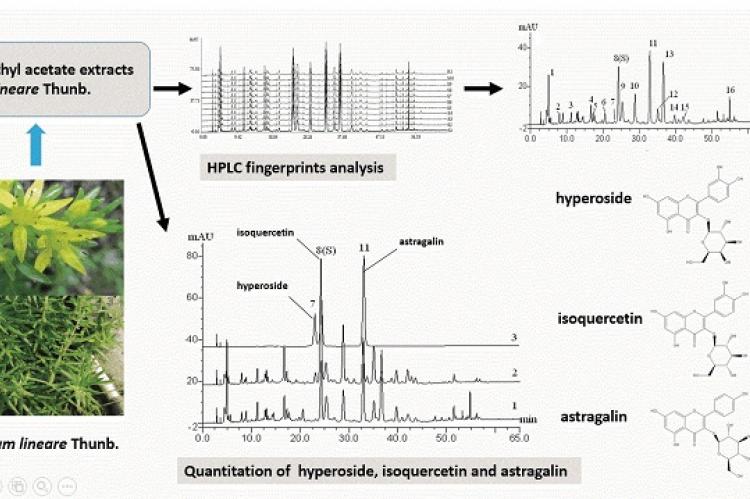
A marker assay asks how much of the selected analyte is present; a fingerprint asks whether the broader chemical pattern is still characteristic of the expected botanical. Fingerprinting can reveal characteristic peaks or zones, missing components or unexpected changes that one assay cannot show, but it does not replace quantitative testing — the two are complementary, and neither is evidence of clinical efficacy. See HPLC Fingerprinting for Botanical Extract Authentication.
What Does Batch-to-Batch Consistency Mean?
Botanicals vary naturally with species, cultivar, plant part, origin, harvest maturity, storage, drying, extraction, concentration and other processing variables. Standardization does not make lots chemically identical; the goal is to keep meaningful quality characteristics within an established, reproducible profile.
Consistency Does Not Mean Identical Numbers
| Lot (hypothetical) | Specification | Assay Result | Assessment |
|---|---|---|---|
| A2601 | NLT 5.0% | 5.31% | Pass |
| A2602 | NLT 5.0% | 5.22% | Pass |
| A2603 | NLT 5.0% | 5.36% | Pass |
Slightly different values can still mean good consistency. Small differences reflect both material and analytical variation — sampling, preparation, method precision, calibration and rounding — so a decimal shift should be read against historical data and manufacturing information rather than assumed to be process drift.
Specification vs Historical Trend
A lot can pass and still deserve review. Results moving from 7.1% to 6.8% to 5.05% all clear an NLT 5.0% requirement but trend clearly downward. This is the difference between OOS (out of specification), where a result fails the acceptance criterion, and OOT (out of trend), where a passing result behaves unusually against history. A passing COA shows the tested lot met its specification; it does not by itself demonstrate long-term process consistency.
How Is Batch Consistency Controlled?
Repeatability starts before the final assay. Raw-material qualification covers identity, plant part, source, moisture and physical characteristics; manufacturing controls cover solvent, temperature, time, concentration, blending, drying and carrier addition; and finished material is checked against the agreed release specification. Our Processing & Standardization service connects raw-material variability, extraction conditions, standardization and analytical verification. For U.S. dietary supplements, FDA’s CGMP Compliance Guide requires specifications for identity, purity, strength, composition and applicable contaminant limits, with appropriate testing or examination. Standardization is a controlled production-and-verification system rather than a final lab number.
Does Standardization Need to Hold Through Shelf Life?
Batch release asks whether the ingredient meets its specification now; stability asks whether the defined profile stays controlled during storage. Some constituents change with moisture, oxygen, light, temperature or chemical instability, so release assay and stability data are different evidence. EMA quality guidance distinguishes release specifications from retest or shelf-life controls and addresses marker stability; it applies to herbal medicinal products, not every botanical ingredient or U.S. supplement, but the distinction is useful. Where stability matters, buyers may consider the stated shelf life or retest period, storage conditions, packaging, marker stability and whether fingerprint or physical changes are also monitored. Release testing shows a batch starts within specification; stability data show whether it stays there.
Chemical Equivalence Does Not Guarantee Formulation Equivalence
Analytically similar extracts can behave differently in a finished product. Particle size, bulk density, moisture, carrier, flow, solubility and dispersibility affect formulation and processing — a capsule maker may care most about flow and density, a beverage formulator about dispersibility, sedimentation, color or solubility. These properties do not redefine the assay, but they decide whether a chemically acceptable extract suits the dosage form. Chemical equivalence may be necessary for a supplier substitution; it is not sufficient for formulation equivalence.
How Should Buyers Compare Standardized Botanical Extracts?
Establish technical equivalence before comparing price per kilogram. Use the blank table below as a checklist for each candidate supplier:
| Parameter (checklist template) | Supplier A | Supplier B |
|---|---|---|
| Botanical species | ||
| Plant part | ||
| Marker definition | ||
| Specification | ||
| Actual lot result | ||
| Analytical method | ||
| Reporting basis | ||
| Reference/calibration system | ||
| Carrier or excipient | ||
| Extraction solvent | ||
| Identity/fingerprint method | ||
| Representative multi-lot data | ||
| Relevant physical properties |
If critical parameters do not align, the materials may be different grades rather than interchangeable sources.
Illustrative Example: Two “5%” Ashwagandha Extracts
This example is illustrative and does not compare actual suppliers.
| Parameter | Supplier A | Supplier B |
|---|---|---|
| Botanical | Withania somnifera | Withania somnifera |
| Plant part | Root | Root + leaf |
| Marker | Total withanolides | Withanolides |
| Specification | NLT 5.0% | 5% |
| Method | HPLC | UV |
| Current result | 5.42% | Not stated |
| Carrier | 5% maltodextrin | Not stated |
| Extraction solvent | Hydroethanolic | Not stated |
| Identity | HPTLC | Not stated |
Both might appear in a short catalog as “Ashwagandha Extract 5%,” but the plant part differs, the assay method differs, the marker definition may differ, and only one supplier gives an actual lot result. Resolve the specification differences before comparing commercial terms.
Why Buyers Should Review More Than One Lot
One COA is a snapshot; several representative lots show repeatability. Take a hypothetical turmeric extract specified at total curcuminoids NLT 95.0% by HPLC:
| Lot (hypothetical) | Curcuminoids | Moisture | Method | Observation |
|---|---|---|---|---|
| T2601 | 96.2% | 1.8% | HPLC | Baseline |
| T2602 | 96.5% | 1.7% | HPLC | Normal |
| T2603 | 96.1% | 1.9% | HPLC | Normal |
| T2604 | 95.1% | 3.2% | HPLC | Review trend |
All four pass, but the fourth moves closer to the limit as moisture rises. That does not prove a manufacturing problem; it is a reason to read the result against historical performance and process information. Multi-lot review is especially useful when qualifying a second source, transferring a formula, changing origin or site, or buying tightly standardized ingredients. When source, process, carrier, specification or method changes, the link between lots and commercial batches matters too, as our Sourcing & Traceability page outlines.
A Practical Framework for Evaluating Standardized Extracts
| Layer | Buyer Question |
|---|---|
| 1. Identity | Is this the correct species and plant part? |
| 2. Marker | What exactly is being standardized or controlled? |
| 3. Method | How was the result measured and calibrated? |
| 4. Specification | What acceptance criteria must the material meet? |
| 5. Lot Evidence | What did the current batch actually test at? |
| 6. Stability | Is the defined profile expected to remain controlled during storage? |
| 7. Application Fit | Will the commercial grade behave appropriately in the intended formulation? |
The framework guards against a common sourcing error — treating one marker percentage as a complete product definition — by tying analytical chemistry to the actual ingredient and its application.
Frequently Asked Questions
Is a standardized botanical extract always better?
No. Standardization can provide tighter control of selected chemical characteristics and make commercial specifications easier to reproduce, but it does not automatically make an extract superior. A botanical powder, ratio extract, standardized extract, enriched fraction or purified phytochemical may each be appropriate for different applications; the correct choice depends on the formulation and target specification.
Does a 5% standardized extract contain exactly 5.00% in every batch?
Not necessarily. If the specification is NLT 5.0%, lots testing at 5.22%, 5.38% or 5.51% may all comply. Batch consistency means maintaining the defined quality profile, not producing mathematically identical numbers.
Can two extracts with the same marker percentage still be different?
Yes. They may differ in species, plant part, marker definition, assay method, reference standard, extraction system, carrier content, reporting basis, broader chemical profile or physical behavior. The marker percentage is one specification attribute, not a complete description of the ingredient.
Does a standardized extract stay at the same assay throughout shelf life?
Not necessarily. Botanical constituents can change during storage, so release assay and stability answer different quality questions. Storage conditions, packaging, shelf-life or retest information and stability data help determine whether the intended profile remains controlled over time.
What documents should buyers request before approving a standardized extract?
Requirements vary with the material, market and application, but useful records commonly include an approved specification, lot-specific COA, botanical identity information, assay method information, carrier or excipient details and supporting technical records. The specification is what the ingredient must meet; the COA is how the tested batch performed against it. Our Compliance & Documentation page explains how these documents are used.
Standardization Is a System, Not Just a Percentage
A standardized extract cannot be judged reliably from its headline assay. A sound decision connects identity, marker, method, specification, lot evidence, stability and application fit — asking what was measured, how, against which specification, whether the profile can be reproduced across lots, and whether the grade suits the formulation. Answered clearly, those questions make standardization a practical tool for quality control, supplier comparison and formulation.
Request Specifications, Multi-Lot COAs or Samples
Browse our Standardized Extracts, then contact Essencefield Botanicals with your botanical, marker, method and reporting-basis requirements to request a specification, representative COA or sample.