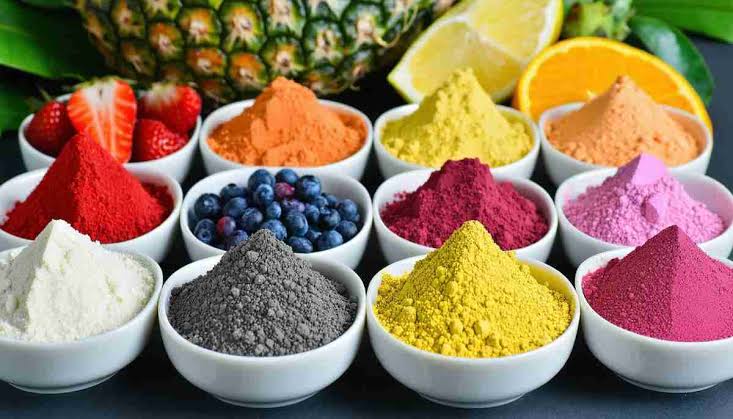
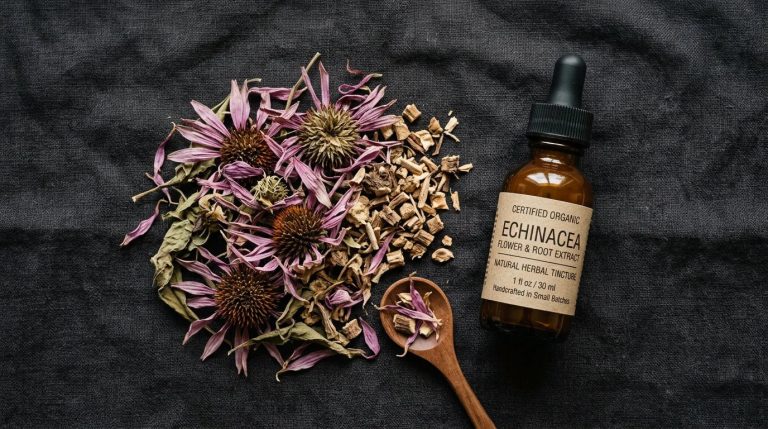
Phytochemicals are naturally occurring compounds produced by plants, spanning chemically diverse groups such as polyphenols, alkaloids, terpenoids, carotenoids, saponins, phytosterols and sulfur-containing compounds. Their composition is not fixed: species, plant part, cultivar, growing environment, harvest timing, post-harvest handling and extraction all shape the profile of a plant-derived ingredient.
In botanical extracts these differences matter because processing and standardization can concentrate some constituents while reducing others. Understanding phytochemicals therefore takes more than a compound name — botanical source, chemical class, ingredient form, analytical method and intended application all affect how an ingredient should be evaluated. This guide covers the major classes, their plant sources, how plant material becomes an extract, and how phytochemical specifications are read in commercial ingredients.
What Are Phytochemicals?
Phytochemicals are chemical constituents naturally present in or derived from plants; in botanical and nutrition science the term mainly refers to secondary metabolites and other characteristic plant compounds. Plants make them through pathways involved in chemical defense, pigmentation, aroma, signaling, reproduction and adaptation to stress.
A peer-reviewed review of plant-derived component terminology treats phytochemical as a term based on plant origin rather than one implying biological efficacy, and discusses related terms such as phytonutrient, bioactive and polyphenol. Unlike vitamins and essential minerals, phytochemicals are generally not classed as essential nutrients, though many are studied intensively — identifying a constituent and demonstrating a physiological effect remain separate scientific questions.
Phytochemicals vs Phytonutrients
The two terms are often used interchangeably in consumer nutrition but are not exact synonyms. Phytochemical describes a compound mainly by its plant origin, while phytonutrient tends to be used for plant compounds discussed in terms of dietary or physiological relevance. For specifications, testing, standardization and quality control, phytochemical is generally the more precise term.
Why Are Phytochemicals Important?
Within plants, secondary metabolites contribute to defense, pigmentation, signaling, reproduction and adaptation to environmental and biological stress. In ingredient science they provide targets for botanical characterization, extract standardization, chemical fingerprinting, compound-specific assays and batch-consistency monitoring.
Phytochemicals are also investigated in relation to cellular signaling, redox processes, enzyme activity, inflammatory and metabolic pathways and gut-microbiome interactions. The presence of a phytochemical does not by itself establish efficacy: chemical identity, concentration, dose, bioavailability, metabolism and clinical evidence answer different questions, and the concentration measured in an ingredient is not the amount absorbed or reaching tissues. Identity and composition should be established before drawing any conclusions about function.
How Are Phytochemicals Classified?
There is no single universal classification. Compounds may be grouped by structure, biosynthetic pathway or biological role; for ingredients, structure-based grouping is most useful because chemical families differ in solubility, extraction behavior, stability and analytical requirements. Common major groups are polyphenols, alkaloids, terpenes and terpenoids, carotenoids, saponins, glucosinolates, organosulfur compounds and phytosterols, while other systems separately list coumarins, quinones, acetylenes or phytoestrogens. The categories below are a practical overview rather than a definitive taxonomy.
Major Classes of Phytochemicals
| Phytochemical Class | Key Subclasses or Examples | Representative Botanical Sources |
|---|---|---|
| Polyphenols | Flavonoids, phenolic acids, tannins, stilbenes, lignans | Tea, grape, berries, citrus |
| Alkaloids | Caffeine, berberine, piperine | Coffee, tea, Berberis, black pepper |
| Terpenes & Terpenoids | Monoterpenes, sesquiterpenes, diterpenes, triterpenes | Citrus, aromatic herbs, Panax, Centella |
| Carotenoids | Lycopene, lutein, beta-carotene, zeaxanthin | Tomato, carrot, marigold |
| Saponins | Ginsenosides, gypenosides, saikosaponins | Panax, Gynostemma, Bupleurum |
| Glucosinolates | Glucoraphanin and related compounds | Broccoli and other cruciferous plants |
| Organosulfur Compounds | Allium-derived sulfur constituents | Garlic, onion |
| Phytosterols | Beta-sitosterol, campesterol, stigmasterol | Seeds, oils and other plant materials |
Polyphenols
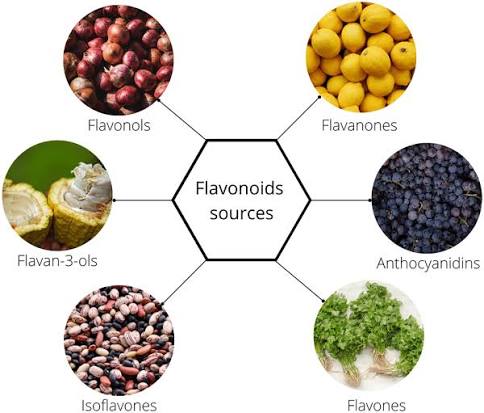
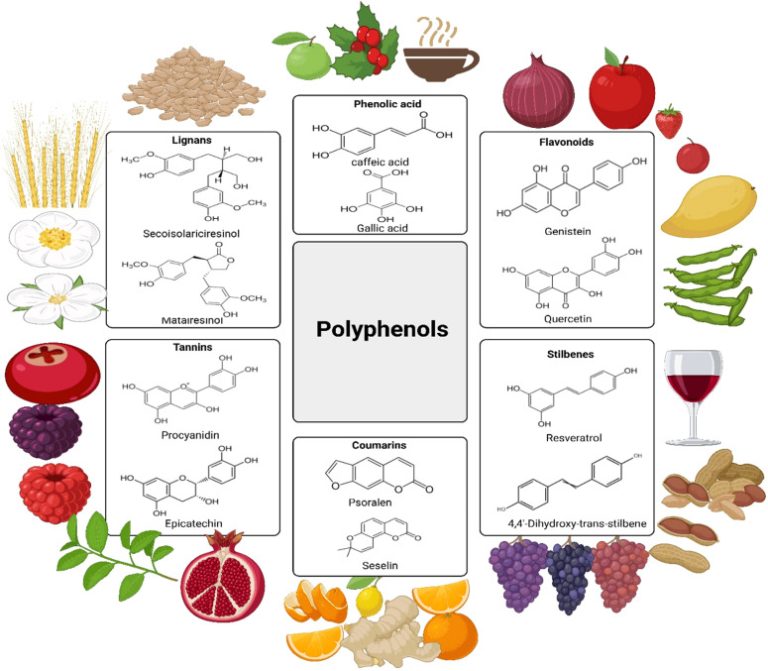
Polyphenols comprise flavonoids, phenolic acids, tannins, stilbenes and lignans. Flavonoids divide further into flavonols, flavones, flavanones, flavan-3-ols, isoflavones and anthocyanins. Representative compounds include quercetin, catechin, epicatechin, EGCG, anthocyanins, chlorogenic acid, ferulic acid, resveratrol and proanthocyanidins — for example Quercetin 98%, trans-Resveratrol 99% or Grape Seed Extract 95% OPC.
This hierarchy matters for specifications: total polyphenols and total flavonoids are not interchangeable measurements. An extract at 50% total polyphenols can differ greatly from one at 50% flavonoids even from similar plant material, and the figure means something only when the analyte definition and method are known. The peer-reviewed review Chemistry and Biochemistry of Dietary Polyphenols gives a detailed overview of polyphenol classes and subclasses.
Alkaloids
Alkaloids are a chemically diverse group of nitrogen-containing compounds, including caffeine, berberine, piperine and nuciferine. “Total alkaloids ≥10%” and “a specific alkaloid ≥98%” are very different specifications — the first is generally a group measurement, the second the concentration of one analyte — so source, compound identity, assay level and method must be read together.
Terpenes and Terpenoids
Terpenes and terpenoids form a large family derived from isoprene-related pathways, grouped into monoterpenes, sesquiterpenes, diterpenes and triterpenes. Limonene is a familiar citrus monoterpene, while triterpenoids occur in Centella asiatica and Panax species. Because the family is so broad, “terpenoids” alone rarely defines a useful specification; the relevant compound or group needs naming.
Carotenoids
Carotenoids include pigments such as beta-carotene, lycopene, lutein and zeaxanthin. They are chemically part of the terpenoid family but usually treated as a separate group in ingredient discussions. Many are lipophilic, so dispersion technology, carrier, ingredient form and matrix strongly influence practical use — a clear case where concentration alone does not determine performance. Tomato-derived lycopene, for example, is supplied as Tomato Lycopene Color.
Saponins
Saponins are especially relevant to standardized extracts: ginsenosides from Panax species, gypenosides from Gynostemma pentaphyllum and saikosaponins from Bupleurum species. Many contain triterpenoid or steroidal aglycones, but they are often treated as a separate commercial group because extracts are standardized to total saponins or a named saponin family, as with Ginseng Extract 10–80% Ginsenosides. This is one reason a ratio extract and a standardized saponin extract should not be treated as equivalent grades.
Glucosinolates and Organosulfur Compounds
Glucosinolates are sulfur-containing metabolites associated with cruciferous vegetables. Broccoli contains glucoraphanin, which enzymatic hydrolysis can convert to sulforaphane; the two are related but distinct analytical targets, so a glucoraphanin-standardized ingredient is not a sulforaphane-standardized one. Allium plants such as garlic and onion contain different families of sulfur constituents, so botanical identity and target compound remain essential when describing sulfur-rich ingredients.
Phytosterols
Phytosterols — beta-sitosterol, campesterol, stigmasterol and others — occur in seeds, vegetable oils and many plant materials, either within a broader matrix or as more concentrated ingredients. As with other families, the category name alone does not define a finished specification.
Common Plant Sources of Phytochemicals
Composition varies between species and between tissues of the same plant, so the most useful source map links botanical, plant part, compound group and ingredient form.
| Botanical Source | Plant Part | Main Phytochemical Group | Representative Constituent | Ingredient Example |
|---|---|---|---|---|
| Camellia sinensis | Leaf | Polyphenols | Catechins / EGCG | Green Tea Extract |
| Vitis vinifera | Seed | Polyphenols | Proanthocyanidins | Grape Seed Extract |
| Curcuma longa | Rhizome | Phenolic compounds / diarylheptanoids | Curcuminoids | Turmeric Extract |
| Citrus spp. | Peel / fruit | Flavonoids | Hesperidin, naringin | Citrus Extract |
| Panax spp. | Root | Saponins | Ginsenosides | Ginseng Extract |
| Gynostemma pentaphyllum | Aerial parts | Saponins | Gypenosides | Jiaogulan Extract |
| Piper nigrum | Fruit | Alkaloid-type constituent | Piperine | Black Pepper Extract |
| Tomato | Fruit | Carotenoids | Lycopene | Lycopene Ingredient |
| Marigold | Flower | Carotenoids / xanthophylls | Lutein | Lutein Ingredient |
To compare these forms, browse our botanical ingredient portfolio, organized into botanical extracts, standardized extracts, phytochemicals, powders, polysaccharides, peptides and other categories.
Why Plant Part Matters
Different parts of the same plant can have very different profiles: roots, leaves, fruits, seeds, bark, flowers and rhizomes accumulate different compounds, or the same compounds at different levels. Grape seed and grape skin differ; citrus peel and juice carry different flavonoid proportions; a root can differ substantially from the leaves of the same species. A common name therefore may not be enough to define an ingredient. United States Pharmacopeia General Chapter <563> recognizes botanical and chemical characteristics, including the plant part, in identification — see USP <563>: Identification of Articles of Botanical Origin. Our Specification & Grade Matching service likewise considers identity and plant part alongside extract ratio, assay, carrier, physical properties and application requirements.
What Affects a Plant’s Phytochemical Profile?
Even with species and plant part correctly identified, composition varies before extraction begins:
| Factor | Why It Matters | Possible Effect |
|---|---|---|
| Botanical species | Defines genetic chemical potential | Different species may produce different marker profiles |
| Cultivar / variety | Alters metabolic expression | Concentrations may differ within one species |
| Plant part | Compounds accumulate differently by tissue | Seed, root and leaf may have different profiles |
| Geography & climate | Light, temperature and environmental stress influence metabolism | Different phytochemical concentrations |
| Soil & cultivation | Growing conditions influence plant development | Variation in secondary-metabolite accumulation |
| Harvest stage | Compound levels can change with maturity | Earlier or later harvest may change assay values |
| Drying & storage | Heat, oxygen and light can affect sensitive compounds | Loss or transformation of constituents |
| Extraction | Selectively recovers compounds according to chemistry | Different finished extract profiles |
That is why botanical identity alone does not guarantee identical composition between batches. Commercially, the variability is managed through sourcing controls, raw-material qualification, processing parameters, analytical testing and finished specifications.
From Plant Material to Botanical Extract
| Ingredient Form | What It Represents | Typical Characteristics |
|---|---|---|
| Botanical Powder | Milled or minimally processed plant material | Broad native plant matrix |
| Botanical Extract | Selected soluble fraction recovered by extraction | Greater concentration of extractable constituents |
| Standardized Extract | Extract controlled against defined constituent(s) or profile | Defined assay range and improved consistency |
| Enriched Fraction | Selected compounds concentrated further | Higher target-compound content |
| Purified Phytochemical | Narrower, high-concentration constituent | More chemically defined material |
Botanical Extract
Extraction transfers selected constituents from plant material into a suitable medium. USP General Chapter <565> recognizes water, alcohol, alcohol–water mixtures and other suitable solvents, as well as further processing to increase characterized constituents or reduce unwanted ones — see USP <565>: Botanical Extracts. An extract is therefore a processed chemical profile, not simply powdered plant.
Standardized Extract
Standardization controls an extract against defined parameters — a specific phytochemical, a family of related compounds, a characteristic marker or a defined chemical profile. Our Processing & Standardization service links extraction, filtration, concentration, purification, marker standardization, drying and physical adjustment to the intended specification.
How Extraction Changes the Phytochemical Profile
Extraction is selective because compounds differ in polarity, solubility, stability and interaction with the plant matrix.
| Processing Approach | General Effect |
|---|---|
| Water extraction | Favors many polar and water-compatible compounds |
| Ethanol-water extraction | Allows polarity to be adjusted for different chemical profiles |
| Concentration | Removes solvent and increases extract solids |
| Enrichment / purification | Increases selected constituents or removes unwanted fractions |
Water and hydroalcoholic extracts of the same material can therefore have different profiles, and the solvent system should be chosen for the matrix and the compounds to be recovered or controlled. Our Water vs Ethanol Extraction guide covers solvent polarity, target compounds and specification differences in more depth.
Phytochemical Content vs Extract Ratio
Extract ratio and phytochemical concentration describe different characteristics. A 10:1 extract does not contain 10% of any particular phytochemical, and 20% polyphenols is not the same as a 20:1 extract. A ratio describes the relationship between starting material and extract on a defined manufacturing basis; a standardized percentage describes the measured concentration of a compound or group. Use the ratio to understand the extraction specification and the assay to understand the target constituent — neither substitutes for the other.
Phytochemicals vs Marker and Active Compounds
| Term | Practical Meaning |
|---|---|
| Phytochemical | Chemical constituent naturally present in or derived from a plant |
| Characteristic Marker | Constituent used to characterize or help identify a botanical |
| Active Marker | Marker associated with relevant biological activity |
| Active Constituent | Compound with sufficiently characterized biological relevance in a defined context |
| Negative Marker | Undesirable constituent monitored or limited for quality or safety purposes |
The WHO Guidelines for Selecting Marker Substances of Herbal Origin address how to choose quality-control markers and match them with identification and assay techniques. A marker compound is not automatically the only active constituent in an extract; for the full distinction see Active Compounds vs Marker Compounds.
A Marker Does Not Describe the Entire Extract
A standardized marker helps control identity, concentration or consistency, but extracts are multicomponent matrices whose constituents may act independently or interact — additively, synergistically, neutrally or antagonistically, depending on context. The presence of many phytochemicals is not evidence of beneficial synergy. A marker specification is best understood as one defined quality parameter, not a full description of an extract’s chemistry or activity.
How Are Phytochemicals Measured?
| Analytical Goal | Common Approaches |
|---|---|
| Quantify a specific compound | HPLC / UHPLC and related chromatographic methods |
| Compare chemical fingerprint | TLC / HPTLC |
| Measure a compound group | Appropriate validated group assay |
| Support measurement accuracy | Validated methods and suitable reference standards |
Reference materials matter whenever quantitative results are used to compare ingredients. NIST develops Standard Reference Materials with assigned values for active and marker compounds — see NIST Measurements and Standards for Botanical Dietary Supplements — and AOAC INTERNATIONAL runs the Botanical Ingredients and Dietary Supplement Integrity program for methods and standards. Two extracts labeled “50% polyphenols” are not necessarily analytically equivalent; check analyte definition, method, reference standard and reporting basis before comparing. Our Quality & Testing approach matches test selection to identity, matrix, target analyte and agreed specification.
Phytochemicals and Biological Activity
Phytochemicals are studied in relation to redox signaling, enzyme activity, inflammatory and metabolic pathways, gut-microbiome interactions, absorption and metabolism. Compounds in the same broad class can behave differently because their structures and physicochemical properties differ, so interpretation depends on identity, form, concentration, dose, matrix, bioavailability, metabolism and study design. The level measured in a raw material or extract is not the amount reaching a target tissue; chemical composition and biological evidence are related but not interchangeable.
Commercial Applications of Phytochemicals
Phytochemical-rich ingredients and standardized extracts are used in supplements, functional foods, beverages, powder blends and beauty-nutrition products, with suitability depending on both chemistry and physical behavior.
| Application | Important Ingredient Considerations |
|---|---|
| Capsules & Tablets | Assay, dosage, bulk density, flowability |
| Gummies | Taste, color, heat exposure, inclusion level |
| Functional Beverages | Solubility, dispersibility, sedimentation, pH, flavor |
| Powder Blends | Particle size, flow, hygroscopicity, dispersibility |
| Functional Foods | Heat stability, moisture, matrix interactions, sensory profile |
| Beauty Nutrition | Standardization, appearance, stability, finished format |
A highly standardized ingredient may cut the amount needed for a target constituent yet perform poorly in a beverage through low dispersibility or sedimentation, and an extract that works in a capsule may bring color, flavor or heat-stability problems to a gummy. Our Ingredients by Application guide organizes botanical forms around finished-product requirements rather than concentration alone.
How to Choose the Right Phytochemical Ingredient
| Evaluation Area | What to Check |
|---|---|
| Identity | Botanical species and plant part |
| Ingredient Form | Powder, ratio extract, standardized extract, enriched fraction, purified constituent |
| Chemical Specification | Marker or target compound and required level |
| Analytical Basis | Test method, reference standard and reporting basis |
| Application Fit | Solubility, dispersibility, particle size, color, taste, physical properties and documentation |
Solvent, carrier and processing route also matter where they affect the target profile or formulation behavior. The agreed specification should define the ingredient clearly enough that batch documentation, including the Certificate of Analysis, can show whether supplied material conforms. For projects that start from a target ingredient, marker, application or existing specification, our Ingredient Sourcing service outlines how requirements are aligned before supply.
Are Higher Phytochemical Levels Always Better?
No. The right concentration depends on the formulation. A high-assay extract — say Curcumin 98% versus a broader turmeric extract — may reduce loading but can differ in solubility, color, taste, carrier needs, processing behavior, chemical complexity and cost. Higher concentration also changes exposure: a compound present at low levels in a whole food can be delivered at much higher levels in an enriched extract, so safety depends on the compound, concentration, serving level, intended use, target population and applicable regulations. Plant-derived does not mean safe at any concentration. The better question is which specification fits the application, and how that specification is verified.
Frequently Asked Questions
What are phytochemicals?
Chemical compounds naturally present in or derived from plants. The term commonly covers secondary metabolites such as polyphenols, alkaloids, terpenoids, carotenoids, saponins and sulfur-containing compounds.
What are the major classes of phytochemicals?
Common groups include polyphenols, alkaloids, terpenes and terpenoids, carotenoids, saponins, glucosinolates, organosulfur compounds and phytosterols. Classification varies with the chemical framework used.
Are phytochemicals essential nutrients?
Generally no. They are not usually classified as essential nutrients in the way vitamins and essential minerals are, although many are widely studied.
Are all phytochemicals antioxidants?
No. Phytochemical describes a compound by plant origin, while antioxidant describes a chemical or biological property. Some polyphenols, carotenoids and other plant compounds show antioxidant activity, but antioxidant is not a phytochemical class.
Are flavonoids phytochemicals?
Yes. Flavonoids are phytochemicals and are generally classified as a major subclass of polyphenols.
Are polyphenols and flavonoids the same?
No. Polyphenols are the broader family; flavonoids are one major group within it, alongside phenolic acids, tannins, stilbenes and lignans.
Are phytochemicals the same as botanical extracts?
No. A phytochemical is a single chemical constituent, while a botanical extract is a mixture produced by extracting selected constituents from plant material and may contain many phytochemicals.
What is a standardized botanical extract?
An extract controlled against defined constituent levels or another appropriate chemical profile to support a consistent specification.
Does a 10:1 extract contain 10% active compound?
No. Extract ratio and phytochemical assay describe different characteristics; a 10:1 extract does not automatically contain 10% of any particular compound.
How are phytochemicals measured?
Depending on the target, laboratories may use HPLC or UHPLC, TLC/HPTLC fingerprinting, compound-group assays or other validated techniques. Analyte, method, reference standard and reporting basis should be considered together.
From Phytochemical Science to Ingredient Specification
Phytochemistry is the foundation for evaluating botanical ingredients, but a usable commercial specification needs more than a compound class. The chain runs:
- Plant source
- Plant part and growing conditions
- Phytochemical profile
- Extraction and processing
- Defined marker or compound group
- Analytical verification
- Ingredient specification
- Application fit
This framework gives formulators and sourcing teams a more reliable basis for comparison than a botanical name, extract ratio or assay percentage alone. More technical articles are in our Ingredient Science library.
Request Phytochemical Specifications or Samples
Explore our Phytochemicals and Standardized Extracts ranges — for example Green Tea Extract 40–98% Polyphenols — and send us the target compound or marker, required level and method, application and estimated quantity. Contact Essencefield Botanicals to request a specification, representative COA or sample.