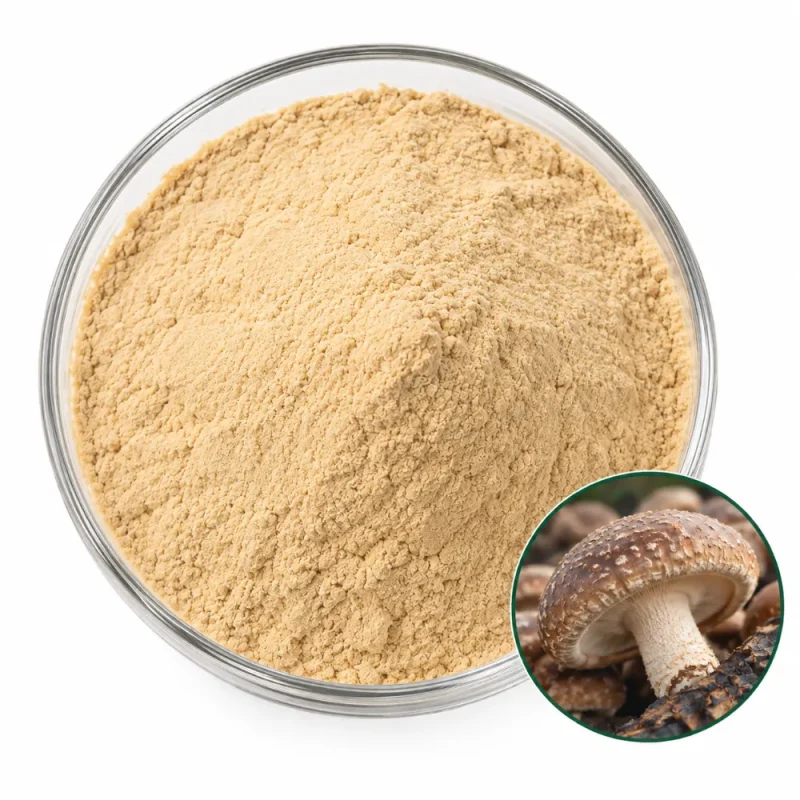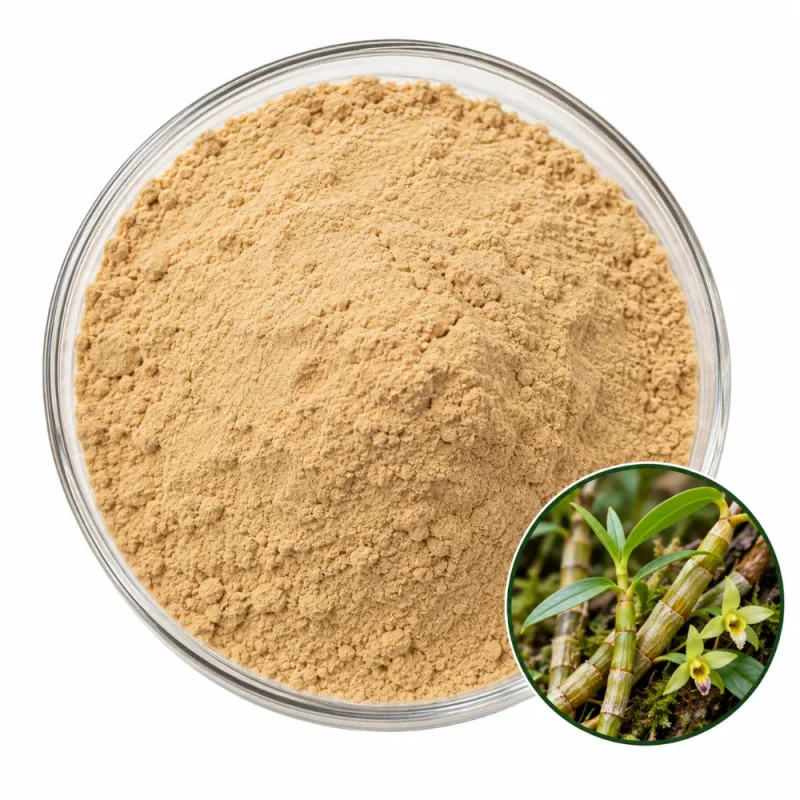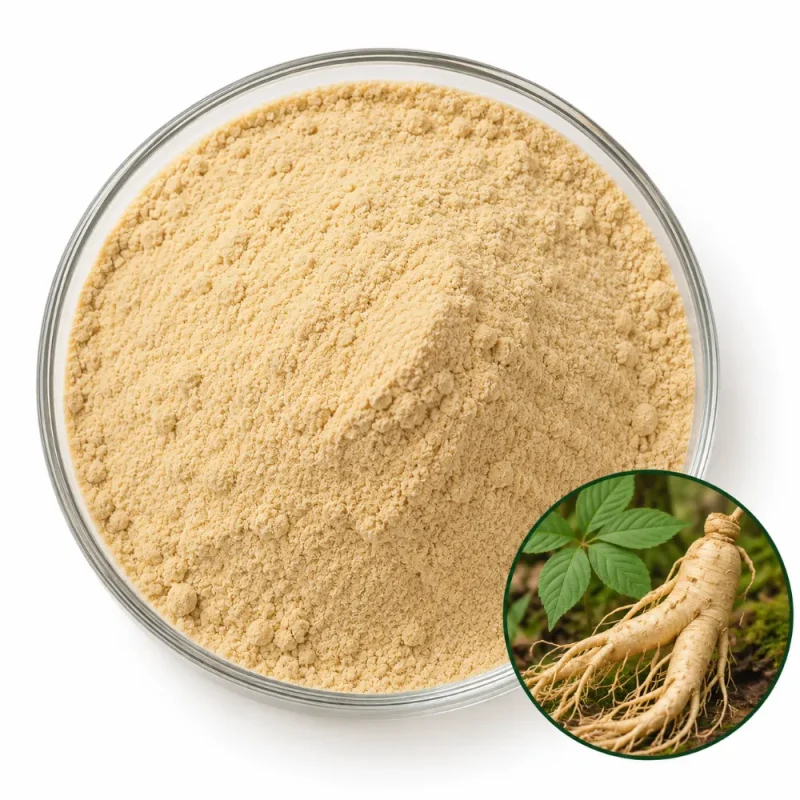
American Ginseng Polysaccharide Powder

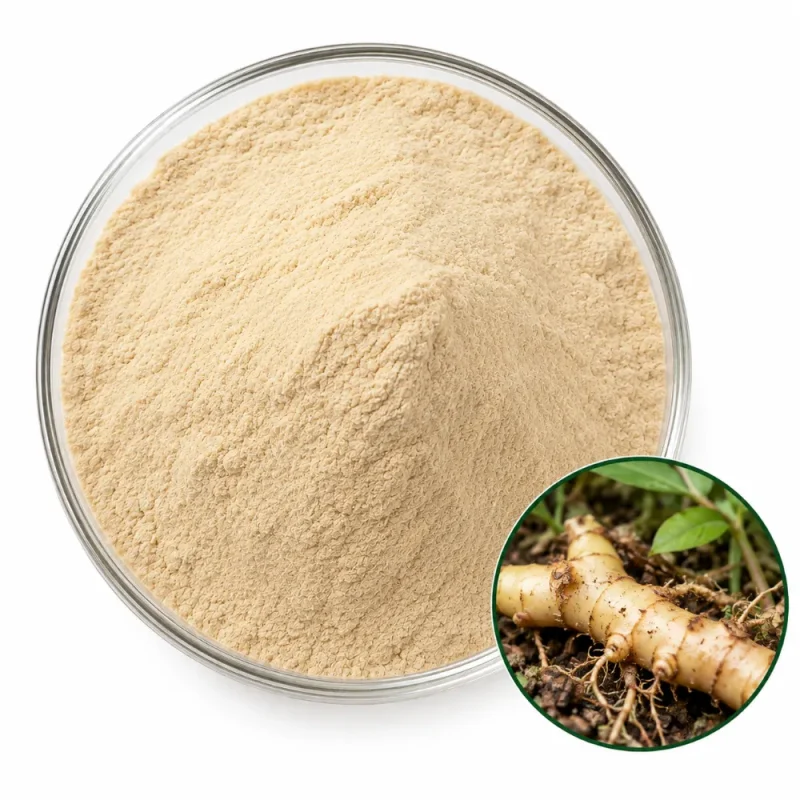
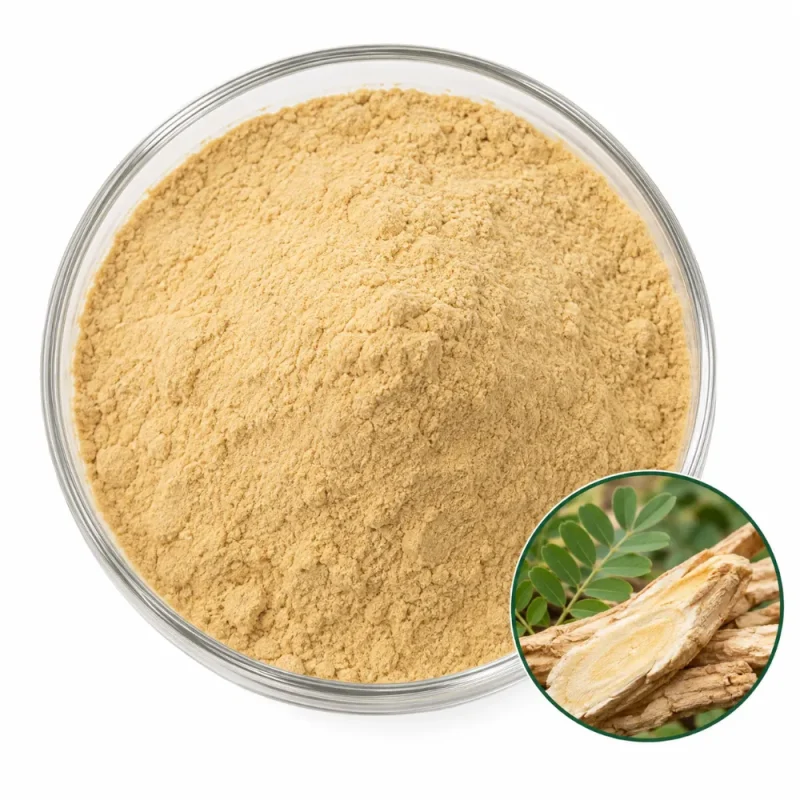
Water-extracted from the root of Panax quinquefolius, American ginseng polysaccharide powder carries the carbohydrate fraction of the root and not its saponin fraction. Starch and low-mass sugars are reduced during purification, and the dried result is a fine brown powder that dissolves in water.

Polysaccharide content is ≥30% by UV-Vis (phenol–sulfuric, as glucose), moisture and total ash are each ≤5.0%, and the powder is milled to 80 mesh. It is supplied to brands developing dietary supplements, functional beverages and functional foods built around North American ginseng.

American Ginseng Polysaccharide Identity

American ginseng polysaccharide powder is made from the root of Panax quinquefolius L., a slow-growing woodland perennial of eastern North America that takes several years to reach harvest size. American ginseng root is the only part used. Leaf, stem and berry are not included, and neither is the closely related Asian species Panax ginseng, which has its own page. Because wild American ginseng roots were over-collected, the species sits in CITES Appendix II, and cultivated root is the practical source today.

The carbohydrate fraction of American ginseng root has two families. Starch-type glucan is the storage reserve and is abundant in a mature root. The acidic, pectin-like heteropolysaccharides, which the older literature groups as the quinquefolans, are the fraction that gives this product its identity. Hot-water extraction releases both families together with saponins and sugars, and the purification stage is designed to leave the second family in a larger share.

Cultivated American ginseng is grown under artificial shade, and the age of the root at harvest changes the balance between starch and saponin. Roots are washed, dried and sorted before extraction, so American ginseng polysaccharide starts from clean dried root and carries no aerial plant material.

Other American ginseng products work differently. American Ginseng Root Powder is the milled root, American Ginseng Extract Powder is a 10:1 water extract, and American Ginseng Extract 10–80% Ginsenosides is defined by its saponin assay rather than by carbohydrate.
Polysaccharide Content & Test Method

The content figure is a total-carbohydrate value: polysaccharides ≥30% by UV-Vis. In the phenol–sulfuric reaction, hot acid breaks the chains into monosugars, phenol develops a color, and absorbance is read against a glucose standard, so results are glucose equivalents. For American ginseng root this method needs care, because starch gives the same color as pectic polysaccharide and the root holds a lot of starch.

For that reason purification matters as much as the assay. Treatment with amylase and ethanol fractionation remove much of the starch and the small sugars before drying, and the 30% figure refers to the finished powder after these steps. A reading taken on a crude root extract with the same method could look high while holding mostly starch.

Gravimetric values weigh the whole ethanol precipitate, protein included, and enzymatic assays count a single linkage type. The American ginseng grade is specified by UV-Vis alone, and the figure is not a ginsenoside content, a pectin content or a β-glucan content. Comparing it with a saponin percentage from an extract offers no meaningful information.

Typical Specifications

Specification ItemProduct Information
Latin NamePanax quinquefolius
Plant PartRoot & Rhizome
ProcessingWater Extraction & Purification
Common NameAmerican ginseng
Ingredient TypePolysaccharide Extract
Polysaccharide TypePectic-type heteropolysaccharides with glucan
ContentPolysaccharides ≥30% (UV-Vis, as glucose)
AppearanceBrown powder
Solubility / DispersibilityWater Soluble
Quality Parameters
Moisture≤5.0% (LOD)
Total Ash≤5.0%
Particle Size80 mesh
Heavy MetalsLead ≤2 ppm · Arsenic ≤1 ppm · Cadmium ≤1 ppm · Mercury ≤0.1 ppm
MicrobiologyTPC ≤1,000 cfu/g · Yeast & Mold ≤100 cfu/g · E. coli Negative · Salmonella Negative/25 g
Shelf Life24 months in unopened original packaging, cool and dry storage

American Ginseng Polysaccharide Solution Behavior

American ginseng polysaccharide is water soluble, with a brown, slightly turbid solution at working concentrations. Pectic polysaccharides hydrate into a modest viscosity rather than a gel, and the viscosity grows with concentration and with chain length. Cold water dissolves the powder more slowly than warm water, but heating above a gentle warm temperature is unnecessary for dissolution.

The acidic residues along the chain carry a negative charge, so the polymer reacts with calcium and other divalent cations and can bind basic proteins. In a milk-protein or mineral-enriched drink this can show up as haze or light sediment, and it is worth testing early. In plain water or sweetened acid drinks the solution stays stable.

Ordinary pasteurization leaves the backbone intact, while long boiling in acid shortens the chains and lowers viscosity. Trace saponins remain in the powder and make the solution foam when it is shaken, a point to remember in carbonated or filled-to-the-neck bottles. No viscosity values are stated for this grade.

Sweeteners such as sucrose, stevia and sugar alcohols do not interact with the chain, while strongly alkaline mineral salts can darken the brown solution during storage. American ginseng polysaccharide is best kept near neutral or mildly acidic pH, and light changes its color far less than it changes the pigmented botanical extracts it is often blended with.

Application Areas

Ginseng Drink Concentrate Powders

American ginseng polysaccharide powder mixes into tea-style or citrus drink powders and dissolves without a visible residue in cold water. The brown tint is part of the product, so flavor and color systems can be matched to it, and foam from trace saponin should be checked after shaking.

Capsule Fills Beside Root Powder

Pairing American ginseng polysaccharide with milled root in a capsule gives a broader root-derived profile in one dose. The two powders flow differently, so a pre-blend with a flow agent avoids segregation, and the polysaccharide should be added at the dry mixing stage.

Stick-Pack Herbal Blends

In multi-ingredient stick packs, American ginseng polysaccharide is compatible with other water-soluble extracts. Its moisture pickup calls for a laminate film with a barrier layer, and long hold times in humid warehouses can harden the contents of the pack.

Lozenge and Gummy Bases

Added to a cooked base after the temperature has fallen, the polysaccharide adds soluble solids and a mild brown color. Because pectic chains compete for water and cations, gel strength in pectin gummies should be compared with a control batch.

Functional Food Fortification

Cereal bars and spoonable fruit preparations can carry the powder at modest levels. It disperses best into a syrup phase before it meets dry ingredients, and acidic fruit bases keep it stable for the intended storage period.

Packaging & Commercial Supply

Essencefield supports product evaluation, formulation trials, commercial orders, and ongoing ingredient supply. Packaging, storage, and shipping arrangements are determined by product characteristics, order quantity, stability requirements, and destination-market needs.

Supply ItemGeneral Information
SampleAvailable upon request for formulation, testing, and supplier evaluation
Order Quantities100 g · 1 kg · 5 kg · 25 kg · 100 kg · 500 kg · Bulk
Sample Lead TimeTypically 5–7 days after sample confirmation
Production Lead TimeTypically 15–30 days after order and specification confirmation
PackagingSuitable protective inner packaging with bags, cartons, drums, or other appropriate outer packaging
StorageStore in tightly sealed, suitable protective packaging in a cool, dry environment. Protect from moisture, heat, and direct sunlight. Specific storage conditions follow the approved product specification.
DocumentationCOA · Product Specification · TDS · SDS · Applicable declarations (as applicable)

Final order quantities, lead times, packaging, documentation, and shipping arrangements are confirmed according to the selected product and commercial requirements.

Request Ingredient Specifications & Quote

Share your target specification, application, quantity, and documentation needs. We’ll help confirm suitable options, samples, and commercial supply details.