Matricaria chamomilla Raw Material & Plant Part
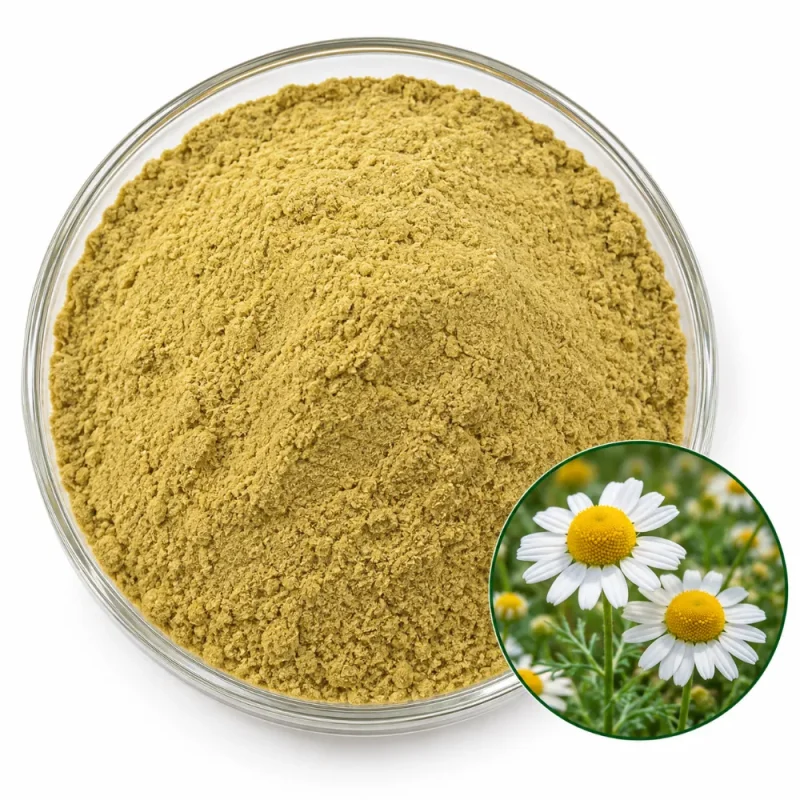
The botanical name is Matricaria chamomilla L., family Asteraceae, known as German chamomile, blue chamomile or wild chamomile. The raw material is the dried flower head, a small daisy-like capitulum with a yellow center and white ray florets, picked at full bloom, dried and milled. Stems and leaves are not included.
Two plants carry the chamomile name in commerce. Roman chamomile, Chamaemelum nobile, is a different species, a creeping perennial with a stronger bitter note, and it has its own uses. A third product, dyer’s chamomile, belongs to yet another genus. Specifications that give the botanical name and the flower head separate German chamomile from those.
The flower heads are known for flavonoid glycosides, in particular glycosides of apigenin, for coumarins, for mucilage and for a volatile oil containing bisabolol and chamazulene. Much of the oil is lost in water extraction, which is why powder and extract smell different.
Harvesting takes place when the flowers are fully open, and the heads are dried at low temperature, since heat drives off the aroma and turns the pale yellow flowers brown.
The dried flower heads are pale yellow to tan with small white petals, and the milled chamomile flower powder is a light yellow, slightly fluffy powder. Darker, brownish tones point to heat during drying or to long storage.