Fennel Seed Powder

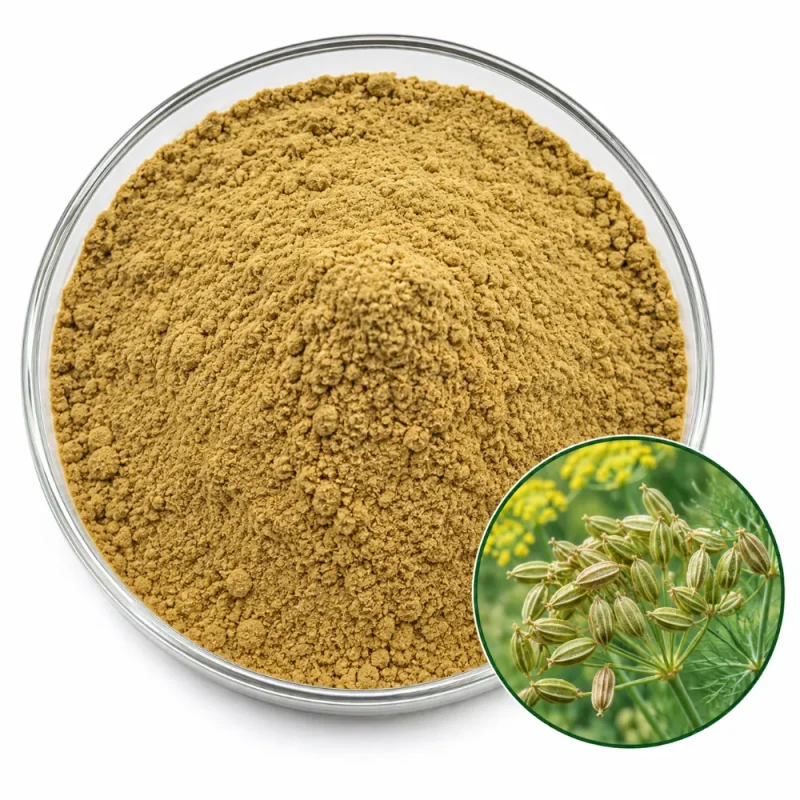
Fennel seed, the ripe dried fruit of Foeniculum vulgare, is cleaned and milled into a light brown powder with a sweet, anise-like aroma and a warm taste. Only the seed is used, so the bulb, the feathery leaves and the pollen of the fennel plant are not in the material.

Fennel seed powder is supplied at 80 mesh, with 40, 60 and 100 mesh optional, and has a sweet, licorice-like odor with a warm, slightly bitter and aromatic taste. It is raw milled seed rather than an extract, so inclusion rates are higher and the aroma is stronger than in the extract form.

Foeniculum vulgare Raw Material & Plant Part

The botanical name is Foeniculum vulgare Mill., family Apiaceae, known as fennel or sweet fennel. The raw material is the dried mature fruit, which is trade-named seed. It is a small, elongated, ridged, greenish-brown unit that splits into two halves, harvested when the umbels ripen, dried and cleaned before milling. Bulb, stem, leaf and flower are not included.

Several aromatic seeds are confused with fennel. Anise, from Pimpinella anisum, has a similar licorice note but comes from a different plant. Star anise comes from Illicium verum, a tree, and shares the main aroma compound only by chemistry. Dill and caraway are also members of the carrot family with a different taste. Naming the species and the seed removes the confusion.

Fennel seed is known for an essential oil dominated by trans-anethole, which gives the sweet anise note, and for fenchone, which is higher in the bitter type and adds a camphor-like edge. The seed also contains flavonoids and fatty oil.

Cultivated fennel is sold as sweet and bitter types, and the sweet type is the one used in food. The ground seed is greenish brown, and the green tone, when present, reflects the harvest stage and careful drying.
Fennel Seed Powder vs Extract

FormWhat It IsChoose It When
Fennel Seed PowderMilled dried seed with its oil and fiberAroma, flavor and fiber of the whole seed
Fennel Seed Extract PowderWater-extracted seed with the fiber removedA soluble format with less seed aroma

The seed powder keeps the essential oil, the fatty oil and the fiber together at their natural levels. It is an aromatic seasoning as much as a botanical, and inclusion rates are therefore based on flavor strength, with the powder only dispersing in liquids.

A water extract of fennel seed carries little of the volatile oil, because anethole and fenchone dissolve poorly in water and evaporate during processing. The extract powder is therefore much milder in smell than the seed powder, and it is chosen where a soluble material with a restrained aroma is needed.

The difference is easy to smell. Rubbing a pinch of the seed powder releases a sweet, penetrating anise note, whereas the extract powder is flat and faintly sweet, so fennel seed powder is the choice when the aroma itself is part of the recipe.

For formulators the choice also affects flavor strength. Fennel seed powder carries the taste of the seed in every particle, so seasoning, sausage and bakery uses stay with the milled seed, and the extract powder is added for soluble solids rather than for taste.

Typical Specifications

Specification ItemProduct Information
Latin NameFoeniculum vulgare
Plant PartSeed & Grain
ProcessingMilled
Common NameFennel, sweet fennel
Raw MaterialDried seed (fruit)
Ingredient TypeMilled Powder
AppearanceLight Brown powder (natural color of the dried material)
Odor & TasteSweet, anise-like odor; warm, aromatic, slightly bitter taste
Solubility / DispersibilityWater Dispersible
Quality Parameters
Moisture (LOD)≤8.0%
Particle Size80 mesh (40 / 60 / 100 mesh optional)
Heavy MetalsLead ≤2 ppm · Arsenic ≤1 ppm · Cadmium ≤1 ppm · Mercury ≤0.1 ppm
MicrobiologyTPC ≤10,000 cfu/g · Yeast & Mold ≤1,000 cfu/g · E. coli Negative · Salmonella Negative/25 g
Shelf Life24 months in unopened original packaging, cool and dry storage

Application Areas

Sausage and meat seasoning mixes

Fennel seed powder is a classic ingredient in Italian-style sausage seasonings, rubs and spice mixes. It gives a sweet anise top note that combines with garlic, pepper and chili, and dosing is adjusted by smelling the blend, since the seed is strong.

Bread, biscuit and cracker doughs

Bakery doughs use the powder for a warm, sweet spice note that survives baking better than most herbs. Fine mesh spreads the flavor evenly through the crumb, while coarse grades leave visible specks on the crust.

Spiced herbal tea blends

Tea blends use coarse fennel seed with mint, chamomile or hibiscus. The seed releases its oil slowly in hot water, so the infusion is steeped under a lid to hold the volatile aroma, and the cup is sweet and clear.

Capsule and chew blends

Fills and chewable blends use the powder where a sweet aromatic taste is helpful. The seed oil makes the powder slightly oily and cohesive, so flow aids and a gentle fill speed are tested before scale-up.

Handling & Blending Notes

The volatile oil defines how fennel seed powder is handled. Anethole and fenchone evaporate with warmth, air and fine milling, so the powder is milled cold when possible and packed soon after production. A freshly opened pack should smell sweet and sharp, and a flat odor points to age or poor storage.

The powder is slightly oily, because of the fatty oil of the seed. It clumps in warm rooms, builds up on hopper walls and cakes if moisture enters the pack. Barrier packaging, dry rooms and cool storage prevent most problems, and fine dust is controlled by local extraction at the scoop.

Aroma also moves between materials. Fennel seed powder passes its smell to neighboring powders and takes up odors in turn, so dedicated scoops and separate storage are used. Mesh follows the format, with 80 mesh for dry blends and capsules, 40 and 60 mesh for infusions and visible spice, and 100 mesh for smooth sauces. Opened containers are resealed at once and kept away from light and heat.

Fennel seed powder is best bought in sizes that are used within a few months, because the aroma declines with time even in good packs. First-in, first-out rotation, labeled opening dates and a smell check at each opening are simple controls that protect the flavor.

Packaging & Commercial Supply

Essencefield supports product evaluation, formulation trials, commercial orders, and ongoing ingredient supply. Packaging, storage, and shipping arrangements are determined by product characteristics, order quantity, stability requirements, and destination-market needs.

Supply ItemGeneral Information
SampleAvailable upon request for formulation, testing, and supplier evaluation
Order Quantities100 g · 1 kg · 5 kg · 25 kg · 100 kg · 500 kg · Bulk
Sample Lead TimeTypically 5–7 days after sample confirmation
Production Lead TimeTypically 15–30 days after order and specification confirmation
PackagingSuitable protective inner packaging with bags, cartons, drums, or other appropriate outer packaging
StorageStore in tightly sealed, suitable protective packaging in a cool, dry environment. Protect from moisture, heat, and direct sunlight. Specific storage conditions follow the approved product specification.
DocumentationCOA · Product Specification · TDS · SDS · Applicable declarations (as applicable)

Final order quantities, lead times, packaging, documentation, and shipping arrangements are confirmed according to the selected product and commercial requirements.

Request Ingredient Specifications & Quote

Share your target specification, application, quantity, and documentation needs. We’ll help confirm suitable options, samples, and commercial supply details.