Kaempferol Chemical Identity
Kaempferol has the molecular formula C15H10O6 and a molecular weight of 286.2. It is a flavonol, a flavone with a hydroxyl at position 3, with further hydroxyls at positions 5 and 7 on the A-ring and at 4′ on the B-ring. The single hydroxyl on the B-ring is the feature that separates it from quercetin, which has two. That difference makes kaempferol less polar, less reactive toward oxidation and less strongly metal-binding than the catechol-bearing flavonol.
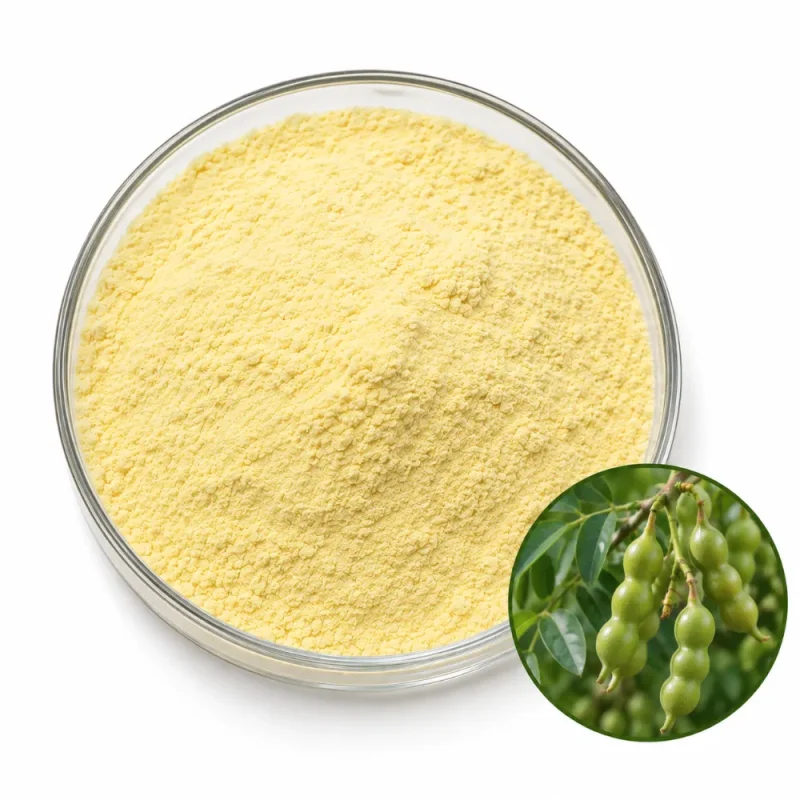
The formula and weight are shared by other flavones. Fisetin and luteolin have the same C15H10O6 and differ in where the hydroxyls sit, so retention time and the ultraviolet spectrum are what separate them, not the mass. The natural source is the flower bud of Sophora japonica L., a tree that GBIF now lists under the name Styphnolobium japonicum, and the bud is the established commercial source of flavonols. In the bud the main flavonoid is rutin, a quercetin glycoside, and the kaempferol sugar-bound forms are minor, which is why the free aglycone is produced by hydrolysis and purification. Related products are Quercetin 98%, Quercetin Dihydrate 99% and Rutin 98%.