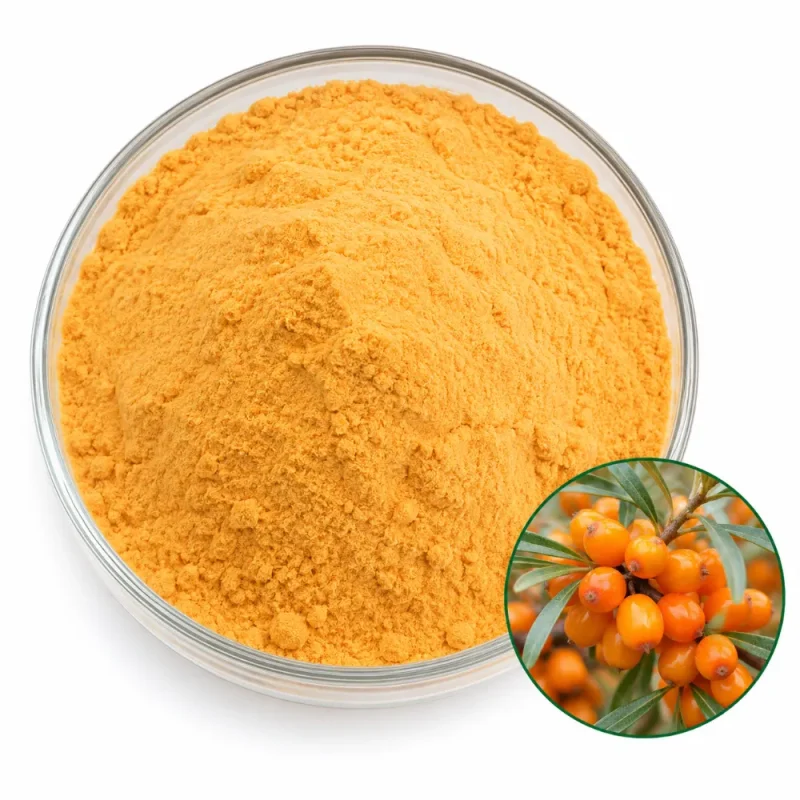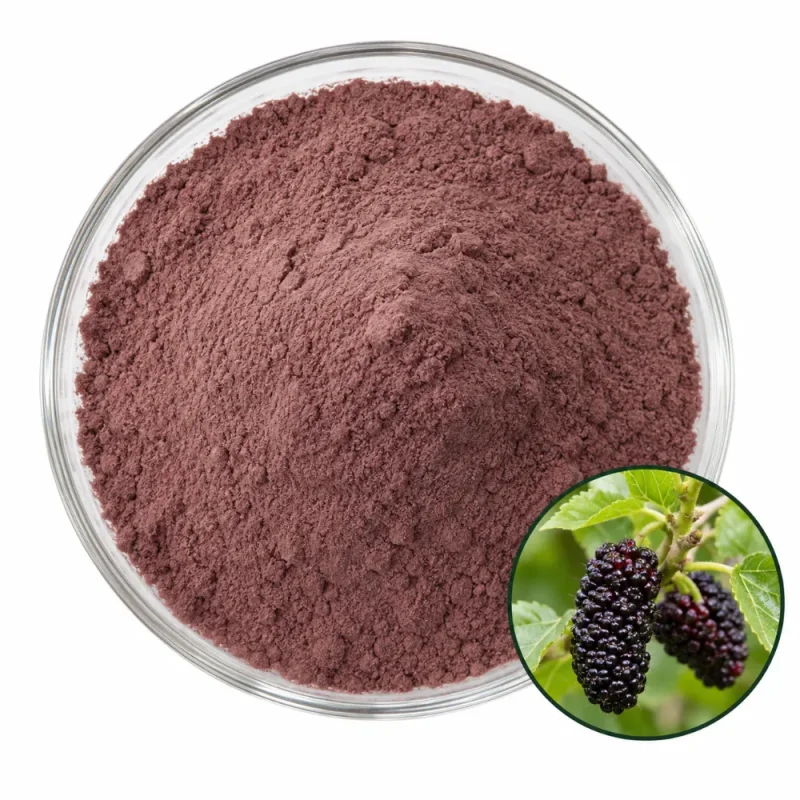
Mulberry Powder

Mulberry powder is spray-dried from the pressed juice of Morus alba fruit, the white mulberry, on a maltodextrin carrier. It is a purple red, water-soluble powder with a mild, jammy sweetness and very little sourness. Leaves, twigs and root bark of the same tree are separate ingredients and are not used.

The name “white mulberry” refers to the pale buds and bark of the tree and not to the color of the fruit, which ranges from white through pink to nearly black. The master data for this powder points to a purple red fruit juice.

Mulberry Juice Powder Processing

The species is Morus alba L., the white mulberry, a deciduous tree of the mulberry family (Moraceae) native to northern China and cultivated for centuries as the feed plant of the silkworm. The black mulberry, Morus nigra, is a different species with larger, tarter and darker fruit, and the red mulberry, Morus rubra, is a North American species. Some suppliers mix the names on their pages, so the species name matters.

The raw material is mulberry juice concentrate. The ripe fruit, an aggregate of tiny drupelets, is pressed, and the juice is concentrated, blended with maltodextrin and atomized in a spray dryer. The carrier gives the powder its solubility and free-flowing character, and it also moderates the intense color of the fruit juice.

Mulberries bruise and ferment quickly after harvest, so the fruit is processed soon after picking. The short window between picking and pressing is one reason mulberry juice products often show a stronger cooked-fruit note than powders made from firmer, slower-ripening berries.

Fruit color depends on cultivar and ripeness, and mulberries picked fully black give the deepest pigment while pink or white types give a paler, sweeter juice. The concentrate here is built from purple red fruit, in line with the master color, and the mix of cultivars is not stated.
Mulberry Flavor, Color & Forms

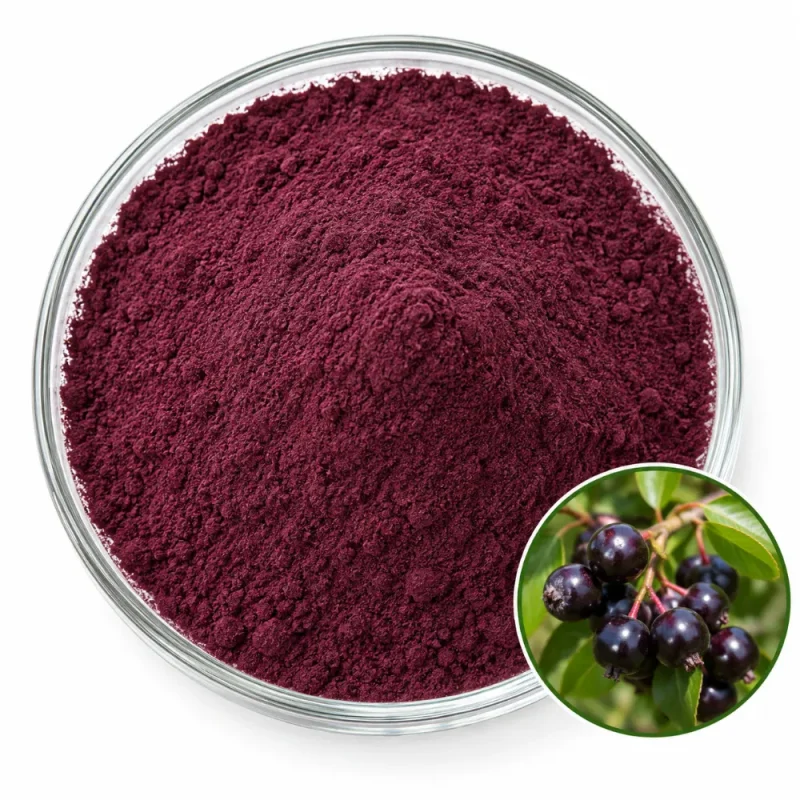
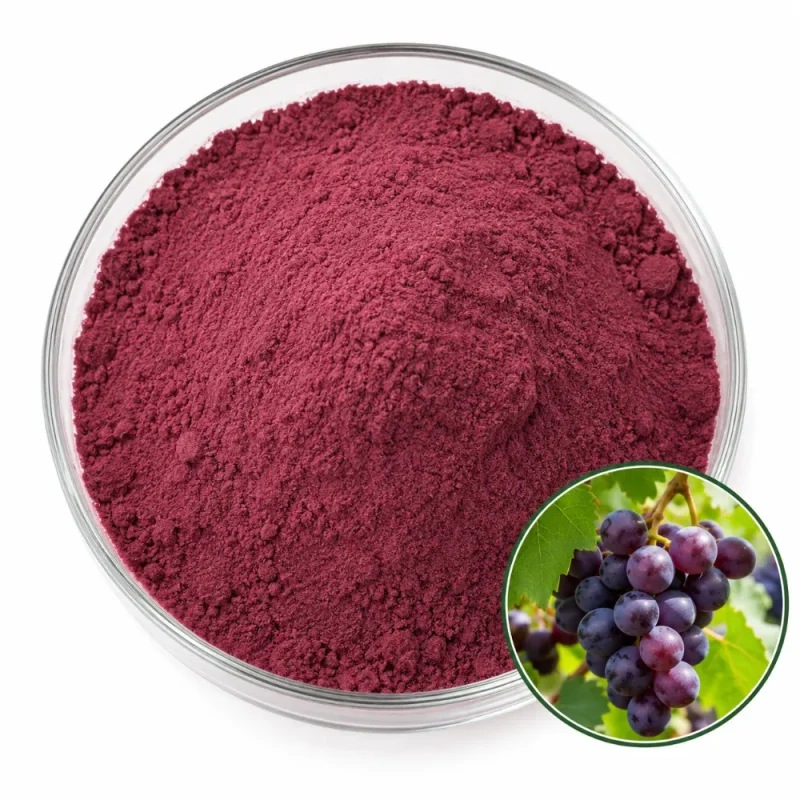
The powder is purple red and dissolves to a deep pink-red to violet liquid. The taste is sweet and mildly fruity, with a hint of jam and little acidity compared with raspberry or cranberry, which makes mulberry an easy partner for tart ingredients. The astringency is low, so the powder blends smoothly into dairy and plant drinks. Compared with a tart berry such as cranberry, mulberry works as a sweet base that other acids can sharpen, and it is a natural partner for lemon, apple or hibiscus in blended drinks.

Characteristic constituents are sugars, anthocyanins (mainly cyanidin glycosides), organic acids at low levels, and pectin. No figure is given for any of them. Because the acid is low, the pigment tends toward a purple-pink shade at neutral pH and brighter red when the formula is acidified.

FormWhat It IsChoose It When
Mulberry Juice PowderSpray-dried juice on maltodextrinA soluble, sweet purple red base is wanted
Freeze-Dried Mulberry PowderWhole fruit dried under vacuumSkin, pulp and seed solids are wanted
Mulberry Fruit Extract PowderRatio extract of the fruitA concentrated extract is specified
Mulberry Leaf Extract Powder10:1 water extract of the mulberry leafThe leaf, not the fruit, is the requirement

Typical Specifications

Specification ItemProduct Information
Latin NameMorus alba
Plant PartFruit & Berry
ProcessingSpray-Dried Juice
Common NameMulberry
Raw MaterialMulberry juice concentrate
Ingredient TypeJuice Powder
CarrierMaltodextrin
AppearancePurple Red powder
FlavorSweet, jammy, low acidity
Solubility / DispersibilityWater Soluble
Quality Parameters
Moisture (LOD)≤5.0%
Heavy MetalsLead ≤2 ppm · Arsenic ≤1 ppm · Cadmium ≤1 ppm · Mercury ≤0.1 ppm
MicrobiologyTPC ≤10,000 cfu/g · Yeast & Mold ≤1,000 cfu/g · E. coli Negative · Salmonella Negative/25 g
Shelf Life24 months in unopened original packaging, cool and dry storage

Application Areas

Berry Yogurt and Dairy Bases

Dairy and plant-based drinks use mulberry powder for soft pink-purple color and gentle sweetness. The pigment is stable in the pH range of yogurt, and the low astringency means the powder does not curdle or roughen the milk.

Jam and Spread Premixes

Dry premixes for fruit spreads use mulberry powder to boost fruit flavor and color after the pectin has set. Its low acid means a premix often needs added citric acid to reach the right gel pH, which should be tested.

Gummies and Soft Candy

Confectioners add mulberry powder for pink-violet color and sweet berry flavor. Added after the cook, it keeps the pigment brighter, and its mild acid calls for an adjustment of the candy’s overall acid balance to hit the target shade.

Baked Goods and Cereal Coatings

Bakers and cereal makers use the powder in fillings, glazes and coatings for a berry tint and a sweet jammy note. The pigment fades during long baking, so the powder performs best in cooled fillings and finishing coats.

Tea and Herbal Drink Sticks

Instant tea sticks combine mulberry powder with green or herbal tea for a naturally colored drink. The mild flavor leaves room for tea character, and the powder dissolves in hot or cold water without clumping.

Moisture Pickup & Stability

Mulberry powder is high in sugar and its carrier is amorphous, which makes it strongly moisture-absorbing. Left open in humid air, the surface turns sticky, then sets into a dark, hard cake. Keep weighing rooms dry and close the liner after each draw.

The anthocyanin pigment is more sensitive to pH than to heat alone. In near-neutral formulas the color slides from purple red toward blue-violet and grey, so a drink or dairy product should be checked in the real matrix. Added acid restores a redder shade, but excessive acid can dull the mild flavor.

Over longer storage, browning reactions between sugars and amino traces darken the powder, and light bleaches the pigment slowly. Store unopened drums cool, keep opened ones sealed and out of light, and use stainless steel tools to avoid iron-induced darkening of the polyphenols in the powder.

The sweetness of the powder also matters for stability, since high sugar content softens the glass state of the carrier and speeds up caking compared with a less sweet fruit powder. Pack sizes that match the production run, and avoid leaving half-used drums open between shifts.

Packaging & Commercial Supply

Essencefield supports product evaluation, formulation trials, commercial orders, and ongoing ingredient supply. Packaging, storage, and shipping arrangements are determined by product characteristics, order quantity, stability requirements, and destination-market needs.

Supply ItemGeneral Information
SampleAvailable upon request for formulation, testing, and supplier evaluation
Order Quantities100 g · 1 kg · 5 kg · 25 kg · 100 kg · 500 kg · Bulk
Sample Lead TimeTypically 5–7 days after sample confirmation
Production Lead TimeTypically 15–30 days after order and specification confirmation
PackagingSuitable protective inner packaging with bags, cartons, drums, or other appropriate outer packaging
StorageStore in tightly sealed, suitable protective packaging in a cool, dry environment. Protect from moisture, heat, and direct sunlight. Specific storage conditions follow the approved product specification.
DocumentationCOA · Product Specification · TDS · SDS · Applicable declarations (as applicable)

Final order quantities, lead times, packaging, documentation, and shipping arrangements are confirmed according to the selected product and commercial requirements.

Request Ingredient Specifications & Quote

Share your target specification, application, quantity, and documentation needs. We’ll help confirm suitable options, samples, and commercial supply details.