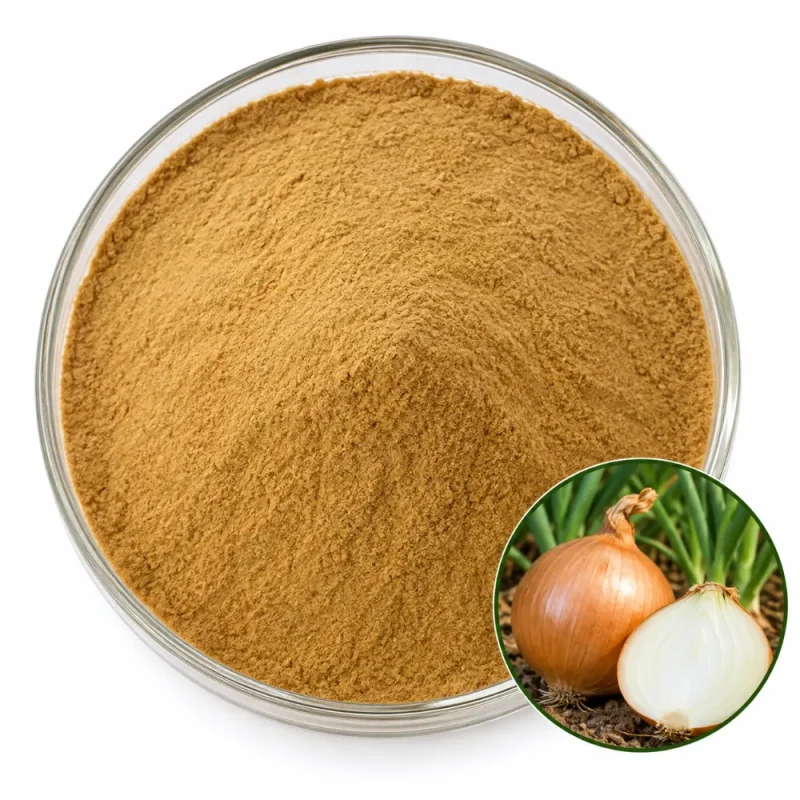
Onion Extract Powder

Onion extract powder starts with the bulb of Allium cepa L., the layered storage leaves of the common onion rather than its green tops or seed. The bulb is extracted in water, and the liquor is concentrated and dried into a light yellow powder.

The extract ratio is 10:1, the powder is milled to 80 mesh, and it is water dispersible. It has no marker figure, so it differs from plain dried onion powder and from the spray-dried onion juice powder, which are separate forms.

Onion Bulb Source & Identity

The species is Allium cepa L., a biennial bulb vegetable of the amaryllis family (Amaryllidaceae). The part used here is the bulb. Leaves, flower stalks and seed are not used. Onion should not be confused with shallot, which belongs to the same species but forms clustered bulbs, or with garlic (Allium sativum) and the bunching onion (Allium fistulosum), which are different species with their own chemistry. Yellow, red and white onions are cultivar groups of the same species. Onion bulbs contain flavonol glycosides based on quercetin, organosulfur compounds that form when the tissue is cut, fructans and sugars. They appear as families only, since the onion extract is not sold on a quercetin or sulfur figure. Pungency and sugar content differ by cultivar, but the species and the part stay the same.

Onion Extract vs Powder & Juice Powder

FormWhat It IsChoose It When
10:1 Onion Bulb ExtractWater-extracted, concentrated and dried onion bulbA soluble onion extract in a dispersible powder
Onion PowderDried onion bulb milled whole, fiber retainedThe whole bulb and its bulk are wanted
Onion Juice PowderOnion juice dried on a carrierA juice-based powder with a carrier is wanted
Shallot PowderDried shallot bulb, the clustered-bulb form of the same species, milled without extractionA shallot-type bulb powder is specified

The 10:1 ratio states how much dried bulb was used per unit of extract and says nothing about quercetin or sulfur content. Water carries the sugars, fructans and polar flavonoid glycosides into the extract, while the insoluble fiber stays behind. The sulfur aroma that makes fresh onion pungent is only partly retained after concentrating and drying, so the powder smells milder than the whole bulb. A buyer who wants fiber and bulk should look at the dried onion powder. A buyer who wants a juice-style material on a carrier should look at the juice powder. The ratio extract suits formulas that need a compact, fine onion-derived ingredient without a carrier.

Typical Specifications

Specification ItemProduct Information
Latin NameAllium cepa
Plant PartRoot & Rhizome
ProcessingWater Extraction
Common NameOnion, Common Onion
Ingredient TypeRatio Extract
Extract Ratio10:1
AppearanceLight Yellow powder
Solubility / DispersibilityWater Dispersible
Quality Parameters
Moisture (LOD)≤5.0%
Total Ash≤5.0%
Particle Size80 mesh
Heavy MetalsLead ≤2 ppm · Arsenic ≤1 ppm · Cadmium ≤1 ppm · Mercury ≤0.1 ppm
MicrobiologyTPC ≤1,000 cfu/g · Yeast & Mold ≤100 cfu/g · E. coli Negative · Salmonella Negative/25 g
Shelf Life24 months in unopened original packaging, cool and dry storage

Application Areas

Capsules That Contain Odor

Onion extract powder fills hard capsules, where the shell keeps the faint sulfur note out of sight. Because the extract holds sugars and is fine, it can pack tightly and stick. Check fill-weight uniformity on the machine and add a flow aid only if the powder bridges in the hopper.

Coated Tablets for Sulfur Notes

Onion tablets are built from the extract plus a dry binder and a disintegrant. The sulfur compounds can leave a lingering smell on uncoated tablets, so a film coat is usually applied, and the light yellow tint disappears under a white or colored coating.

Stick Packs in Vegetable Blends

In stick packs, onion extract works inside vegetable and greens blends, where beet, spinach and carrot powders mask its flavor. A drink sachet built on onion alone will taste sharply of cooked onion, so the extract should be a minor part of the blend.

Bars with Nut and Cocoa Flavors

Bars and bites can carry a small dose of onion extract if nut, cocoa or seed flavors cover its character. Add the powder to the dry mix, because the quercetin-type pigments can darken when heated for a long time in a wet binder.

Gummies with Apple and Pear Notes

Gummies carry little of the bulb character at low dose. Stir the powder into the cooled mass with the flavor system, and choose apple, pear or caramel flavors that sit well beside a faint sweet-sulfur note. A small trial confirms the aroma before scale-up.

Formulation Notes

Onion extract is a light yellow powder with a sweet, cooked-onion aroma and a taste that is sweet at first and sulfurous afterward. It disperses in water to a pale, slightly hazy yellow liquid. Sugars and fructans make the powder hygroscopic, so it can cake quickly in damp air, and flavonol glycosides can brown slowly if the powder is exposed to heat and light.

A carrier powder mixed in first and sieved before the main blend breaks up small lumps in dry onion blends. Sachets need a moisture-barrier film and a low-humidity filling room. Between uses, keep the container closed and shielded from heat and light, since warmth speeds browning and sulfur notes.

Packaging & Commercial Supply

Essencefield supports product evaluation, formulation trials, commercial orders, and ongoing ingredient supply. Packaging, storage, and shipping arrangements are determined by product characteristics, order quantity, stability requirements, and destination-market needs.

Supply ItemGeneral Information
SampleAvailable upon request for formulation, testing, and supplier evaluation
Order Quantities100 g · 1 kg · 5 kg · 25 kg · 100 kg · 500 kg · Bulk
Sample Lead TimeTypically 5–7 days after sample confirmation
Production Lead TimeTypically 15–30 days after order and specification confirmation
PackagingSuitable protective inner packaging with bags, cartons, drums, or other appropriate outer packaging
StorageStore in tightly sealed, suitable protective packaging in a cool, dry environment. Protect from moisture, heat, and direct sunlight. Specific storage conditions follow the approved product specification.
DocumentationCOA · Product Specification · TDS · SDS · Applicable declarations (as applicable)

Final order quantities, lead times, packaging, documentation, and shipping arrangements are confirmed according to the selected product and commercial requirements.

Request Ingredient Specifications & Quote

Share your target specification, application, quantity, and documentation needs. We’ll help confirm suitable options, samples, and commercial supply details.