Poria cocos Raw Material & Plant Part
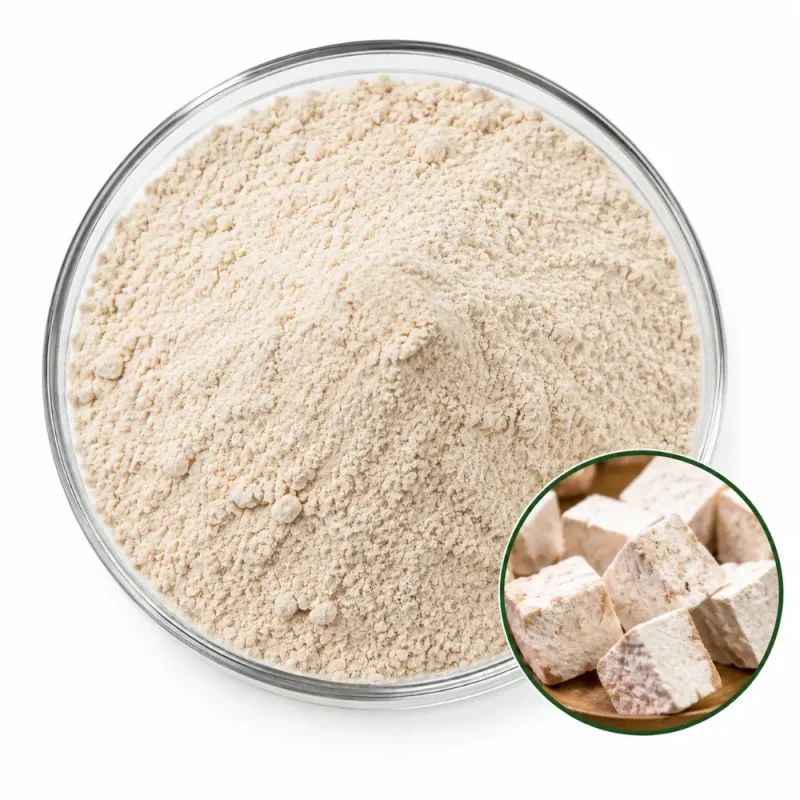
The botanical name used in trade is Poria cocos F.A.Wolf, a wood-decay fungus of the family Polyporaceae in older sources. Current databases treat the name as a synonym of Wolfiporia cocos and place the fungus in the family Fomitopsidaceae, and labels may show either name. The raw material is the dried sclerotium, the hard, resting body that forms underground, which is peeled, sliced or cut and dried before milling.
The master data lists the part as fruiting body, but fu ling is a sclerotium, not the spore-bearing fruiting body of the fungus. That distinction defines the ingredient: the sclerotium is dense, starchy and nearly white, while true fruiting bodies of other polypore fungi are thin, leathery and differently flavored. The same fungus is traded as separate cuts, including the white inner part, the pinkish part close to the surface and the brown outer peel, and the white part is the one that gives the light-colored powder.
Poria is known for polysaccharides, mainly pachyman, a beta-glucan that dissolves very poorly in water, and for lanostane-type triterpene acids such as pachymic acid and dehydropachymic acid. The sclerotium also contains sterols and small amounts of other compounds. These are traits of the fungus and not levels for this powder.
Pachyman makes up much of the dry mass, which explains why the powder looks and feels like a fine starch yet does not gelatinize like one.