Botanical extracts look simple on a product list, but their technical profiles vary widely. Plant part, extraction system, extract ratio, marker compounds, carrier, physical characteristics and analytical methods all shape the finished ingredient — and decide whether two apparently similar extracts are truly comparable and whether a grade will perform in the finished product.
Quick Answer: What Are Botanical Extracts?
Botanical extracts are ingredients made by separating selected constituents from plant material with water, ethanol, water-ethanol mixtures, CO₂ or another suitable process. Their characteristics depend on species, plant part, extraction conditions, processing route, marker or assay specification, carrier and final physical form.
What Are Botanical Extracts?
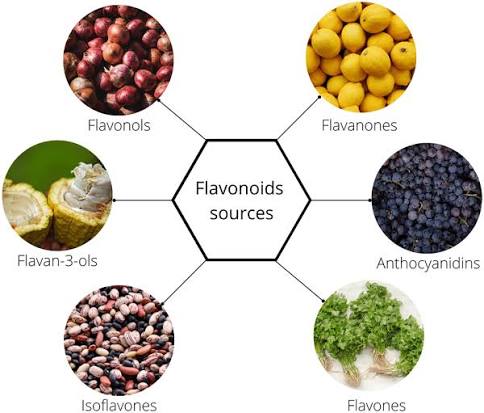
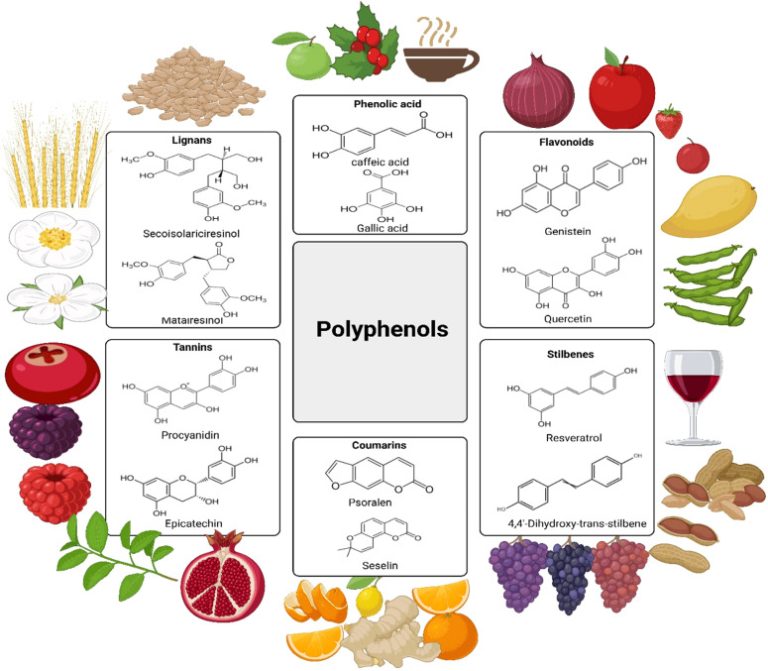
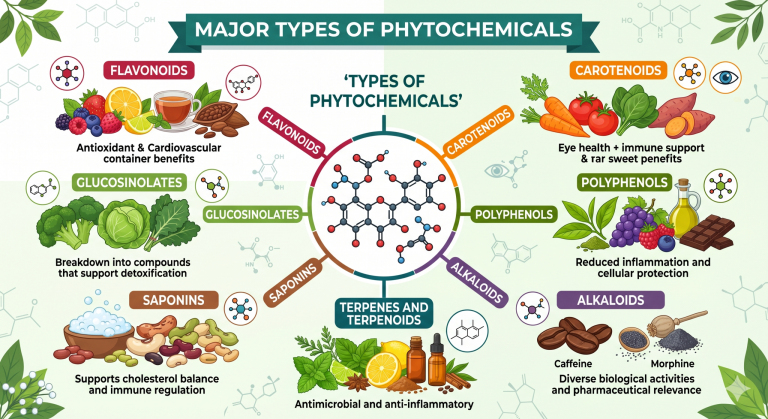
USP General Chapter <565> Botanical Extracts describes extraction as separating constituents of interest from plant material using water, alcohol, alcohol-water mixtures or other suitable solvents, after which the material may be concentrated, dried, adjusted or further processed. A typical route runs from preparation through extraction, filtration and concentration to finishing. Most commercial extracts remain complex mixtures rather than single compounds and, depending on botanical and process, can contain polyphenols, flavonoids, anthocyanins, saponins, alkaloids, terpenes, polysaccharides and other phytochemicals — which is why botanical identity alone does not define the finished ingredient.
Botanical Extracts vs Isolated Compounds
An extract usually holds a mixture of constituents, whereas a purified or isolated phytochemical represents a further degree of processing. An extract standardized to anthocyanins, such as Bilberry Extract 25% Anthocyanins, still contains many other constituents of the original matrix. Compare source, plant part, process, marker, assay and finished composition together; for single-compound grades see our Phytochemicals.
Botanical Extracts vs Botanical Powders
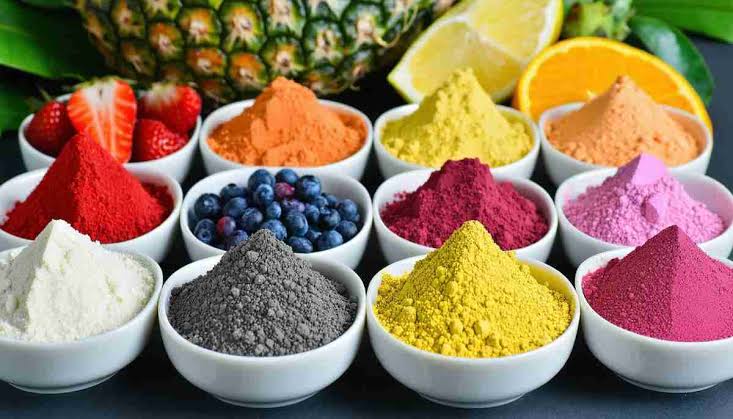
Both come from plant material, but by different routes. A botanical powder is a dried, milled plant part that retains most of the original matrix; an extract adds a separation step that moves selected constituents into an extraction medium, after which the liquid may be concentrated and dried.
| Characteristic | Botanical Powder | Botanical Extract |
|---|---|---|
| Starting material | Whole or selected plant part | Whole or selected plant part |
| Main process | Drying and milling | Extraction and downstream processing |
| Original plant matrix | Largely retained | Partially separated |
| Concentration | Usually close to raw material | May be concentrated |
| Typical specification | Identity and physical parameters | Ratio, marker, assay and physical parameters |
| Common form | Powder | Liquid, semisolid or dry powder |
The right form depends on formulation objective, constituent profile, dose, processing and sensory requirements. Botanical Powders are selected mainly on plant part, milling, particle size and physical performance; see Botanical Extract vs Botanical Powder for a detailed comparison.
How Botanical Extracts Are Made
Raw Material and Identity
Species and plant part should be established before processing, supported where relevant by Latin name, origin, raw-material condition and identity testing. Roots, leaves, fruits, seeds, flowers and bark of one species can have different constituent profiles, and growing conditions, harvest, drying, storage and handling add natural variation.
Preparation and Extraction
Raw material may be cleaned, dried, cut, crushed or milled so the extraction medium contacts the matrix effectively. It is then contacted with water, ethanol, a water-ethanol mixture, CO₂ or another system, and that choice determines which fractions are preferentially transferred into the extract.
Filtration, Concentration and Drying
Insoluble material is separated, the liquid may be concentrated and, for dry grades, spray dried or otherwise converted to powder. Carriers are sometimes added to support drying, flow, physical stability or dispersibility. Where a project needs defined extraction, purification, marker adjustment or drying parameters, our Processing & Standardization service becomes part of grade development. The full sequence is covered in How Botanical Extracts Are Made.
Common Botanical Extraction Methods
No method is universally optimal; the right process depends on matrix, target profile, scale, economics and required finished characteristics. A 2025 review of plant extraction technologies in Frontiers in Chemistry compares conventional approaches with ultrasound-assisted, microwave-assisted, pressurized-liquid and supercritical-fluid extraction and concludes that each has its own advantages and limitations. Our hub on botanical extraction methods covers them in detail; in summary:
| Method | Typical Technical Fit | Process Consideration | Key Specification Check |
|---|---|---|---|
| Water | Polar and water-soluble fractions | Temperature and concentration | Ratio, carrier, solubility |
| Hydroalcoholic | Broader constituent range | Ethanol-to-water ratio | Solvent system, residual-solvent limits |
| Supercritical CO₂ | Lipophilic fractions | Pressure and selectivity | Target constituents, final form |
| Ultrasound-assisted | Process intensification | Time, energy and scale | Batch consistency |
| Microwave-assisted | Faster processing in suitable systems | Temperature control | Stability and scale-up |
Water suits polar constituents, with temperature, time, agitation and solvent-to-solid ratio controlled to give a defined material. Ethanol and water-ethanol mixtures let polarity be tuned and can recover a broader range of compounds, so the solvent belongs in the ingredient profile — see Water vs Ethanol Extraction. Maceration holds material in the solvent for a set period and percolation moves solvent through it; particle size, temperature, time, solvent ratio and process control affect both (more on maceration). Supercritical CO₂ is selective for lipophilic or relatively non-polar constituents but needs specialized equipment and is less suited to strongly polar compounds (more on supercritical CO₂). Ultrasound- and microwave-assisted methods can improve mass transfer or shorten processing; their commercial value depends on reproducing the required composition and physical performance at scale. What matters in the end is which process consistently delivers the required ingredient profile.
Why Two Extracts From the Same Botanical May Not Be Equivalent
Products with the same botanical name can differ in plant part, raw-material condition, extraction medium, process parameters, carrier, marker profile and finishing — and each difference can change the specification and application performance. Switching from water to hydroalcoholic extraction may change which constituents dominate; adding carrier changes the share of native extract; standardizing to a marker adds another comparison basis beyond ratio. Research on plant-to-extract ratios in botanical extracts likewise shows that raw-material quality, extraction conditions, solvent and excipients all affect the relationship between starting material and finished extract.
Types of Botanical Extracts
Physical form, native-extract content, ratio and standardization describe different characteristics and are not interchangeable terms.
Liquid, Semisolid and Dry Extracts
Extracts may stay liquid, be concentrated to a semisolid mass or be dried; USP describes fluids, masses and powders as possible forms after extraction and adjustment. Tinctures are liquid preparations usually made with alcohol-water mixtures, and the NIH Office of Dietary Supplements botanical background distinguishes them from extracts, which may be evaporated further into dry preparations. These terms describe preparation or form, not ratio or standardization.
Native Extracts
USP uses native extract for an extract with no added inert substances and no processing beyond extraction. A finished commercial extract may combine native extract solids with an added carrier or diluent, which matters when powdered grades contain different amounts of added material.
Ratio Extracts
Ratio extracts are described as 4:1, 10:1, 20:1 and so on. The ratio relates botanical starting material to finished extract; it does not measure the concentration of any constituent.
Standardized Extracts
A standardized extract is controlled around one or more defined constituents or markers, so Standardized Extracts are differentiated by marker identity, assay level and analytical method. NIH ODS explains that standardization identifies and measures selected constituents to support batch consistency, and notes that “standardized” does not by itself establish overall quality. See What Is a Standardized Botanical Extract?
Understanding Botanical Extract Ratios
The American Herbal Products Association guidance on extract ratios states that for soft or powdered extracts the first number is the dried botanical starting material and the second the finished total extract, so 10:1 describes a manufacturing relationship. Our extract ratios guide goes deeper; two points matter most for buyers.
Does a Higher Ratio Mean a Stronger Extract?
Not necessarily. Consider two hypothetical products:
| Parameter (hypothetical) | Extract A | Extract B |
|---|---|---|
| Extract ratio | 10:1 | 20:1 |
| Marker assay | 10% | 5% |
| Carrier | None | Present |
| Extraction system | Hydroalcoholic | Water |
The ratio does not show which contains more of a marker or which suits a formula better, because solvent, conditions, yield, carrier and analytical targets all affect the material. The Frontiers paper Understanding Plant to Extract Ratios in Botanical Extracts explains why such ratios are not a complete measure of composition or potency.
Native Extract Ratio vs Finished Extract Ratio
The same paper distinguishes native and finished bases: if 10 parts of starting material give 2 parts native extract, the plant-to-native-extract ratio is 5:1; add 0.5 part excipient and the 2.5-part finished extract has a plant-to-finished-extract ratio of 4:1. European herbal terminology expresses a related concept as the drug-to-extract ratio (DER). Two materials with the same number are not necessarily equivalent unless the basis and finished composition are known, so confirm carrier content and ratio basis when comparing powdered extracts.
Ratio Extracts vs Standardized Extracts
A ratio describes how the extract was produced; a standardized assay such as 25% anthocyanins describes what is analytically controlled. Some materials carry both. For standardized grades, the method also matters — HPLC, UV/Vis, TLC, chromatographic fingerprinting or another technique depending on botanical and analyte — and the NIH Analytical Methods and Reference Materials Program supports validated methods for verifying ingredient identity and content claims. Standardization is most useful where a formula needs tight control of a marker across lots, but a percentage without knowing what was measured and how is worth less than it looks.
How Extraction Affects Ingredient Performance
Extraction affects more than concentration: analytical profile, color, taste, odor, solubility, dispersibility and other physical characteristics can all shift. A material can meet its assay and still perform poorly if its physical or sensory behavior does not fit the product, so the highest assay is not automatically the best grade.
Botanical Extract Applications
Application requirements should guide grade selection from the start. Capsules, tablets, gummies and powder blends combine assay with particle size, bulk density, flow, taste and compatibility in different ways (see Dietary Supplements). Food systems put more weight on heat, taste, color, texture, moisture and matrix compatibility (see Functional Foods). Beverages make physical performance most visible: solubility, dispersibility, sedimentation, clarity, bitterness, color and pH compatibility all count, and an extract that works in a capsule may cause haze or sediment in a drink (see Functional Beverages). For topical applications, extraction medium, form, solubility, color, odor, pH range and compatibility are relevant. In every case, analytical concentration is only one part of selection.
How Should a Buyer Specify a Botanical Extract?
Start from the finished-product requirement rather than asking for the highest ratio or assay.
- Botanical identity — species and plant part, plus origin where relevant.
- Extract type — ratio, standardized, native, purified fraction or another defined grade.
- Marker and assay — marker, target, acceptable range and analytical method where standardization is needed.
- Processing parameters — solvent, permitted carrier or carrier-free status, native-extract content where necessary.
- Physical properties — particle size, bulk density, solubility, dispersibility, color, taste or form.
- Application — capsule, tablet, gummy, powder, food, beverage, cosmetic or other system.
- Quality and documentation — analytical limits and supporting documents agreed before approval.
When the target grade is not yet clear, our Specification & Grade Matching service is a better starting point than comparing product names.
What Should You Compare When Two Botanical Extracts Look Similar?
Two suppliers may both list “Green Tea Extract 10:1” and still supply quite different materials — and a green tea extract can also be sold as a general extract powder or as a polyphenol-standardized grade (compare Green Tea Extract Powder with Green Tea Extract 40–98% Polyphenols). Align the technical profile before comparing price:
| Comparison Area | What to Check |
|---|---|
| Botanical identity | Species and accepted botanical name |
| Plant part | Leaf, root, fruit, seed, bark or other |
| Extraction system | Water, hydroalcoholic or other |
| Extract ratio | Definition and calculation basis |
| Native extract | Native-extract content where relevant |
| Carrier | Type and level |
| Marker profile | Defined constituents |
| Assay | Target level and analytical method |
| Physical properties | Particle size, bulk density, solubility |
| Quality limits | Relevant contaminant and microbiological limits |
| Application fit | Performance in the intended product |
Price per kilogram only becomes meaningful once these parameters are aligned; similar product names do not guarantee comparable ingredients.
Quality and Documentation to Review
Identity Comes Before Assay
An assay confirms the level of a defined constituent; identity testing establishes whether the material is the declared botanical and, where relevant, plant part — so passing an assay does not by itself prove identity. The AHPA Botanical Identity Reference Compendium covers identity information and test approaches for traded botanicals. Depending on material and processing, identity may rest on botanical records, macroscopic or microscopic examination of raw material, TLC or HPTLC, chromatographic fingerprinting or other methods, and highly processed extracts may need different strategies from intact botanicals. See Botanical Ingredient Identity Testing.
Quality Parameters and Documentation
Depending on ingredient and market, review may cover identity, assay, physical parameters, microbiology, heavy metals, pesticide residues, residual solvents and other requirements. The FDA Botanical Drug Development guidance applies to botanical drugs, not food or supplement ingredients, but its discussion of complexity, characterization, quality control and manufacturing consistency is technically useful. Our Quality & Testing approach follows the same principle — methods matched to botanical, matrix, analyte, specification and project. Commercial review may also involve a product specification, COA, TDS, SDS, identity information, composition statements and relevant certification documents.
Selecting Botanical Extracts for Commercial Use
Evaluate a botanical ingredient as a defined material rather than by plant name, ratio or assay alone. Source, plant part, extraction route, marker profile, carrier, physical characteristics, analytical requirements and application all affect suitability, so the strongest approach is specification-driven: define the application, then compare materials on the parameters that matter.
Explore Botanical Extracts
We supply conventional and standardized extracts for supplement, food, beverage and related formulation projects. Browse Botanical Extracts and Standardized Extracts, then contact Essencefield Botanicals to request a specification, representative COA or sample.