Hibiscus Flower Powder

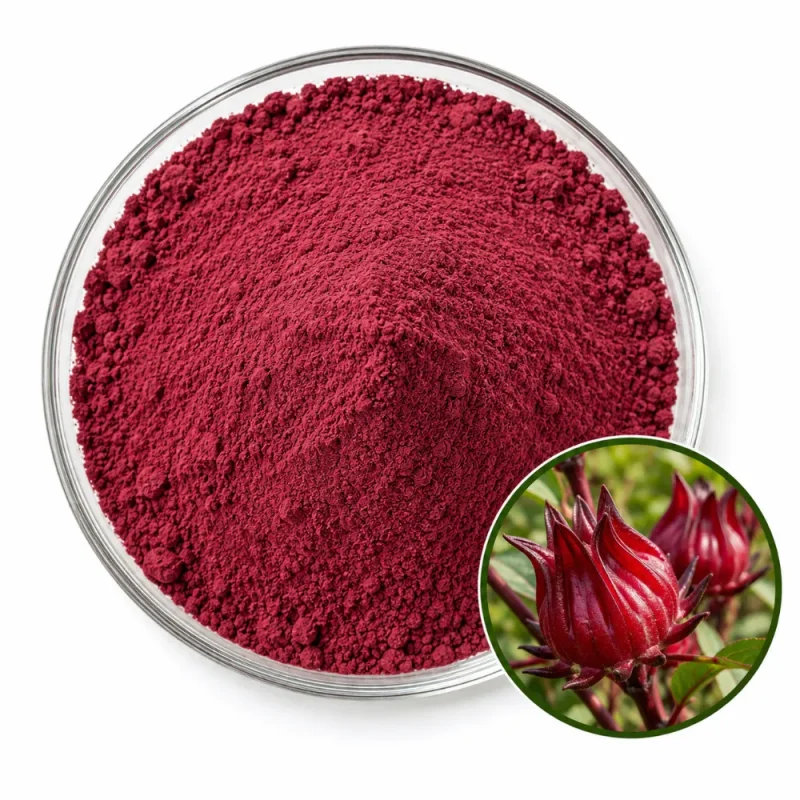
Dried calyces of Hibiscus sabdariffa, the roselle plant, are milled into this deep purple-red powder, which is sold commercially as hibiscus flower. The red calyx is the part used, with no seed, leaf or stem, so the tart acidity and the pigment of the calyx define the material.

Hibiscus flower powder is supplied at 80 mesh, with 40, 60 and 100 mesh optional, and has a fruity, sharply sour taste with little aroma. It is raw milled calyx rather than an extract, so inclusion rates are higher and the tartness is stronger than in the extract forms.

Hibiscus sabdariffa Raw Material & Plant Part

The botanical name is Hibiscus sabdariffa L., family Malvaceae, sold as roselle, Jamaica, sorrel or karkade. What the trade calls the flower is the fleshy red calyx with its small epicalyx, which is harvested after the true flower has fallen, dried and milled. Seeds, leaves and stems are not part of this powder.

The word hibiscus covers a large genus. Hibiscus rosa-sinensis, the ornamental shoeblack plant, is a different species with different flowers that are not the source of roselle products, and a specification that says only hibiscus does not exclude it. Naming H. sabdariffa and the calyx removes both doubts.

The calyx is rich in organic acids, which give the sour taste, and in anthocyanins, mainly delphinidin-based glycosides, which give the deep red color. Mucilage and pectin from the plant add body and moisture binding. These are traits of the material and not levels for the powder.

Harvest and drying set the quality of the calyx. Calyces are picked when fully developed and firm, separated from the seed capsule and dried until brittle, and slow or humid drying darkens them toward brown. Hibiscus flower powder therefore reflects the drying in its depth of red, which is a quick visual check on a lot.

Hibiscus Flower Powder vs Extract

FormWhat It IsChoose It When
Hibiscus Flower PowderMilled dried calyx with its fiberWhole-calyx tartness and color in dry blends
Hibiscus (Roselle) Extract PowderWater-extracted calyx with the fiber removedA soluble format with less sediment
Hibiscus Extract 5–25% AnthocyaninsCalyx extract standardized to an anthocyanin rangeA defined pigment content is required
3,4-Dihydroxybenzoic Acid 98%Single phenolic acid reference gradeAn isolated compound, not a botanical, is needed

The powder keeps the fiber, mucilage, acids and pigment of the calyx together, so it colors and sours a product at the same time. Inclusion rates are higher than for an extract, and the powder only disperses in liquids, leaving a red, slightly viscous suspension.

An extract powder dissolves with less sediment and is easier to handle in a clear drink. The standardized extract is chosen for pigment strength rather than taste, and the single acid is a chemical ingredient, not a plant material. Choose the powder when the whole calyx, its acidity and its color are part of the recipe.

In use, hibiscus flower powder suits recipes in which sourness and red color are wanted together. An extract powder gives color with less bulk, which helps when a clear drink is needed, and hibiscus powder in its milled form is the better choice where the texture and fiber of the calyx are part of the product.

Typical Specifications

Specification ItemProduct Information
Latin NameHibiscus sabdariffa
Plant PartFlower
ProcessingMilled
Common NameHibiscus, roselle, Jamaica, sorrel
Raw MaterialDried calyx
Ingredient TypeMilled Powder
AppearancePurple Red powder (natural color of the dried material)
Odor & TasteFaint fruity odor; sharply sour taste
Solubility / DispersibilityWater Dispersible
Quality Parameters
Moisture (LOD)≤8.0%
Particle Size80 mesh (40 / 60 / 100 mesh optional)
Heavy MetalsLead ≤2 ppm · Arsenic ≤1 ppm · Cadmium ≤1 ppm · Mercury ≤0.1 ppm
MicrobiologyTPC ≤10,000 cfu/g · Yeast & Mold ≤1,000 cfu/g · E. coli Negative · Salmonella Negative/25 g
Shelf Life24 months in unopened original packaging, cool and dry storage

Application Areas

Tart herbal tea blends

Hibiscus is a standard base in fruit and herbal teas, where the powder adds sourness and a ruby color. A coarse 40 or 60 mesh stays in the bag, and the pigment shifts toward blue-gray if the water is alkaline.

Natural red-tinted drink mixes

Powder sticks and drink mixes use the powder for color and tartness together. The mucilage thickens the drink slightly, so the dose is limited when a thin, clear beverage is the goal. A small amount of fruit powder rounds off the sharp acidity.

Gummies and fruit chews

Gummies take the powder as a sour, colored fruit component. The acid lowers pH and weakens some gels, so pectin and acid are adjusted in trial batches before scale-up. Late addition at a lower temperature protects the pigment, and the color is checked again after storage.

Seasoning and sauce bases

Dry sauce, chutney and spice mixes use hibiscus for a fruity sour note and a deep red tone. Metal contact and heat darken the color, so stainless steel and moderate cooking times are preferred. Dry mixes are blended away from metal scoops that stain.

Handling & Blending Notes

Hibiscus flower powder is hygroscopic. The acids, pectin and mucilage pull moisture from air, so the powder cakes and darkens in open packs within hours at high humidity. Barrier bags, dry rooms and tight reclosing are the main controls, and lumps are screened before the powder goes into a blend.

Color depends on pH. The anthocyanins are bright red in acid, shift to purple and then blue-green as pH rises, and are bleached by heat and some metals. A drink base is therefore tested at its final pH, and carbonates or alkaline minerals are kept away from the powder in dry premixes.

Mesh choice matters. The 80 mesh grade fits capsules and dry blends, 40 and 60 mesh grades suit tea bags, and 100 mesh disperses better in drinks, with a stronger tendency to stain equipment and containers. Staining of plastics and cloth is a practical point in the plant, so dedicated scoops and quick cleaning are normal.

Packaging and storage follow the moisture risk. Sealed barrier bags with little headspace, cool rooms and opaque containers protect both texture and pigment, and a desiccant sachet is a common aid in large containers. Once a pack is open, the powder is used within a short time, because color loss and caking appear first at the surface of the exposed material.

Packaging & Commercial Supply

Essencefield supports product evaluation, formulation trials, commercial orders, and ongoing ingredient supply. Packaging, storage, and shipping arrangements are determined by product characteristics, order quantity, stability requirements, and destination-market needs.

Supply ItemGeneral Information
SampleAvailable upon request for formulation, testing, and supplier evaluation
Order Quantities100 g · 1 kg · 5 kg · 25 kg · 100 kg · 500 kg · Bulk
Sample Lead TimeTypically 5–7 days after sample confirmation
Production Lead TimeTypically 15–30 days after order and specification confirmation
PackagingSuitable protective inner packaging with bags, cartons, drums, or other appropriate outer packaging
StorageStore in tightly sealed, suitable protective packaging in a cool, dry environment. Protect from moisture, heat, and direct sunlight. Specific storage conditions follow the approved product specification.
DocumentationCOA · Product Specification · TDS · SDS · Applicable declarations (as applicable)

Final order quantities, lead times, packaging, documentation, and shipping arrangements are confirmed according to the selected product and commercial requirements.

Request Ingredient Specifications & Quote

Share your target specification, application, quantity, and documentation needs. We’ll help confirm suitable options, samples, and commercial supply details.