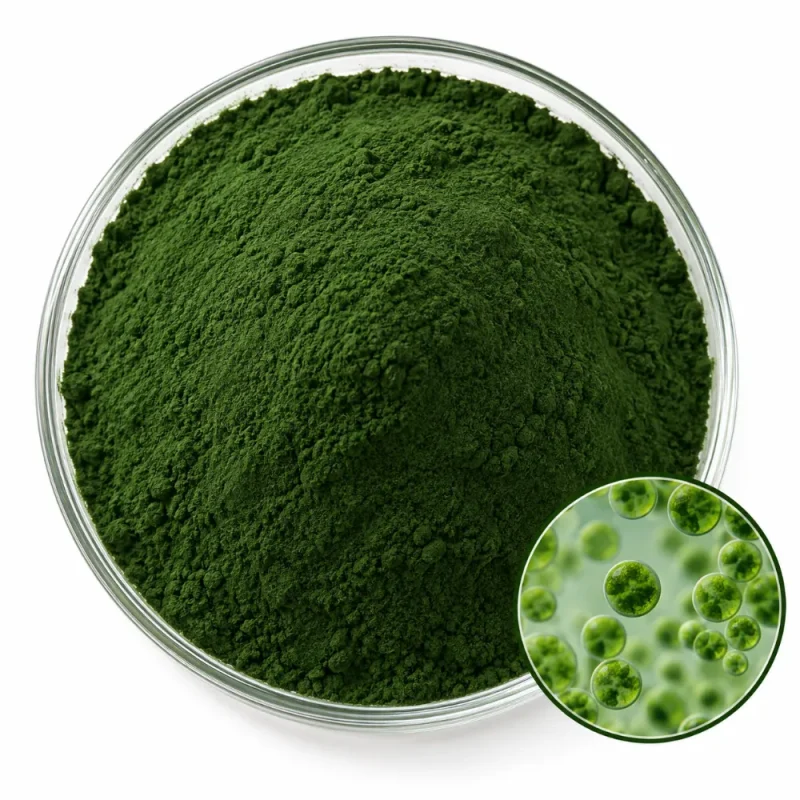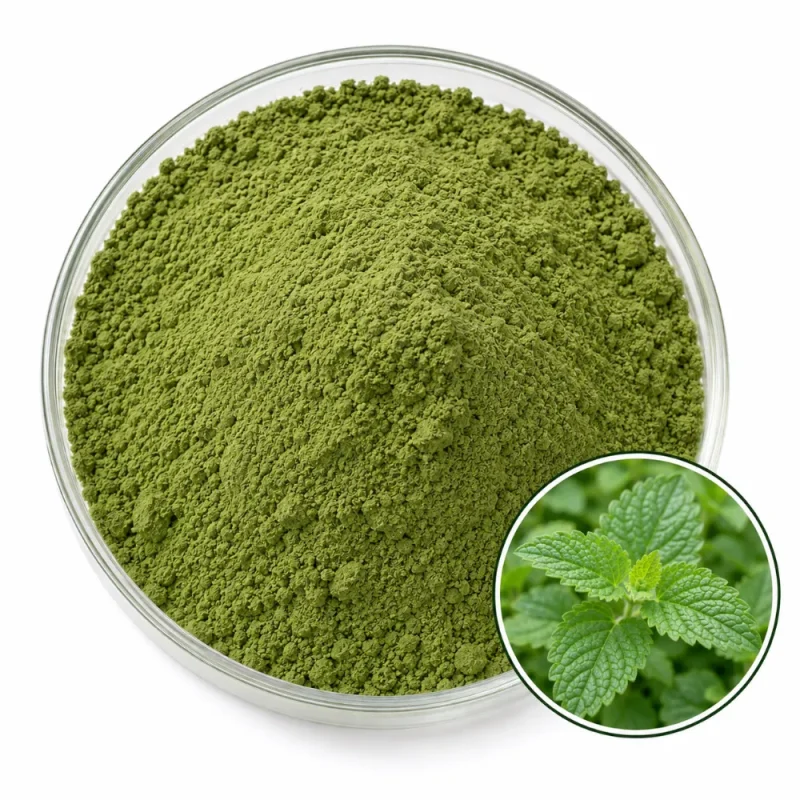
Lemon Balm Leaf Powder

Leaves of Melissa officinalis, a perennial mint-family herb, are dried and milled into this green lemon balm leaf powder. The leaf alone is used, so stems and flowering tops do not dilute the lemony herbal character of the material.

The powder is supplied at 80 mesh, with 40, 60 and 100 mesh optional, as a green powder with a mild lemon-herbal odor and a gentle, slightly bitter taste. It is milled leaf rather than an extract, which means higher inclusion rates and a fuller leaf flavor than lemon balm extract powder gives.

Melissa officinalis Raw Material & Plant Part

The botanical name is Melissa officinalis L., family Lamiaceae, sold as lemon balm, balm or sweet balm. The raw material is the dried leaf, harvested before or at early flowering, cut and dried before milling. Stems, flowers and roots are not included.

Several plants carry a lemon name and are unrelated. Lemon verbena, lemongrass and lemon thyme belong to other genera, and lemon-scented leaves alone do not identify lemon balm. A specification that reads lemon balm without the species leaves that confusion open.

The fresh leaf smells of lemon because of volatile oils rich in citral and citronellal. Those oils are light and easily lost in drying and storage, so the dried leaf smells milder than the living plant. Rosmarinic acid is the main phenolic acid of the leaf, together with caffeic and chlorogenic acids. These are listed as a family trait of the plant, not as a level for this powder.

The lemon balm leaf is thin, crinkled and softly hairy, with a toothed edge and the square stem typical of the mint family, and it is bright green when dried quickly at low heat. Slow or hot drying turns it brown and strips the aroma, so the color of the milled powder is a first check on how well the leaf was handled.

Lemon Balm Leaf Powder vs Extract

FormWhat It IsChoose It When
Lemon Balm Leaf PowderMilled dried leaf with its fiberWhole-leaf inclusion in teas and dry blends
Lemon Balm Extract PowderWater-extracted leaf with the fiber removedA soluble format at a lower inclusion rate
Lemon Balm Extract 5–10% Rosmarinic acid-type markersLeaf extract standardized to a phenolic marker rangeA defined marker content is required

The leaf powder keeps the green fiber, chlorophyll and the remaining volatile oils, so inclusion rates are higher than for an extract and the powder only disperses in liquids. The green color and herbal note of lemon balm are part of the product, which is why lemon balm leaf powder fits tea blends and savory mixes.

An extract powder is paler, lighter in smell and easier to dissolve, because the oils are largely lost during water extraction. The standardized extract is chosen for its defined marker and not for flavor. Lemon balm leaf powder is the form for buyers who want the leaf itself.

Dispersion shows the difference in a cup. The powder floats first, then settles as green sediment, while an extract powder gives a clearer amber liquid. A formulator who needs color and herbal body therefore reaches for the leaf powder, and one who needs a clean, quickly dissolving ingredient reaches for the extract.

Typical Specifications

Specification ItemProduct Information
Latin NameMelissa officinalis
Plant PartLeaf & Herb
ProcessingMilled
Common NameLemon balm, balm, sweet balm
Raw MaterialDried leaf
Ingredient TypeMilled Powder
AppearanceGreen powder (natural color of the dried material)
Odor & TasteMild lemon-herbal odor; gentle, slightly bitter taste
Solubility / DispersibilityWater Dispersible
Quality Parameters
Moisture (LOD)≤8.0%
Particle Size80 mesh (40 / 60 / 100 mesh optional)
Heavy MetalsLead ≤2 ppm · Arsenic ≤1 ppm · Cadmium ≤1 ppm · Mercury ≤0.1 ppm
MicrobiologyTPC ≤10,000 cfu/g · Yeast & Mold ≤1,000 cfu/g · E. coli Negative · Salmonella Negative/25 g
Shelf Life24 months in unopened original packaging, cool and dry storage

Application Areas

Herbal tea blends

Lemon balm leaf powder goes into tea bags and infusion blends with mint, chamomile or hibiscus. A coarser 40 or 60 mesh stays in the filter bag, while a fine grade passes through the paper and clouds the cup with green sediment, so the mesh is set by the bag.

Green leaf capsule fills

Capsules take the leaf powder as a bulky, fibrous green fill. The volume is high for the weight, so capsule size sets the maximum amount per unit, and a pilot fill shows how much powder a capsule actually holds before the formula is fixed.

Savory seasoning mixes

Dry seasoning and dip mixes use the herbal note of the leaf with parsley, dill or thyme. The powder adds green color and a light citrus-herbal accent that does not overpower the mix, and a low inclusion rate is enough for the effect.

Powder sticks with green bases

Stick packs pair the leaf powder with other green herbs or fruit powders. The fiber stays suspended for a short time only, so drinks are stirred just before use, and a sweet fruit base helps to cover the slight bitterness of the leaf.

Handling & Blending Notes

Lemon balm leaf is a light, fluffy powder, so bulk density is low and the powder dusts easily at filling points. Local extraction, covered hoppers and gentle scooping keep the green dust out of the air and off equipment. The powder takes up moisture from the air, so lumps form in open bags and sealed barrier packaging keeps it free-flowing.

Mesh choice changes behavior. The 80 mesh grade suits capsules and dry blends, 40 and 60 mesh stay in infusion bags, and 100 mesh disperses more evenly in a drink mix. Finer grades feel smoother but pack tighter and flow less freely.

The volatile oils that give the leaf its aroma fade with heat, light and air, so opened packs are reclosed quickly and kept cool and away from strong odors. Chlorophyll pigments also lose color under light and acid, which is why leaf powders are stored in opaque packaging and tested in the finished pH of the product.

In tea and dry blends the lemon note is easily overwhelmed by stronger herbs such as peppermint or spearmint, so lemon balm is used as the lead leaf and the strong herbs are added in smaller proportions. Heat in tea-bag filling lines is kept low to protect the remaining oil, and the finished blend is checked for aroma after a short storage period.

Packaging & Commercial Supply

Essencefield supports product evaluation, formulation trials, commercial orders, and ongoing ingredient supply. Packaging, storage, and shipping arrangements are determined by product characteristics, order quantity, stability requirements, and destination-market needs.

Supply ItemGeneral Information
SampleAvailable upon request for formulation, testing, and supplier evaluation
Order Quantities100 g · 1 kg · 5 kg · 25 kg · 100 kg · 500 kg · Bulk
Sample Lead TimeTypically 5–7 days after sample confirmation
Production Lead TimeTypically 15–30 days after order and specification confirmation
PackagingSuitable protective inner packaging with bags, cartons, drums, or other appropriate outer packaging
StorageStore in tightly sealed, suitable protective packaging in a cool, dry environment. Protect from moisture, heat, and direct sunlight. Specific storage conditions follow the approved product specification.
DocumentationCOA · Product Specification · TDS · SDS · Applicable declarations (as applicable)

Final order quantities, lead times, packaging, documentation, and shipping arrangements are confirmed according to the selected product and commercial requirements.

Request Ingredient Specifications & Quote

Share your target specification, application, quantity, and documentation needs. We’ll help confirm suitable options, samples, and commercial supply details.