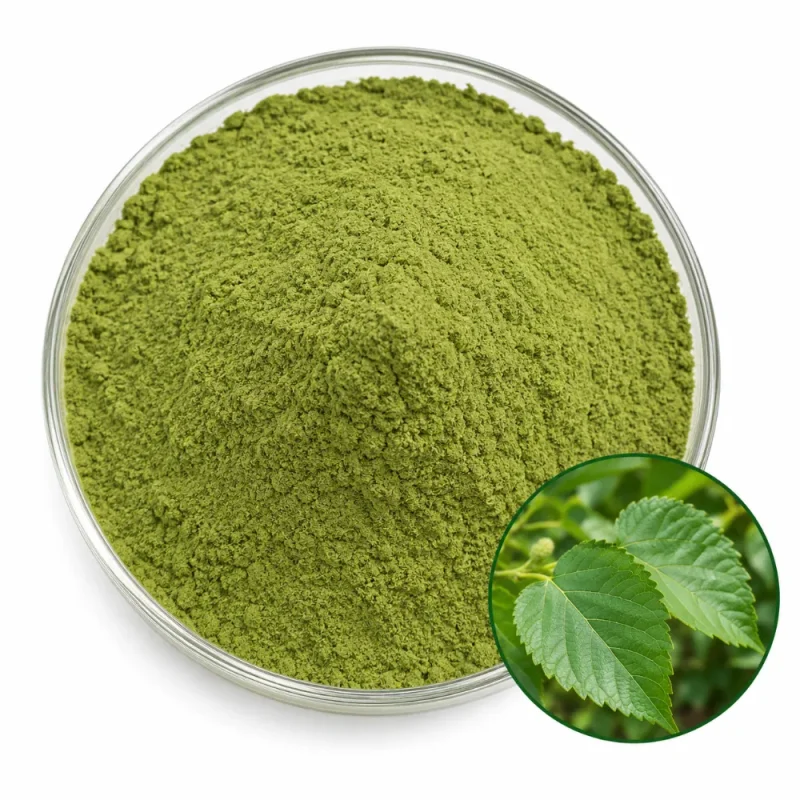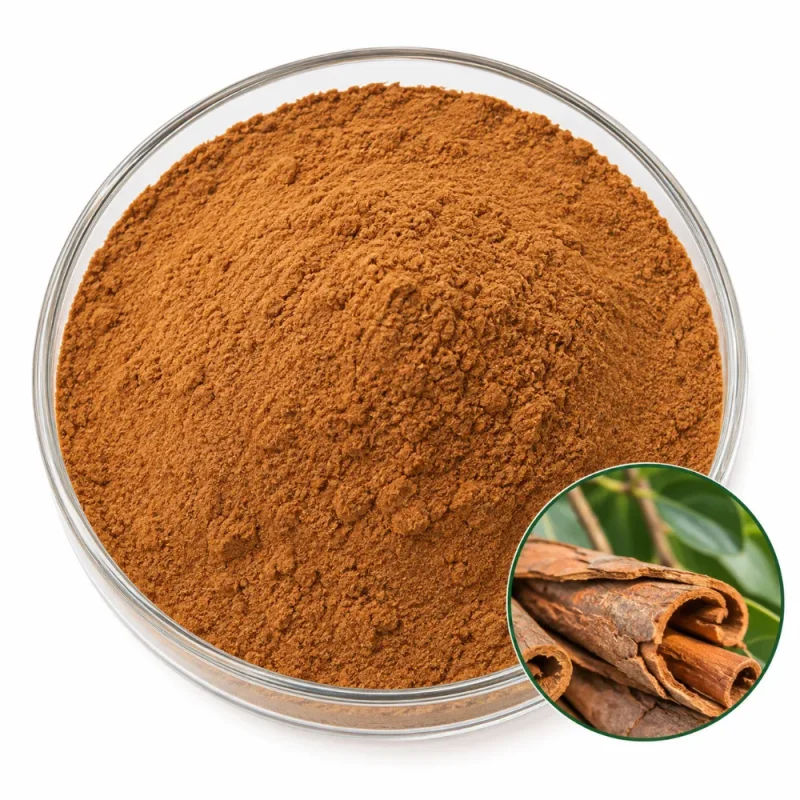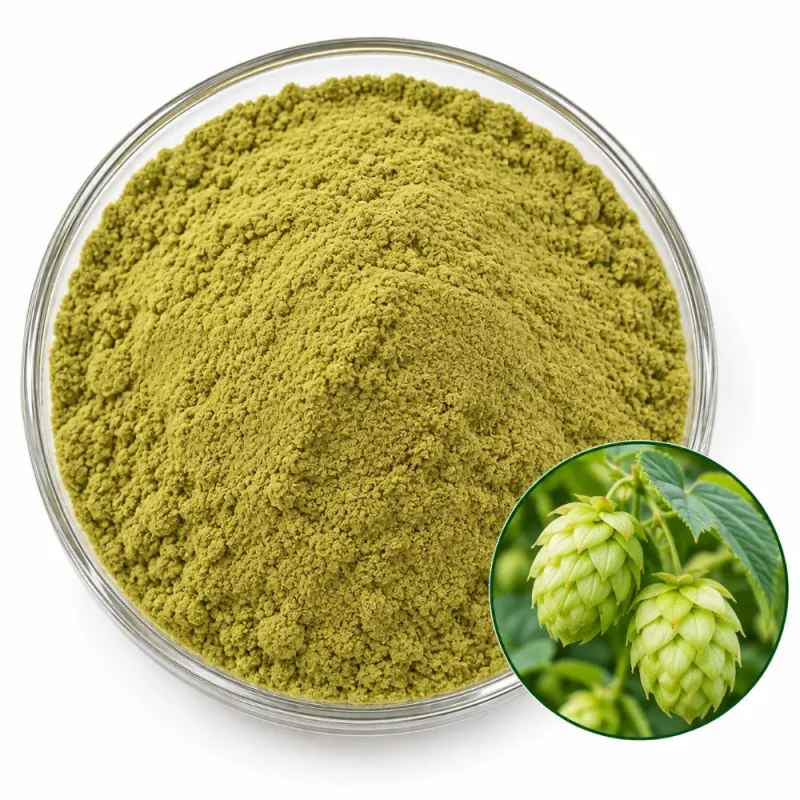
Hops Flower Powder

Hops, the female flower cones of Humulus lupulus, are dried and milled into this light green powder, which carries the resin glands of the cone and a strong, herbal-resinous aroma. The cone is the only part used, so the bines, leaves and male flowers of the hop plant are not in the material.

Hops flower powder is supplied at 80 mesh, with 40, 60 and 100 mesh optional, and has a pungent, resinous and herbal odor with a sharp, lingering bitter taste. It is raw milled cone rather than an extract, so inclusion rates are higher and the resin character is stronger than in the extract forms.

Humulus lupulus Raw Material & Plant Part

The botanical name is Humulus lupulus L., family Cannabaceae, known as hops or common hop. The raw material is the dried female cone, botanically a strobile made of overlapping papery bracts. At the base of the bracts sit the lupulin glands, small yellow resin glands that hold most of the aroma and bitterness. The cones are picked when ripe, dried and then milled. Leaves, bines and roots are not included.

Hop products can mean several things. Brewing hops are sold as whole cones, pellets and extracts, and each form has its own use. The Japanese hop, Humulus scandens, or wild hop, is a different species and is not interchangeable with common hop. The name hops flower in trade refers to the cone, even though a hop cone is not a true flower.

Hop cones are known for bitter resin acids, the alpha acids such as humulones and the beta acids such as lupulones, for essential oil, and for prenylated flavonoids, among them xanthohumol. Alpha and beta acids oxidize in air, which changes the aroma, while xanthohumol is a chalcone that can cyclize in heat and acid.

Drying and storage protect the lupulin. Slow, warm drying and humid storage let the resin acids oxidize, giving a cheesy, stale smell, while quick drying and cool storage keep the fresh, green, resinous character.

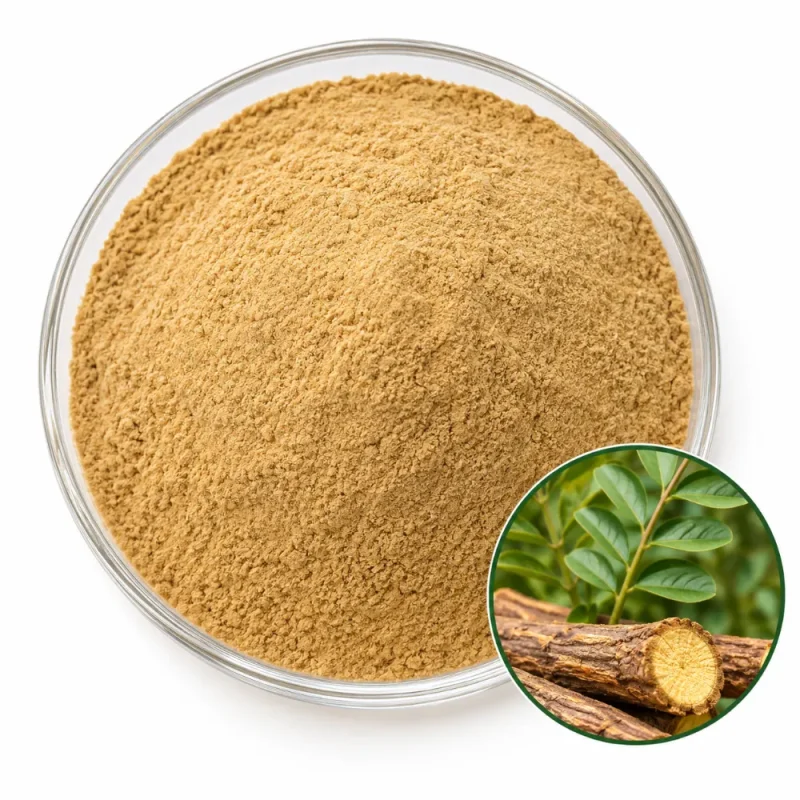
Hops Flower Powder vs Extract

FormWhat It IsChoose It When
Hops Flower PowderMilled dried cone with its bracts and lupulinWhole-cone aroma, bitterness and fiber
Hops Extract PowderExtract of the cone with the fiber removedA concentrated format at a lower inclusion rate
Hops Extract 2.5–10% FlavonoidsCone extract standardized to a flavonoid rangeA defined flavonoid content is required
Xanthohumol 98%Purified single prenylated chalcone reference gradeAn isolated compound is needed

The cone powder keeps the bracts, the lupulin glands and the full volatile profile at their natural, lower concentration. Inclusion rates are higher than for an extract, the aroma is strong and resinous, and the powder only disperses in liquids, with resin that does not wet easily.

The extract powder concentrates the extractable fraction and is easier to handle at low dose, while the standardized extract is chosen for its flavonoid content. The xanthohumol 98% grade is a chemical reference ingredient. Choose the cone powder when the whole hop cone, with its aroma and its fibrous bracts, is the specification.

In handling, the resin makes the powder sticky and hydrophobic. It wets slowly in water and tends to float, while the extract powders spread more evenly.

Hops flower powder is therefore the choice for blends where the aroma of the whole cone is wanted, and the extract serves formulas built around dose and marker content. Neither extract carries the bracts, so only the cone powder shows the fibrous green look of the hop.

Typical Specifications

Specification ItemProduct Information
Latin NameHumulus lupulus
Plant PartFlower
ProcessingMilled
Common NameHops, common hop
Raw MaterialDried female cone
Ingredient TypeMilled Powder
AppearanceLight Green powder (natural color of the dried material)
Odor & TastePungent, resinous, herbal odor; sharp, lingering bitter taste
Solubility / DispersibilityWater Dispersible
Quality Parameters
Moisture (LOD)≤8.0%
Particle Size80 mesh (40 / 60 / 100 mesh optional)
Heavy MetalsLead ≤2 ppm · Arsenic ≤1 ppm · Cadmium ≤1 ppm · Mercury ≤0.1 ppm
MicrobiologyTPC ≤10,000 cfu/g · Yeast & Mold ≤1,000 cfu/g · E. coli Negative · Salmonella Negative/25 g
Shelf Life24 months in unopened original packaging, cool and dry storage

Application Areas

Herbal tea and brew-style blends

Hops flower powder adds bitterness and a resinous aroma to herbal tea blends and non-alcoholic brew-style drink bases. Coarse 40 and 60 mesh grades stay in the bag, and the bitter note is balanced with citrus, malt or sweet spice partners.

Capsule and tablet fills

Fills use the powder as a sticky, aromatic green material. The resin builds up on tooling and capsule machines, so lubricant levels and cleaning intervals are tested, and tablets need a coating to hold back the strong smell.

Savory bitter seasoning blends

Seasoning and spice mixes use a small share of hops for a green, bitter accent next to hops-compatible flavors such as citrus peel, juniper or pepper. The strong aroma dominates quickly, so trials start at very low inclusion.

Dry malt-style drink mixes

Malt and grain drink mixes use the powder for a mild hoppy bitterness. The resin does not dissolve, so the powder is premixed with the malt base to spread evenly, and the drink is stirred before it is served.

Handling & Blending Notes

Resin controls how hops flower powder behaves. The powder is sticky, clings to scoops and equipment, and forms lumps in warm rooms. Cool handling, dry rooms and stainless steel equipment that is cleaned with warm water and a food-safe cleaner after each run keep the line free of resin build-up.

The aroma compounds oxidize in air. A fresh pack smells green and resinous, while an old or poorly stored pack develops a cheesy, stale note, and its green color fades toward brown. Barrier bags with little headspace, a cool store and short working periods after opening are the main controls, and reclosing straight after use is routine.

Fine dust irritates the nose and eyes, and the powder is intensely bitter, so extraction at the scoop and dust masks at open transfers are good practice. Mesh follows the format, with 80 mesh for capsules and dry blends and 40 and 60 mesh for infusions. Odors travel, so hops powder is stored apart from delicate materials.

Cone powder is best bought in sizes that are used quickly. Hops that have been open for months smell stale, so working containers are small, first-in, first-out rotation is applied and every opening is dated on the label.

Packaging & Commercial Supply

Essencefield supports product evaluation, formulation trials, commercial orders, and ongoing ingredient supply. Packaging, storage, and shipping arrangements are determined by product characteristics, order quantity, stability requirements, and destination-market needs.

Supply ItemGeneral Information
SampleAvailable upon request for formulation, testing, and supplier evaluation
Order Quantities100 g · 1 kg · 5 kg · 25 kg · 100 kg · 500 kg · Bulk
Sample Lead TimeTypically 5–7 days after sample confirmation
Production Lead TimeTypically 15–30 days after order and specification confirmation
PackagingSuitable protective inner packaging with bags, cartons, drums, or other appropriate outer packaging
StorageStore in tightly sealed, suitable protective packaging in a cool, dry environment. Protect from moisture, heat, and direct sunlight. Specific storage conditions follow the approved product specification.
DocumentationCOA · Product Specification · TDS · SDS · Applicable declarations (as applicable)

Final order quantities, lead times, packaging, documentation, and shipping arrangements are confirmed according to the selected product and commercial requirements.

Request Ingredient Specifications & Quote

Share your target specification, application, quantity, and documentation needs. We’ll help confirm suitable options, samples, and commercial supply details.