Houttuynia cordata Raw Material & Plant Part
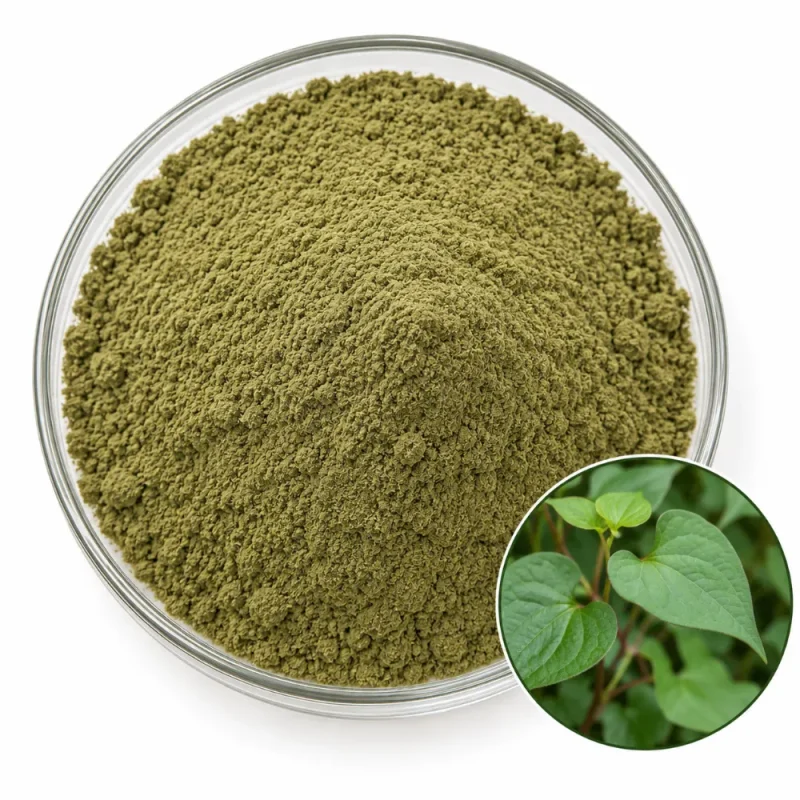
The botanical name is Houttuynia cordata Thunb., family Saururaceae, known as fish mint, heartleaf, chameleon plant or by its herbal name yu xing cao. The raw material is the dried aerial part of the plant, meaning the heart-shaped leaf and the slender stem, cut during the growing season, dried and milled. The underground stems, which are a food in parts of Asia, are not included.
The common name causes confusion. Fish mint is not a true mint, since it does not belong to the mint family, Lamiaceae. The plant gets the name from the strong fishy smell of the fresh leaf, which comes from aldehyde compounds that are released when the leaf is crushed. Drying greatly weakens that smell, which is why the dried herb and the powder are much easier to use than the fresh plant.
Houttuynia is known for flavonoid glycosides such as quercitrin and rutin, for phenolic acids and for a small amount of essential oil. Afzelin, a kaempferol rhamnoside, is one of the characteristic flavonoids.
The dried herb keeps its green color when dried quickly and carefully. The leaf is thin, with heart-shaped blades, and it mills to a green powder with fine fibers from the stems. Slow drying or damp storage turn the powder brownish and bring back the fishy note.