Nori Powder

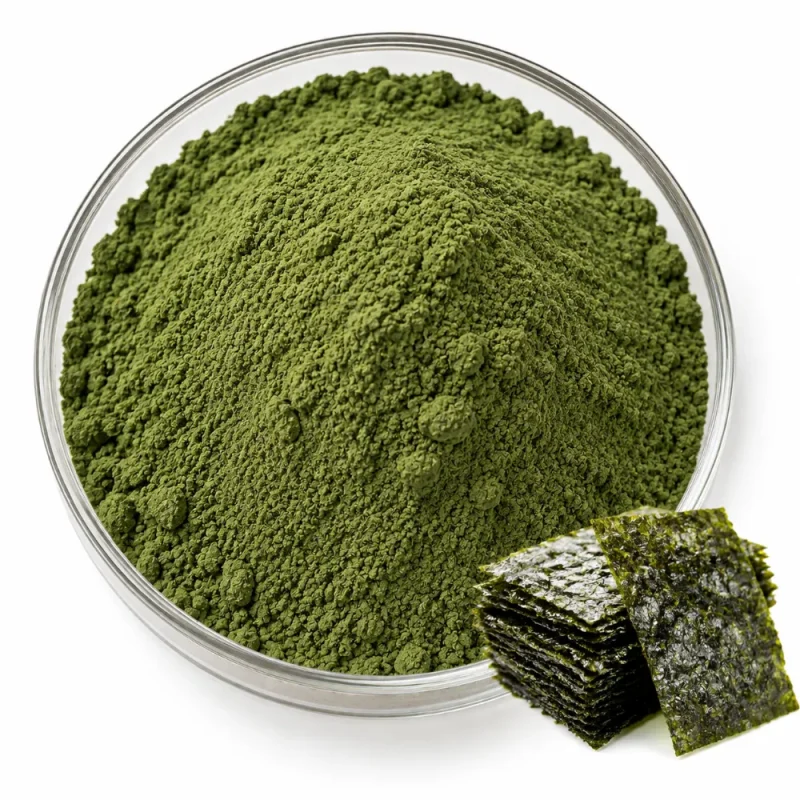
Nori, the thin red seaweed Pyropia yezoensis that is pressed into the wrappers used for sushi, is dried and milled into this dark green powder with a toasty, marine aroma. The whole thallus is the material, so the powder reflects the seaweed itself and not a seasoned or roasted snack.

Nori powder is supplied at 80 mesh, with 40, 60 and 100 mesh optional, and has a deep, sea-like and slightly toasted odor with a savory, umami taste. It is raw milled seaweed rather than an extract, so it carries the fiber, the pigments and the flavor compounds of the whole thallus.

Pyropia yezoensis Raw Material & Plant Part

The botanical name is Pyropia yezoensis (Ueda) M.S.Hwang & H.G.Choi, family Bangiaceae, known as nori, laver or gim. The raw material is the dried thallus, the thin, flat, leaf-like body of the red alga, which is harvested, washed, dried and milled. As a seaweed it has no true roots, stems or leaves, so the term plant part refers to the thallus.

Taxonomy changed in 2011. Nori species formerly placed in Porphyra were moved to Pyropia, so the same seaweed can appear in older sources under the genus name Porphyra yezoensis. Nori is also confused with other seaweeds: kombu and kelp are brown algae from the Laminaria group, wakame comes from Undaria, and spirulina is not a seaweed at all but a cyanobacterium.

Nori is known for its protein-rich composition, for taste-active free amino acids that give the umami flavor, for the sulfated galactan porphyran, for pigments including chlorophyll, phycoerythrin and carotenoids, and for minerals. Its dark green-purple color is the sum of these pigments.

Processing influences the color and smell. Light roasting gives a toasted aroma and a more green tone, while plain dried thallus is darker and more marine. The master color of this powder is dark green.
Nori Mesh Size & Particle Options

Nori powder is supplied at 80 mesh as the standard grade, with 40, 60 and 100 mesh on request. The thin thallus is very brittle when dry, so it mills easily, and the mesh number mainly sets how visible the dark specks are and how the powder behaves in seasonings, doughs and drinks.

A coarse grade of 40 or 60 mesh shows as distinct dark-green flakes, which suit toppings and rustic seasonings, flows more freely and dusts less. The 80 mesh grade is the working grade for dry blends, seasoned doughs and capsules, with an even dark green color. The 100 mesh grade dissolves its color most evenly into soups, sauces and batters, but it is also the grade that takes up moisture fastest, clings to scoops through static charge, and stains containers.

In water, the powder wets quickly, swells and releases a green-brown color, and it does not dissolve completely, because the fiber stays in suspension. Stirring is needed to avoid lumps, and sauces are tasted after resting, since the umami and marine notes continue to develop in the liquid.

Nori powder is chosen over nori flakes where an even, metered seasoning is needed, since the milled seaweed spreads through rice, dough and sauce in a way that torn pieces cannot. Nori in this form suits industrial seasoning lines that dose powders, and it can be blended with salt and sugar without segregating.

Typical Specifications

Specification ItemProduct Information
Latin NamePyropia yezoensis
Plant PartSeaweed & Algae
ProcessingMilled
Common NameNori, laver, gim
Raw MaterialDried thallus
Ingredient TypeMilled Powder
AppearanceDark Green powder (natural color of the dried material)
Odor & TasteDeep, sea-like, slightly toasted odor; savory, umami taste
Solubility / DispersibilityWater Dispersible
Quality Parameters
Moisture (LOD)≤8.0%
Particle Size80 mesh (40 / 60 / 100 mesh optional)
Heavy MetalsLead ≤2 ppm · Arsenic ≤1 ppm · Cadmium ≤1 ppm · Mercury ≤0.1 ppm
MicrobiologyTPC ≤10,000 cfu/g · Yeast & Mold ≤1,000 cfu/g · E. coli Negative · Salmonella Negative/25 g
Shelf Life24 months in unopened original packaging, cool and dry storage

Application Areas

Furikake and rice seasonings

Nori powder is a core ingredient of rice seasonings, furikake-style mixes and sushi flavorings. It combines with sesame, salt and bonito alternatives, and the dark green flecks stay visible on the rice, so a coarser 40 or 60 mesh grade is common.

Snack and cracker coatings

Seaweed-flavored chips, crackers and popcorn use the powder in a topical seasoning. The umami and marine flavor suits salty bases, and the powder is applied with oil or a binder, since the dry powder alone does not stick well to smooth surfaces.

Noodle, dough and batter colorants

Doughs, tempura batters and noodles take nori powder for a green-gray tint and a sea flavor. The color holds in neutral bases but dulls in frying and long cooking, and the marine note is balanced with ginger or citrus.

Soup, sauce and dressing bases

Dry soup, ramen and dressing mixes use fine nori for umami body. It thickens a little as the fiber hydrates, and dressings with oil and vinegar are tasted after resting, since the seaweed flavor develops over time.

Handling & Blending Notes

Nori powder is highly hygroscopic. The thin thallus and its salts and polysaccharides pull moisture from the air within minutes, and the powder turns soft, sticky and dark if the pack stays open. Barrier bags with low headspace, dry weighing rooms and fast resealing are essential, and humidity-damaged material is discarded and not reground.

The marine smell travels and lingers. Nori powder passes its aroma to neighboring materials and packaging, so dedicated scoops, closed hoppers and separate storage prevent cross-contamination of milder products. The odor sharpens with warmth, fine milling and age, and a stale or fishy note suggests damp storage or oxidation.

The pigments fade under light, heat and oxidation, so opaque packs and a cool store protect the dark green color. Fine dust is light and clings through static charge, so anti-static tools, covered transfer and local extraction are used. Opened containers are resealed at once and used within a short time.

Nori powder is dated at opening, kept in small working containers and used first in, first out, since the marine flavor of nori declines within weeks of exposure. A desiccant sachet inside the outer pack gives extra protection in humid regions.

Packaging & Commercial Supply

Essencefield supports product evaluation, formulation trials, commercial orders, and ongoing ingredient supply. Packaging, storage, and shipping arrangements are determined by product characteristics, order quantity, stability requirements, and destination-market needs.

Supply ItemGeneral Information
SampleAvailable upon request for formulation, testing, and supplier evaluation
Order Quantities100 g · 1 kg · 5 kg · 25 kg · 100 kg · 500 kg · Bulk
Sample Lead TimeTypically 5–7 days after sample confirmation
Production Lead TimeTypically 15–30 days after order and specification confirmation
PackagingSuitable protective inner packaging with bags, cartons, drums, or other appropriate outer packaging
StorageStore in tightly sealed, suitable protective packaging in a cool, dry environment. Protect from moisture, heat, and direct sunlight. Specific storage conditions follow the approved product specification.
DocumentationCOA · Product Specification · TDS · SDS · Applicable declarations (as applicable)

Final order quantities, lead times, packaging, documentation, and shipping arrangements are confirmed according to the selected product and commercial requirements.

Request Ingredient Specifications & Quote

Share your target specification, application, quantity, and documentation needs. We’ll help confirm suitable options, samples, and commercial supply details.