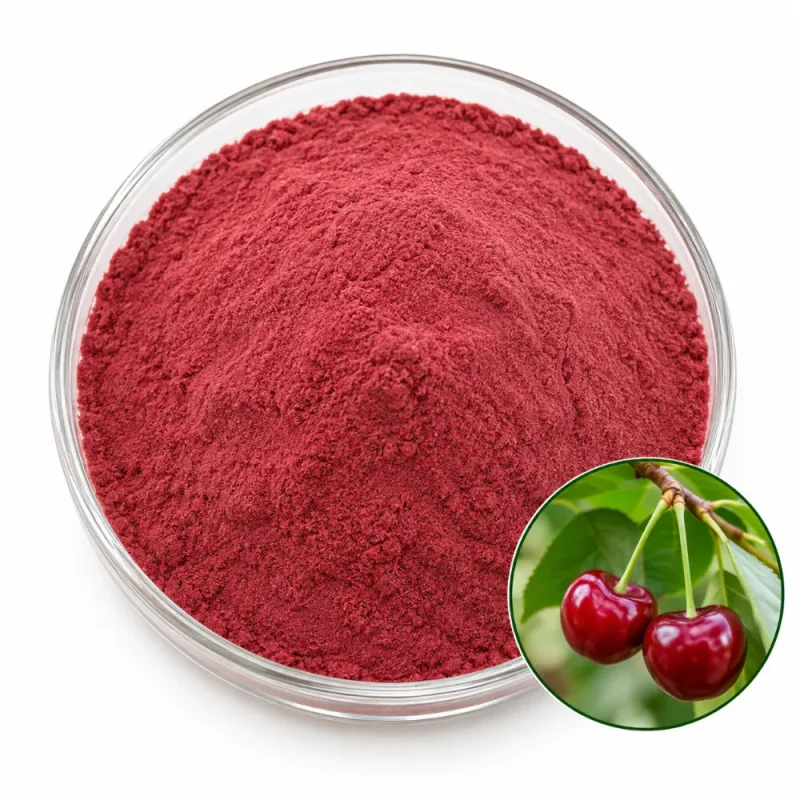
Cranberry Powder

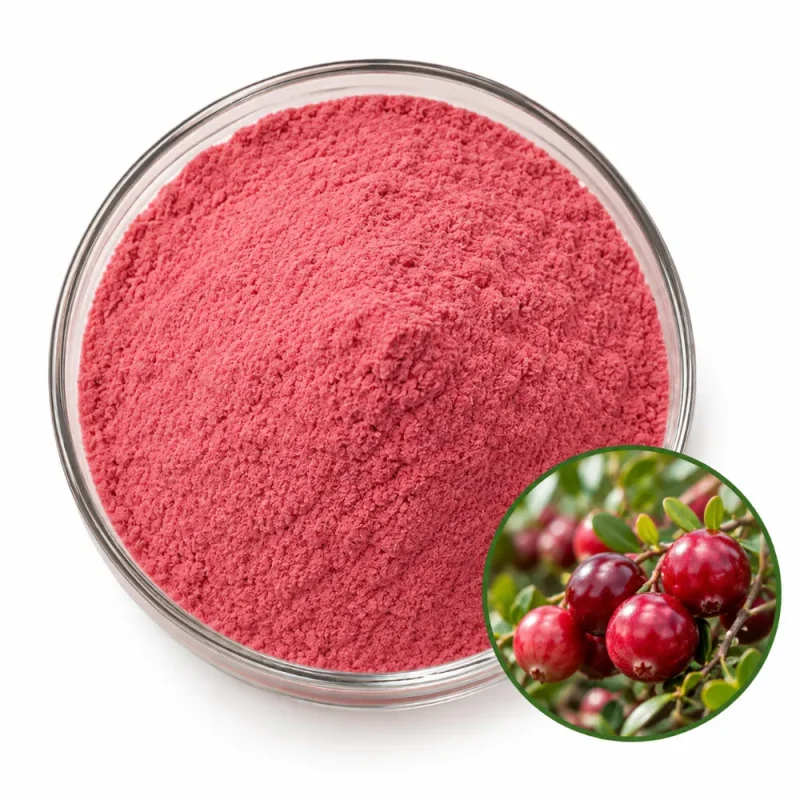
Cranberry juice, pressed from the tart red fruit of the creeping evergreen shrub Vaccinium macrocarpon, is concentrated and spray-dried onto a maltodextrin carrier to give this purple-red powder. The raw material is the juice of the ripe berry, so stems, leaves and seeds stay out of the material.

Cranberry powder dissolves in water to a clear red liquid and has a bright, sharply sour taste with a dry, slightly bitter finish. It differs from freeze-dried cranberry powder, which keeps the skin, pulp and fiber, and from the extracts that are standardized to proanthocyanidin content.

Cranberry Juice Powder Processing

The species is Vaccinium macrocarpon Aiton, family Ericaceae, the American or large cranberry, a close relative of the blueberry. Several other plants are sold as cranberry. The small cranberry, Vaccinium oxycoccos, is a northern wild species, and the lingonberry or cowberry, Vaccinium vitis-idaea, is called cranberry in some regions. Blueberry and bilberry belong to the same genus but have a different flavor and pigment profile, and the species name defines which fruit is used.

The raw material is cranberry juice concentrate. Pressed cranberry juice is concentrated, blended with maltodextrin and then dried in a spray tower to a fine powder. The carrier is important for this fruit, because cranberry juice is extremely acidic and its solids are sticky, so the maltodextrin supports a free-flowing powder and softens the sharpest edge of the acidity.

Cranberries are harvested in autumn, and some are gathered from flooded beds, where the berries float because of the air pockets inside them. Color and acid depend on cultivar, ripeness and year, and the highest red color develops in cool autumn weather, so lots differ in depth of color and in tartness.

Cranberries grow on low vines in sandy, acidic bogs and are harvested once a year. The fruit is firm and keeps well, which makes it easy to freeze and press out of season, and juice from frozen or fresh fruit gives a similar dry powder.
Cranberry Flavor, Color & Forms

Cranberry powder is purple-red, and a small amount tints a drink a bright, clear red. The taste is intensely sour, driven by citric, malic and quinic acids, with a dry, mildly bitter finish. The color comes from anthocyanins that are mainly cyanidin and peonidin glycosides, and the fruit also carries proanthocyanidins of the A type, named as traits of the fruit and not as stated levels for this powder.

The A-type linkage, with an extra ether bond between the units, separates cranberry proanthocyanidins from the B-type ones of grape seed or cocoa. Cranberry juice is among the most acidic fruit juices, and the powder reconstitutes to a low pH, which strongly affects gels, proteins and neighboring ingredients.

FormWhat It IsChoose It When
Cranberry Juice PowderSpray-dried cranberry juice on a maltodextrin carrierA soluble, sharply sour fruit powder for drinks
Freeze-Dried Cranberry PowderFreeze-dried whole berry with skin, pulp and fiberFruit texture and fiber are wanted
Cranberry Extract PowderWater-extracted cranberry concentrate without a stated markerA solid extract format instead of a juice powder
Cranberry Extract 10–50% PACsCranberry extract standardized to proanthocyanidinsA defined PAC content is the requirement

Cranberry powder is a tartness and color ingredient first. It is rarely used alone, since the acid is too sharp, and it is blended with sweeter fruit powders or sweeteners, so the amount of cranberry in a mix is set by the acid it brings and not by volume.

Typical Specifications

Specification ItemProduct Information
Latin NameVaccinium macrocarpon
Plant PartFruit & Berry
ProcessingSpray-Dried Juice
Common NameCranberry, American cranberry, large cranberry
Raw MaterialCranberry juice concentrate
Ingredient TypeJuice Powder
CarrierMaltodextrin
AppearancePurple Red powder
FlavorIntensely sour, dry, mildly bitter finish
Solubility / DispersibilityWater Soluble
Quality Parameters
Moisture (LOD)≤5.0%
Heavy MetalsLead ≤2 ppm · Arsenic ≤1 ppm · Cadmium ≤1 ppm · Mercury ≤0.1 ppm
MicrobiologyTPC ≤10,000 cfu/g · Yeast & Mold ≤1,000 cfu/g · E. coli Negative · Salmonella Negative/25 g
Shelf Life24 months in unopened original packaging, cool and dry storage

Application Areas

Cranberry-style juice drinks and cocktail mixers

Cranberry powder dissolves quickly in cold water to a bright red drink with the sharp taste of cranberry juice. Sweetener or sweet juice powders are blended in to balance the acid, and the powder is a common base for mixers and ready-to-mix beverages.

Sweetened dried-fruit-style bars and cereals

Cereal bars, granola and trail-style mixes use the powder for a tart red fruit note and color. The acid cuts through sweet binders, and the powder is blended into the dry mix before syrup is added, so the color spreads evenly.

Gummies and fruit snacks

Gummies and snacks take cranberry powder as a sharp, colored fruit component. Its very low pH weakens pectin gels, so acid and buffer salts are adjusted early in the trial, and the color is checked after storage.

Bakery fillings, scones and muffins

Fillings, muffins and scones accept the powder as a dry tart component. The acid reacts with baking soda and can release gas early, so leavening is balanced in the recipe, and baked color tends toward brown-red.

Sauce, relish and glaze mixes

Dry sauce, relish and glaze mixes use the powder as a tart, red base next to sugar, spice and orange notes. Hot dissolving gives a smooth, glossy sauce, and the color holds well in acidic systems.

Moisture Pickup & Stability

Cranberry powder combines high acid with sugar and a hygroscopic carrier. In an open pack it takes up moisture quickly, becomes sticky, and sets to a hard cake in a few hours at high humidity. Sealed barrier packaging with little headspace, dry weighing rooms and fast resealing keep the powder loose, and caked material is discarded and not reworked.

The acid is also corrosive. Dry powder in contact with moisture attacks mild steel and some plastics, so stainless steel and food-grade plastic are used for scoops, hoppers and mixers, and equipment is dried after cleaning. Iron and copper also darken the anthocyanins, which is another reason to avoid unprotected metals.

Color is stable in dry storage but fades under light and heat and shifts in finished products as pH changes. Alkaline ingredients such as carbonate neutralize the acid, release gas and turn the red toward gray-purple, so they are kept apart from the powder in dry premixes. Opened containers are resealed at once and kept cool and dry.

Cranberry powder is stored in sealed liners inside cartons, in a cool and dry place. Open packs are used within a short period, and the working container is closed after each dosing, because the strongly acidic, sugar-rich powder pulls humidity quickly.

Packaging & Commercial Supply

Essencefield supports product evaluation, formulation trials, commercial orders, and ongoing ingredient supply. Packaging, storage, and shipping arrangements are determined by product characteristics, order quantity, stability requirements, and destination-market needs.

Supply ItemGeneral Information
SampleAvailable upon request for formulation, testing, and supplier evaluation
Order Quantities100 g · 1 kg · 5 kg · 25 kg · 100 kg · 500 kg · Bulk
Sample Lead TimeTypically 5–7 days after sample confirmation
Production Lead TimeTypically 15–30 days after order and specification confirmation
PackagingSuitable protective inner packaging with bags, cartons, drums, or other appropriate outer packaging
StorageStore in tightly sealed, suitable protective packaging in a cool, dry environment. Protect from moisture, heat, and direct sunlight. Specific storage conditions follow the approved product specification.
DocumentationCOA · Product Specification · TDS · SDS · Applicable declarations (as applicable)

Final order quantities, lead times, packaging, documentation, and shipping arrangements are confirmed according to the selected product and commercial requirements.

Request Ingredient Specifications & Quote

Share your target specification, application, quantity, and documentation needs. We’ll help confirm suitable options, samples, and commercial supply details.