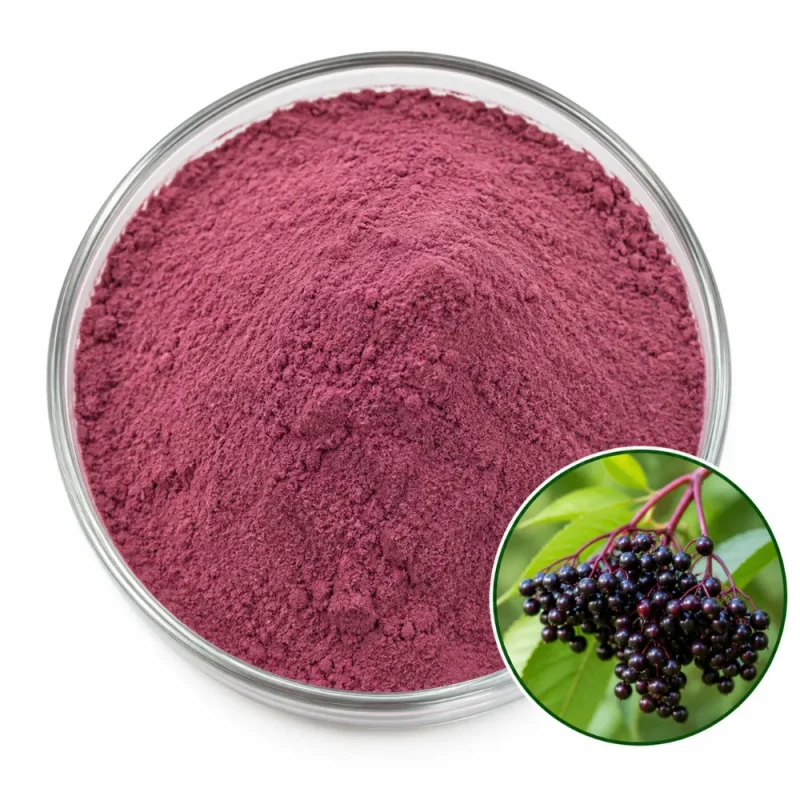
Elderberry Powder

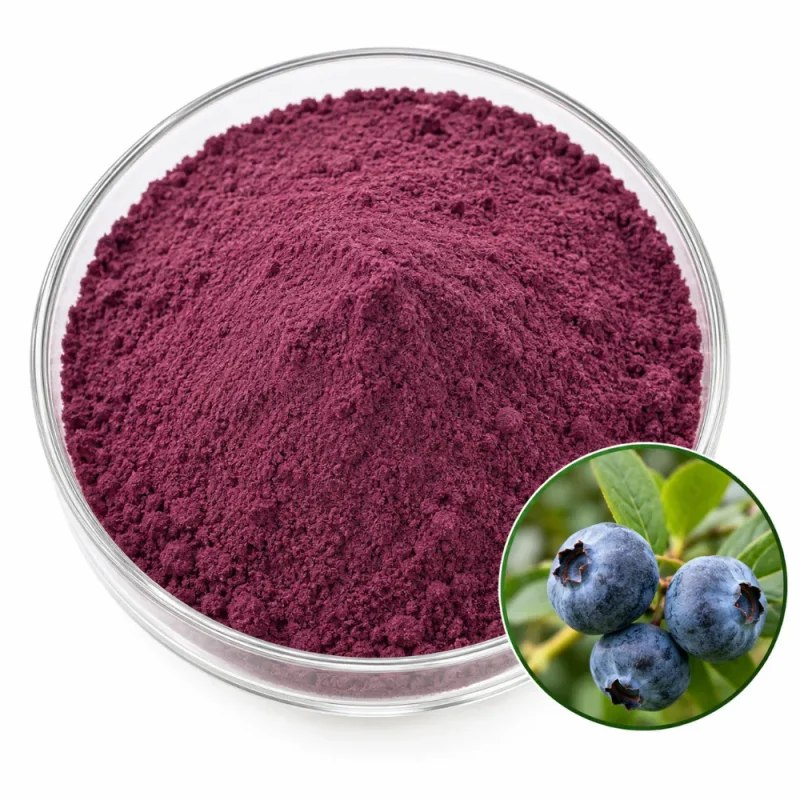
Processed juice from Sambucus nigra berries, the European black elder, is concentrated and spray-dried onto maltodextrin to give elderberry powder. It is a deep purple red, water-soluble powder with a tart, winey berry taste. Flowers, leaves and bark of the same shrub are separate materials and are not used here.

The berries are the commercial part, and they are eaten cooked or processed, not raw. The juice-powder route fits this well, since the juice is heated during concentration and the finished powder dissolves in cold liquid without cooking.

Elderberry Juice Powder Processing

The species is Sambucus nigra L., European or black elder, a deciduous shrub of the moschatel family (Viburnaceae in current classification, earlier placed in honeysuckle). Several relatives are sold under the “elderberry” name. American elder, Sambucus canadensis, is a close New World relative, and dwarf elder, Sambucus ebulus, is a different plant that is not a food crop. The black berries of S. nigra are the traded fruit; elderflower is a distinct ingredient.

Raw elderberries and other parts of the shrub contain cyanogenic compounds, which heating reduces, so the berries are pressed and cooked in normal processing. The raw material here is elderberry juice concentrate. It is blended with maltodextrin and atomized in a spray dryer. The carrier produces a soluble, free-flowing powder, and it lightens the very dark juice color to a purple red while softening the astringency of the pressed berries.

Berries are harvested in late summer when the umbels hang heavy and the fruit is fully black. Ripeness matters, since green or red berries are sharper and carry more of the compounds that processing is meant to reduce. The juice concentrate used here comes from fully ripe fruit, and whole-berry fiber, skins and seeds are removed in pressing, which is why the powder dissolves clearly and leaves little sediment.
Elderberry Flavor, Color & Forms

The powder is purple red and gives a deep ruby to violet solution in water. Elderberry is rich in anthocyanins, chiefly cyanidin glycosides built on the sugar sambubiose, with organic acids and other phenolics. The taste is tart, slightly earthy and winey, with an astringent finish that sweetener or dairy softens. The pigment responds strongly to pH: it is red in acid and turns bluish to grey-violet as the medium approaches neutral.

Constituents are anthocyanins, flavonols, phenolic acids and organic acids, described without figures. The ratio extract and the anthocyanin-defined grades are separate products from this juice powder, so a buyer chooses by the specification the label needs.

Elderberry has a long history in European kitchens as cordial, jam, wine and pie filling, and the powder fits those same flavor families. Spice partners such as cinnamon, clove and ginger work well, as do citrus notes, because the earthy dark-berry taste benefits from brightness. Sweetener choice affects how astringent the finished drink tastes.

FormWhat It IsChoose It When
Elderberry Juice PowderSpray-dried juice on a maltodextrin carrierA soluble elderberry color and flavor are wanted
Freeze-Dried Elderberry PowderWhole berries dried under vacuumSkin and pulp solids are wanted
Elderberry Extract PowderRatio extract of the berriesA concentrated extract is specified
Elderberry Extract 5–25% AnthocyaninsAnthocyanin-defined gradesThe label names an anthocyanin level

Typical Specifications

Specification ItemProduct Information
Latin NameSambucus nigra
Plant PartFruit & Berry
ProcessingSpray-Dried Juice
Common NameElderberry
Raw MaterialElderberry juice concentrate
Ingredient TypeJuice Powder
CarrierMaltodextrin
AppearancePurple Red powder
FlavorTart, winey, mildly astringent
Solubility / DispersibilityWater Soluble
Quality Parameters
Moisture (LOD)≤5.0%
Heavy MetalsLead ≤2 ppm · Arsenic ≤1 ppm · Cadmium ≤1 ppm · Mercury ≤0.1 ppm
MicrobiologyTPC ≤10,000 cfu/g · Yeast & Mold ≤1,000 cfu/g · E. coli Negative · Salmonella Negative/25 g
Shelf Life24 months in unopened original packaging, cool and dry storage

Application Areas

Elderberry Syrup and Drink Concentrate Mixes

Dry bases for syrups and drink concentrates use elderberry powder to give the dark color and winey flavor of the classic elderberry cordial. It dissolves in warm sugar solution without cooking, and a little citric acid keeps the shade bright red-violet.

Gummies and Pectin Chews

Elderberry powder colors and flavors gummies in deep purple and adds tartness that balances sugar. Pectin sets best in acid, so the powder’s natural acidity helps gelation, but it can also tilt the mass toward a lower pH than planned, which needs a check.

Herbal Tea Blends

Tea blenders add elderberry powder to loose or instant blends with hibiscus, rose hip and spice. The pigment gives a rich red-violet infusion, and the powder adds body that whole dried berries only give after long steeping.

Berry Yogurt and Dairy Preparations

Yogurt fruit bases use elderberry powder to add a dark berry note and strong color. The low pH of cultured dairy keeps the pigment red, and the astringency softens against milk protein, but long warm storage will dull the shade.

Effervescent Drink Tablets

Effervescent tablets and powders use elderberry powder to color the fizzing solution. Tablet makers must manage moisture carefully, since the hygroscopic powder can start the acid-base reaction in the press room before the tablet ever reaches water.

Moisture Pickup & Stability

Elderberry powder is a sugar-and-carrier glass, and it takes up moisture quickly in humid air. The first sign is loss of flow, followed by caking and, in severe cases, a dark sticky mass at the drum wall. Weigh in a dry room and reseal the liner after each draw to keep the powder free-flowing.

The pigment is the most sensitive part. Anthocyanin color weakens with heat and light, and it moves toward blue or grey when the powder meets alkaline ingredients such as sodium bicarbonate or calcium carbonate. In effervescent or baked formulas, keep alkaline salts apart from the powder or expect a shift in shade.

Elderberry tannins and anthocyanins can darken in contact with iron. Use stainless steel and avoid unlined metal scoops. The product is supplied on maltodextrin without a named flow aid, so any anti-caking agent belongs to the buyer’s own blend, and opened containers keep best cool, dark and tightly closed.

Packaging & Commercial Supply

Essencefield supports product evaluation, formulation trials, commercial orders, and ongoing ingredient supply. Packaging, storage, and shipping arrangements are determined by product characteristics, order quantity, stability requirements, and destination-market needs.

Supply ItemGeneral Information
SampleAvailable upon request for formulation, testing, and supplier evaluation
Order Quantities100 g · 1 kg · 5 kg · 25 kg · 100 kg · 500 kg · Bulk
Sample Lead TimeTypically 5–7 days after sample confirmation
Production Lead TimeTypically 15–30 days after order and specification confirmation
PackagingSuitable protective inner packaging with bags, cartons, drums, or other appropriate outer packaging
StorageStore in tightly sealed, suitable protective packaging in a cool, dry environment. Protect from moisture, heat, and direct sunlight. Specific storage conditions follow the approved product specification.
DocumentationCOA · Product Specification · TDS · SDS · Applicable declarations (as applicable)

Final order quantities, lead times, packaging, documentation, and shipping arrangements are confirmed according to the selected product and commercial requirements.

Request Ingredient Specifications & Quote

Share your target specification, application, quantity, and documentation needs. We’ll help confirm suitable options, samples, and commercial supply details.