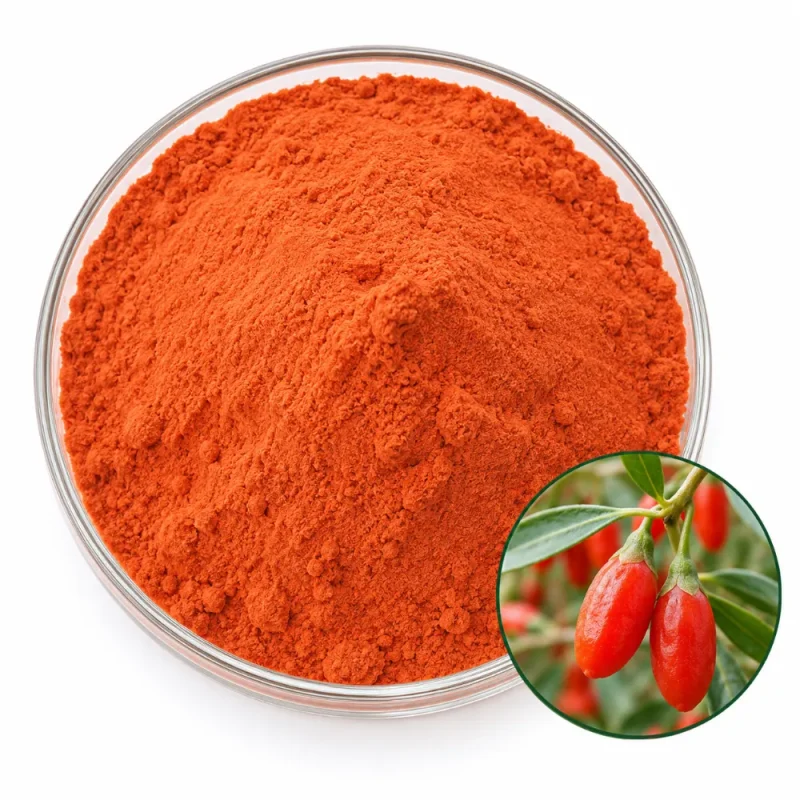
Goji Berry Juice Powder Processing
The species is Lycium barbarum L., the Ningxia wolfberry of the nightshade family (Solanaceae). A second species, Lycium chinense, produces berries that are also sold as goji, and the black wolfberry Lycium ruthenicum gives a dark purple fruit with its own pigments. The two red species are often traded under one name, so identity statements matter. The part used here is the ripe berry only; leaf and root bark are different ingredients.
The raw material is goji berry juice concentrate prepared from the ripe berries. Blended with maltodextrin, the concentrate is sprayed into a hot-air chamber, where the water flashes off and the dissolved solids set as a fine, uniform powder. The carrier is the reason the powder dissolves and flows, and it also dilutes the pigment and sweetens the taste compared with the pressed juice.
Whole dried goji carries its skin and its carotenoids in a solid matrix. Spray-drying the juice leaves most of the insoluble skin material behind, so this powder is lighter in fiber and more uniform in color than ground dried berries.
Lycium berries ripen over several weeks and are picked repeatedly because the soft fruit bruises easily. Ripe fruit gives the sweetness and color that the concentrate needs, and early pickings are paler and sourer, so ripeness at pressing is one of the factors that shape the flavor of the finished powder.