Maqui Berry Powder

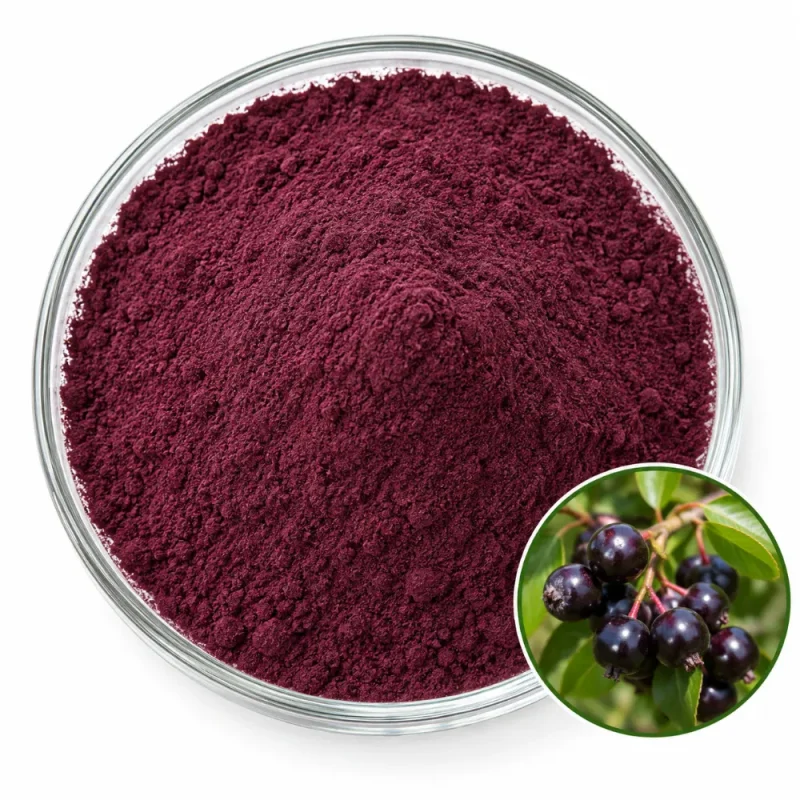
Maqui berry powder is spray-dried from the pressed juice of Aristotelia chilensis berries, a dark fruit from the temperate forests of Chile, on a maltodextrin carrier. It is a purple red, water-soluble powder with a tart, wine-like berry taste. Leaves, bark and seeds of the tree are not used.

The berries are among the darkest in the juice-powder range. Their pigment is dominated by delphinidin-type anthocyanins, which give a more intense, bluer red than the cyanidin pigments of raspberry or strawberry, and which respond strongly to pH.

Maqui Berry Juice Powder Processing

The botanical entity is Aristotelia chilensis (Molina) Stuntz, the maqui, a fast-growing evergreen tree of the Elaeocarpaceae family native to central and southern Chile and neighboring Argentina. The small, round, almost black berries ripen in summer and have been gathered from wild stands for centuries. Maqui is not the açaí berry, Euterpe oleracea, nor the Chilean “murta” or the northern bilberry, although all of them are dark and often appear in the same blends.

The raw material is maqui berry juice concentrate. Berries are pressed, the juice is concentrated and mixed with maltodextrin, and the mixture is atomized in a spray dryer. The carrier makes the powder soluble and free-flowing and lightens the nearly black juice to a purple red powder, while taming the strong astringency of the berries.

Skins and seeds remain in the pomace, so the powder is lighter in fiber and tannin than a whole-berry form. That is the main practical difference between this powder and the freeze-dried alternative.

Wild collection is still a major part of maqui supply, and the fruit ripens unevenly on the tree. Pickers favor fully black berries, which carry the most pigment, and the juice concentrate is built from that dark fraction. Cultivated orchards exist in Chile, but wild-collected fruit remains common in trade.
Maqui Berry Flavor, Color & Forms

The powder is purple red and dissolves to a deep ruby to violet solution that looks darker than its small inclusion level would suggest. The taste is tart and winey, with mild sweetness and an astringent finish typical of dark berries. Delphinidin glycosides shift from red in acid toward violet and blue as pH rises, so drinks of different acidity show clearly different shades from the same powder.

Characteristic constituents are anthocyanins, mainly delphinidin glycosides, other phenolics, organic acids and sugars. No figure is given for any of them. A product that must declare an anthocyanin level is a separate, defined extract grade and not a juice powder.

Maqui differs from blueberry and cranberry powders in its balance of sweetness and acid. It has less tartness than cranberry and a more astringent, wine-like body than blueberry, so substitution in a formula usually needs a sweetener or acid adjustment to match flavor and color.

FormWhat It IsChoose It When
Maqui Berry Juice PowderSpray-dried juice on maltodextrinA soluble, deep purple red base is wanted
Freeze-Dried Maqui Berry PowderWhole berries dried under vacuumSkin and seed solids are wanted
Maqui Berry Extract 20–35% Total AnthocyaninsAnthocyanin-defined extractThe label names an anthocyanin level

Typical Specifications

Specification ItemProduct Information
Latin NameAristotelia chilensis
Plant PartFruit & Berry
ProcessingSpray-Dried Juice
Common NameMaqui berry
Raw MaterialMaqui berry juice concentrate
Ingredient TypeJuice Powder
CarrierMaltodextrin
AppearancePurple Red powder
FlavorTart, winey, astringent finish
Solubility / DispersibilityWater Soluble
Quality Parameters
Moisture (LOD)≤5.0%
Heavy MetalsLead ≤2 ppm · Arsenic ≤1 ppm · Cadmium ≤1 ppm · Mercury ≤0.1 ppm
MicrobiologyTPC ≤10,000 cfu/g · Yeast & Mold ≤1,000 cfu/g · E. coli Negative · Salmonella Negative/25 g
Shelf Life24 months in unopened original packaging, cool and dry storage

Application Areas

Berry Smoothie Powders

Smoothie bases use maqui berry powder for intense color and a tart, winey fruit note that complements banana, mango and acai. It dissolves in cold liquid with brief shaking and tints the drink deep purple at low inclusion.

Gummies and Pectin Chews

Gummy makers add maqui berry powder for dark purple color and tart fruit flavor. The powder’s acidity helps pectin set, while the pigment responds to the pH of the gel mass, so the target shade is set at the final pH of the candy.

Yogurt and Dairy Preparations

Yogurt fruit preps take maqui berry powder for color without the seeds and bulk of berries. In the acidic range of cultured dairy the pigment stays vivid red-violet, and the astringency is softened by milk protein and fat.

Frozen Sorbet and Pop Bases

Sorbet and frozen pop bases use the powder to build a dark berry flavor without puree. The sugars in the powder lower the freezing point, so the base needs a sugar and stabilizer balance that keeps the texture scoopable.

Effervescent Drink Tablets

Effervescent tablets use maqui berry powder as a colorant and flavor in the fizzing mix. Moisture control during pressing is critical, since the hygroscopic powder can trigger the acid-base reaction before the tablet meets water.

Moisture Pickup & Stability

Maqui berry powder is a sugar-and-carrier glass, and it absorbs water quickly. Surface tackiness appears after a short exposure to humid air, and a drum left open can form a dense dark crust. Weigh in a dry room, close the liner after each draw and avoid scooping with damp tools.

The pigment is the main stability concern. Anthocyanin color fades with heat and light and moves from red toward violet, blue and finally grey as alkalinity rises. In a dry mix with carbonates or phosphates the shade can shift as soon as moisture is present, so keep alkaline salts away from the powder or test the final color.

Iron and copper contact darkens the product and the solutions made from it, and polyphenol tannins can combine with metal ions into dull complexes. Use stainless steel, keep opened drums cool and dark, and use them within a short window to hold the shade close to what was received.

Maqui’s high pigment load makes staining a practical point in the plant. Spilled powder and wet residues dye hands, cloths and plastic parts, so dedicated scoops, quick cleanup and sealed transfer lines reduce cross-contamination of pale products made on the same line.

Packaging & Commercial Supply

Essencefield supports product evaluation, formulation trials, commercial orders, and ongoing ingredient supply. Packaging, storage, and shipping arrangements are determined by product characteristics, order quantity, stability requirements, and destination-market needs.

Supply ItemGeneral Information
SampleAvailable upon request for formulation, testing, and supplier evaluation
Order Quantities100 g · 1 kg · 5 kg · 25 kg · 100 kg · 500 kg · Bulk
Sample Lead TimeTypically 5–7 days after sample confirmation
Production Lead TimeTypically 15–30 days after order and specification confirmation
PackagingSuitable protective inner packaging with bags, cartons, drums, or other appropriate outer packaging
StorageStore in tightly sealed, suitable protective packaging in a cool, dry environment. Protect from moisture, heat, and direct sunlight. Specific storage conditions follow the approved product specification.
DocumentationCOA · Product Specification · TDS · SDS · Applicable declarations (as applicable)

Final order quantities, lead times, packaging, documentation, and shipping arrangements are confirmed according to the selected product and commercial requirements.

Request Ingredient Specifications & Quote

Share your target specification, application, quantity, and documentation needs. We’ll help confirm suitable options, samples, and commercial supply details.