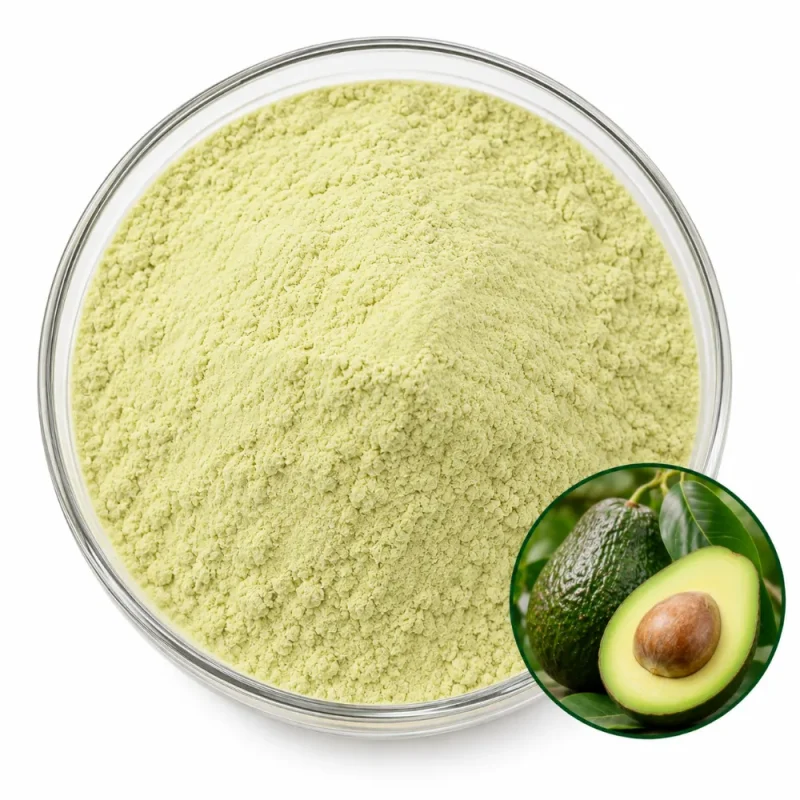
Avocado Juice Powder Processing
The species is Persea americana Mill., family Lauraceae, a relative of cinnamon and bay laurel. Many cultivars exist, and the best known for processing are dark, rough-skinned types with a high oil content. The seed and the skin have their own chemistry and their own uses, and a powder based on the seed is a separate product that this one is not.
The raw material is avocado juice concentrate. The flesh is processed to a liquid concentrate, mixed with maltodextrin and spray-dried to a fine powder. The carrier supports the powder and helps it disperse, but avocado is a fat-bearing fruit, so the dry powder contains fruit oil, and that oil sets its handling and shelf-life behavior more than the carrier does.
Fresh avocado flesh browns within minutes of cutting, because polyphenol oxidase acts on its phenols. In the finished powder this change is largely over, so the light green or yellow-green tone of the powder is a combination of chlorophyll and carotenoid pigments, with a pale cream shade from the oil and carrier.
Fruit maturity changes the flesh. Avocados ripen only after harvest, and the oil content rises as the fruit matures on the tree, so a fully mature fruit gives a creamier concentrate with a nuttier taste than an early-picked one. The powder shows these differences as a more or less buttery note and not as a different identity.