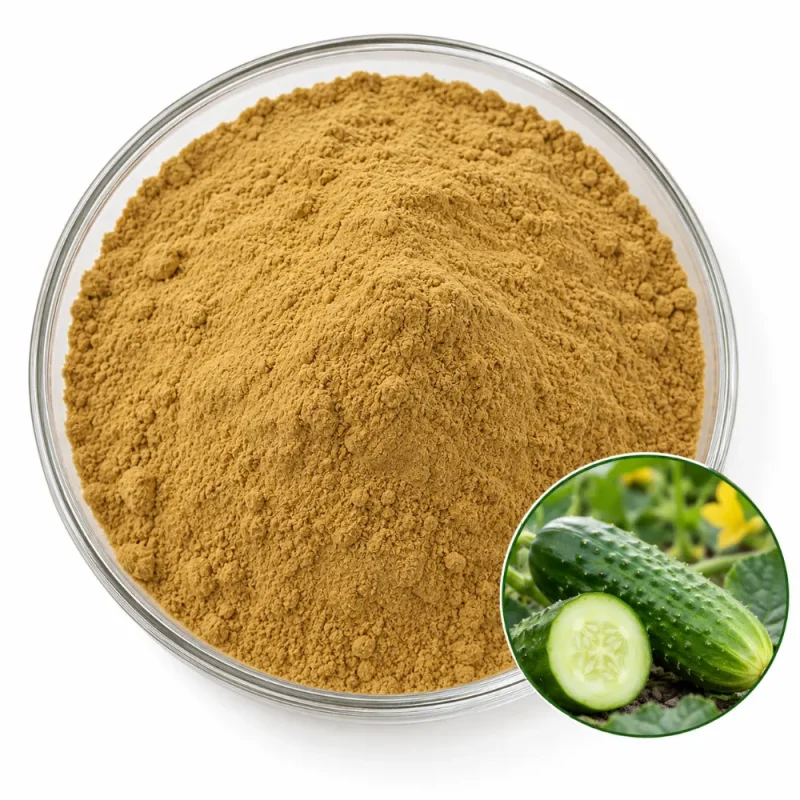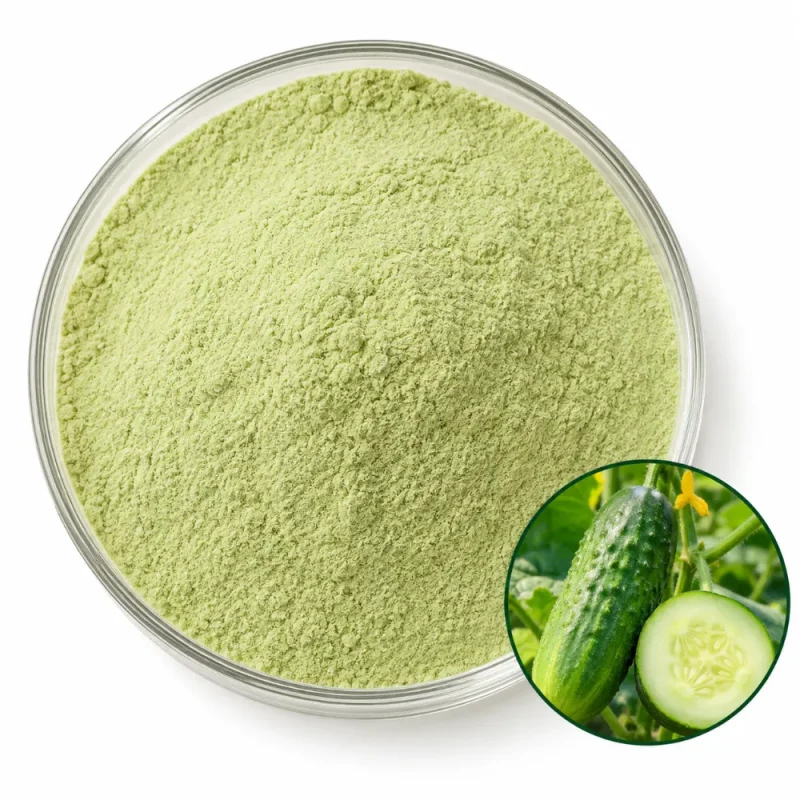
Dehydrated Cucumber Processing
The species is Cucumis sativus L., the cucumber, a trailing vine of the gourd family (Cucurbitaceae) native to South Asia. It is not the squash or melon groups of other Cucurbita and Cucumis species, though the family connection is close: honeydew and cantaloupe are Cucumis melo, and the gherkin is a cucumber group. The part used is the immature fruit, which is eaten before the seeds harden.
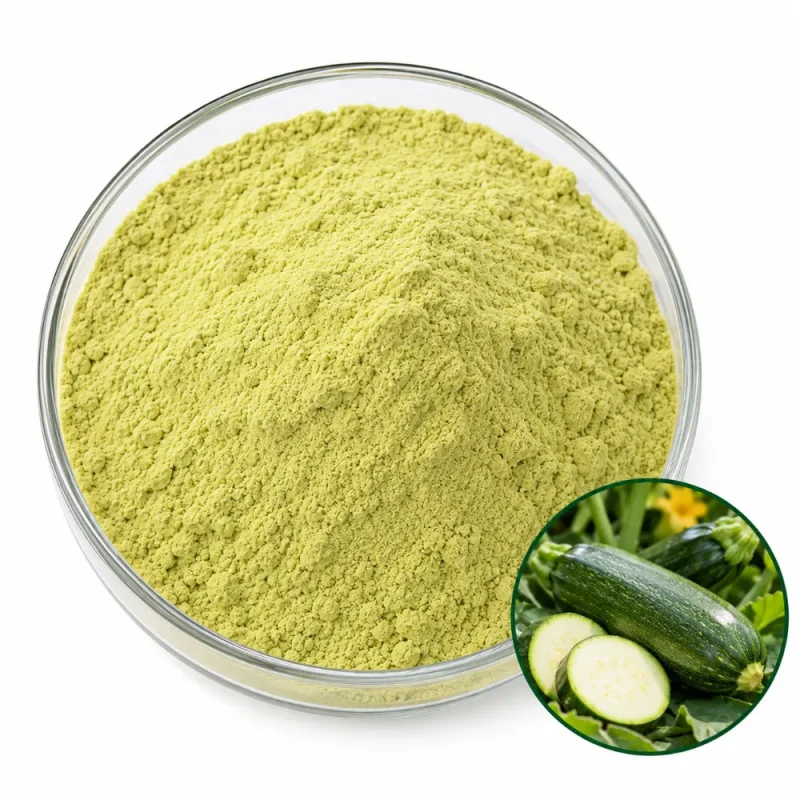
The raw material is fresh cucumber. Fruit is washed, sliced, with or without peel, and dried in warm air, then ground to a fine powder. Because the fresh fruit is mostly water, the dry yield is low, and the fiber and trace solids form a light, voluminous powder. Hot-air dehydration drives off much of the fresh aroma, so the powder reads as a mild, cooked-cucumber note and not as the sharp crispness of a salad slice.
The fresh smell of cucumber comes from unsaturated aldehydes, notably nonadienal, formed when cells are cut and enzymes act. These compounds are volatile and are lost in part during drying, which is why dehydrated cucumber is a weaker aroma ingredient than freeze-dried or juice forms. Peel contributes green color and fiber, and peeled fruit gives a paler, milder powder.
Cucumbers are harvested young, and larger, seedier fruit becomes bitter near the stem end because of cucurbitacins, which modern cultivars are bred to avoid. The cultivars are not listed, so the powder is judged by tint and taste.