20(S)-Protopanaxadiol 98%

The sugar-free core of the diol-type ginsenosides, 20-protopanaxadiol in its 20(S) form, is prepared here from the root of Panax ginseng by ethanol extraction and purification. It is a dammarane triterpene with three hydroxyl groups, and this 20-protopanaxadiol is the aglycone left when the sugar chains of the ginsenosides Rb1, Rb2, Rc and Rd are removed.

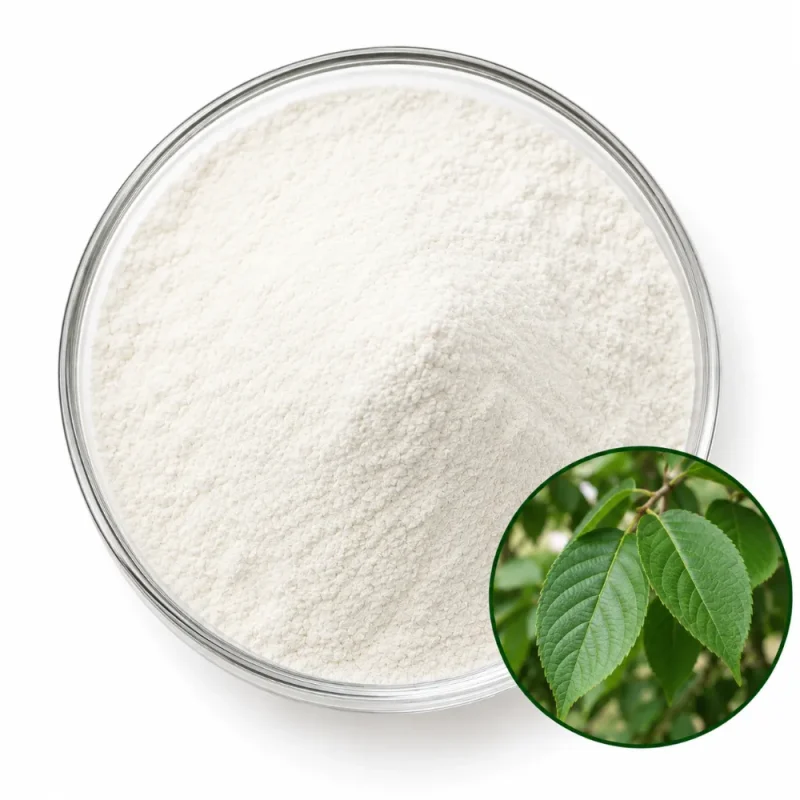
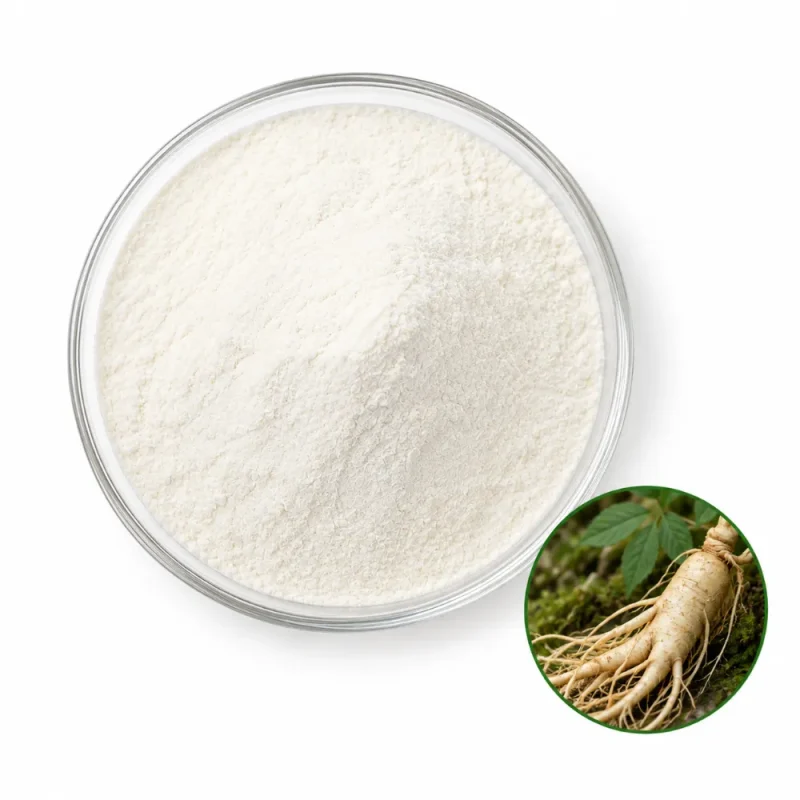
The primary grade is 98% 20(S)-protopanaxadiol by HPLC, with a 95% grade also supplied, in Food / Dietary Supplement Grade. The white powder is insoluble in water. The S in the name is the configuration at C20 and is part of the identity.

20(S)-Protopanaxadiol Chemical Identity

20-Protopanaxadiol has the molecular formula C30H52O3 and a molecular weight of 460.7. The skeleton is a four-ring dammarane triterpene, with hydroxyl groups at positions 3 and 12 on the ring system and a tertiary hydroxyl at C20 on a side chain that ends in an isoprenyl double bond. The three hydroxyls are the attachment sites for sugars in the parent saponins, and removing the sugars leaves the free triol. The S descriptor at C20 gives the natural orientation of the side chain; the 20(R) epimer is a distinct compound that can arise under some processing conditions.

Ginsenosides split into two main families by their aglycone. The protopanaxadiol type carries sugars at C3 and often at C20, while the protopanaxatriol type has an extra hydroxyl at C6 and carries sugars at C6 and C20. The natural source here is the root of Panax ginseng C.A.Mey., and the aglycone is produced by hydrolysis of the saponins, so 20-protopanaxadiol does not exist in the root as such. Ginseng roots are also supplied as Ginseng Extract 10–80% Ginsenosides, the 10:1 Ginseng Extract Powder and the Red Ginseng Extract Powder. The triol counterpart is 20(S)-Protopanaxatriol 98%.

Red and white ginseng differ in their saponin pattern, because steaming converts some ginsenosides into less polar forms, and the aglycones produced from them carry different trace by-products. The botanical source and the part are therefore stated. Once the sugar chains have been removed, the purified 20-protopanaxadiol is a single compound that no longer depends on how the root was processed.

Typical Specifications

Specification ItemProduct Information
Natural SourcePanax ginseng root
Plant PartRoot & Rhizome
ProcessingEthanol Extraction & Purification
Compound ClassTerpenoids
Chemical Name (IUPAC)(3S,5R,8R,9R,10R,12R,13R,14R,17S)-17-[(2S)-2-hydroxy-6-methylhept-5-en-2-yl]-4,4,8,10,14-pentamethyl-2,3,5,6,7,9,11,12,13,15,16,17-dodecahydro-1H-cyclopenta[a]phenanthrene-3,12-diol
CAS Number30636-90-9
Molecular FormulaC30H52O3
Molecular Weight460.7
PubChem CID11213350
InChIKeyPYXFVCFISTUSOO-HKUCOEKDSA-N
SMILESCC(=CCCC(C)(C1CCC2(C1C(CC3C2(CCC4C3(CCC(C4(C)C)O)C)C)O)C)O)C
Purity98% (HPLC)
Available Grades95% · 98% (HPLC)
GradeFood / Dietary Supplement Grade
AppearanceWhite powder
Solubility / DispersibilityInsoluble in Water
Quality Parameters
Moisture (LOD)≤5.0%
Total Ash≤5.0%
Heavy MetalsLead ≤2 ppm · Arsenic ≤1 ppm · Cadmium ≤1 ppm · Mercury ≤0.1 ppm
MicrobiologyTPC ≤1,000 cfu/g · Yeast & Mold ≤100 cfu/g · E. coli Negative · Salmonella Negative/25 g
Shelf Life24 months in unopened original packaging, cool and dry storage

20(S)-Protopanaxadiol Purity Grades & Impurities

GradeAssay & MethodWhere It Fits
95% 20(S)-ProtopanaxadiolHPLCOil-based fills and premixes
98% 20(S)-ProtopanaxadiolHPLCReference-grade and complex systems

The HPLC assay compares the 20-protopanaxadiol peak with the other detected peaks, and the detection is demanding because the molecule lacks a strong chromophore. It absorbs only at a short wavelength, where many compounds also respond, or it is read with a detector that does not depend on absorbance. The percentage leaves out water, ash and components without a response, so moisture and ash are limited separately.

The way 20-protopanaxadiol is made decides which impurities appear. Strong acid hydrolysis of ginsenosides tends to produce artifacts, because the tertiary hydroxyl at C20 can dehydrate or cyclize and the side chain can rearrange, giving panaxadiol-type and ocotillol-type products. For this reason the aglycone is generally prepared by milder alkaline or enzymatic cleavage, and a good trace shows a clean main peak without those artifacts. The 20(R) epimer elutes close to the 20(S) form, and a method that resolves the pair is used for identity.

Residual sugar-bearing intermediates, such as compound K and the partially deglycosylated ginsenosides, show up as earlier peaks. They are the first sign of incomplete conversion. The 95% and 98% grades differ in the share of such intermediates and epimer, and a clean white powder points to a well-purified lot, whereas a cream tint suggests residual saponin or root pigment.

20(S)-Protopanaxadiol Solubility & Delivery

20-Protopanaxadiol is insoluble in water and dissolves in ethanol, methanol, ethyl acetate and chloroform. With a rigid steroid-like ring system, three hydroxyl groups and a lipophilic side chain, it has a high logP, so it is strongly lipophilic and favors oil and surfactant phases over water. The sugar-bearing ginsenosides foam and dissolve in water, whereas the aglycone does neither.

That contrast defines delivery. Where the saponins dissolve and foam, 20-protopanaxadiol must be dispersed. Fine milling, wetting agents, oil suspensions, lipid carriers and cyclodextrin or phospholipid complexes are the approaches described in the literature. In liquid bases, a suspending agent holds the solid. In dry blends the powder is stable and not hygroscopic, though static makes small weights awkward, and anti-static scoops plus a two-stage premix with a dry carrier give a more uniform result. Strong acid is avoided in solution, since it can rearrange the side chain.

Storage of 20-protopanaxadiol is undemanding compared with the sugar-bearing saponins. The aglycone does not absorb much water, it is not light sensitive in the dry state, and it keeps its white color for long periods in a sealed container. The main risk is mechanical, because the fine powder compacts in the drum under its own weight and then needs sieving. A retained sample from each lot lets the formulator compare flow and particle size at the next order.

Application Areas

Oil-Based Capsule Fills

Softgels and oil-filled capsules suit lipophilic 20-protopanaxadiol. The milled powder is dispersed in a carrier oil with an emulsifier, settling is checked before encapsulation, and the tank is stirred so that the dose stays uniform.

Dry Capsule Fills

Dry capsules take 20-protopanaxadiol at small weight. The fine white powder is electrostatic, so a flow agent, anti-static scoops and a sieved premix give an even fill weight from lot to lot and a clean transfer.

Lipid and Phospholipid Complexes

Complex systems raise the dispersion of the insoluble triterpene and keep the powder from clumping in water. The complex is made in a solvent step, dried and milled, and a retained sample of each lot lets the formulator compare dissolution, particle size and color each time the process is repeated.

Aglycone and Saponin Comparison Blends

Formulators comparing ginseng forms use 20-protopanaxadiol beside the saponin extract to see how sugar removal changes dispersion, foaming and taste. Each ingredient is weighed on its own, and the HPLC trace of the blend confirms the ratios have not shifted during mixing or storage.

Tablet Blends With Wetting Agents

Tablets press 20-protopanaxadiol with a dry binder, a lubricant and a wetting agent. A disintegration and dissolution trial on the full blend confirms that the hydrophobic solid is released at the intended rate and is not held back by the lubricant.

Packaging & Commercial Supply

Essencefield supports product evaluation, formulation trials, commercial orders, and ongoing ingredient supply. Packaging, storage, and shipping arrangements are determined by product characteristics, order quantity, stability requirements, and destination-market needs.

Supply ItemGeneral Information
SampleAvailable upon request for formulation, testing, and supplier evaluation
Order Quantities100 g · 1 kg · 5 kg · 25 kg · 100 kg · 500 kg · Bulk
Sample Lead TimeTypically 5–7 days after sample confirmation
Production Lead TimeTypically 15–30 days after order and specification confirmation
PackagingSuitable protective inner packaging with bags, cartons, drums, or other appropriate outer packaging
StorageStore in tightly sealed, suitable protective packaging in a cool, dry environment. Protect from moisture, heat, and direct sunlight. Specific storage conditions follow the approved product specification.
DocumentationCOA · Product Specification · TDS · SDS · Applicable declarations (as applicable)

Final order quantities, lead times, packaging, documentation, and shipping arrangements are confirmed according to the selected product and commercial requirements.

Request Ingredient Specifications & Quote

Share your target specification, application, quantity, and documentation needs. We’ll help confirm suitable options, samples, and commercial supply details.