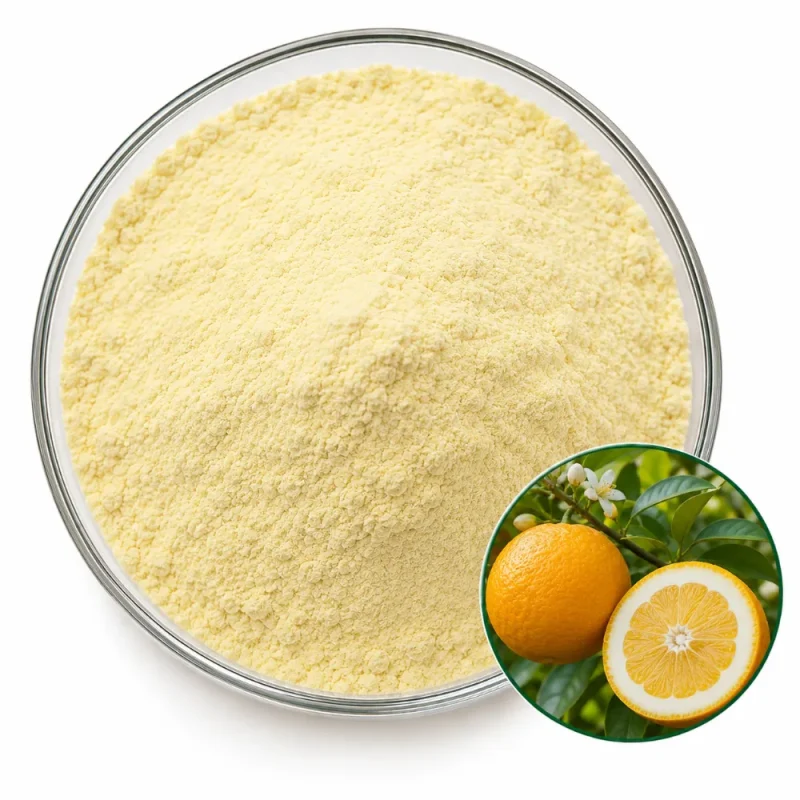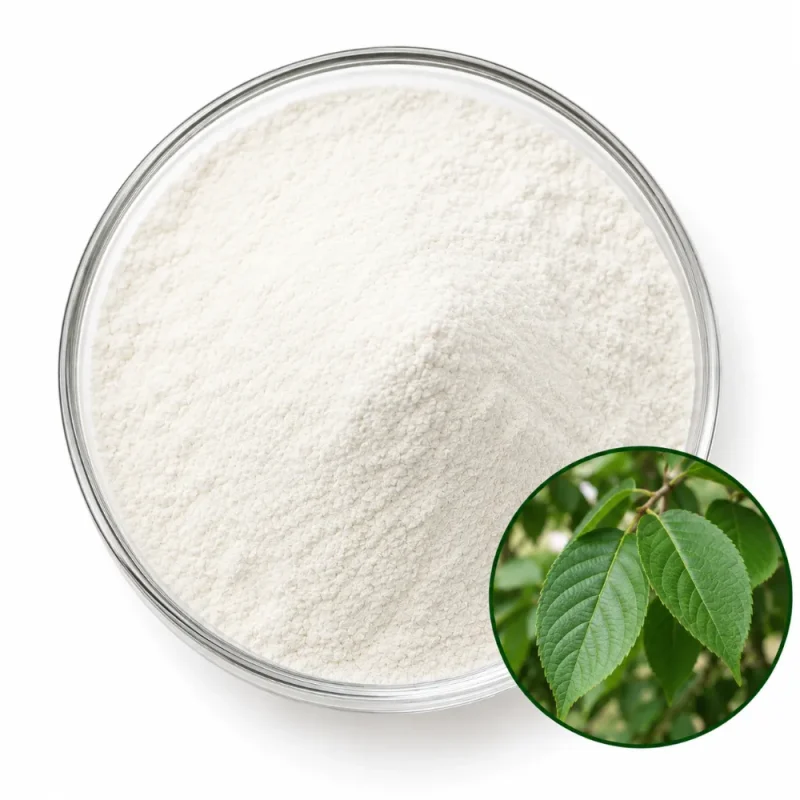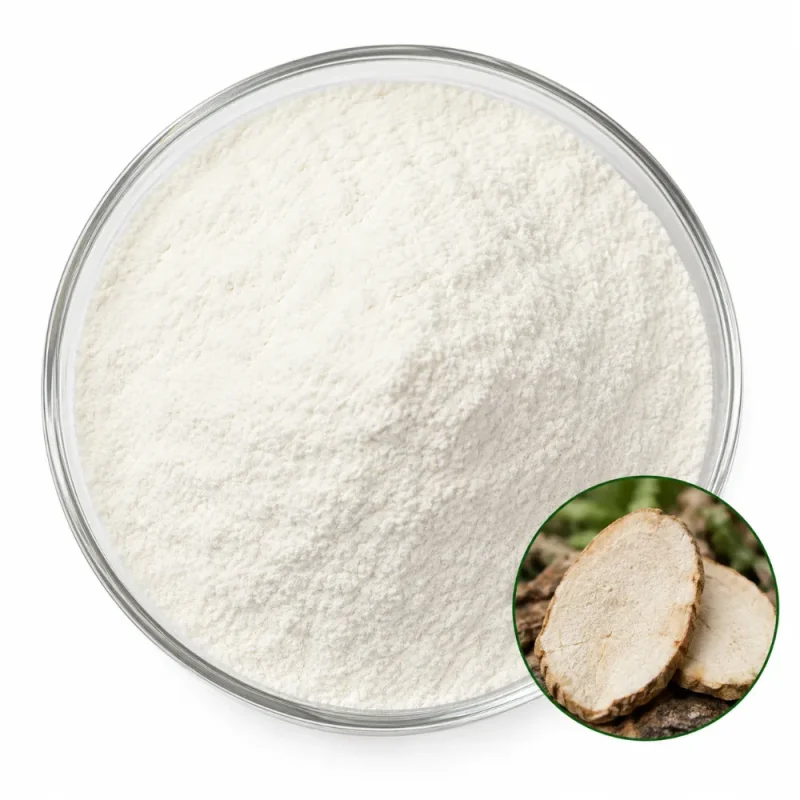
Alisol B 23-Acetate 98%

Alisma rhizome (Alisma orientale) contains alisol B 23-acetate, a protostane triterpenoid carrying a three-membered epoxide ring in its side chain and an acetyl ester at carbon 23. It is isolated by ethanol extraction and purification and supplied as a white powder that is insoluble in water.

The Primary Grade is 98% alisol B 23-acetate by HPLC, in Food / Dietary Supplement Grade. The figure describes this acetate, not alisol B or a total of alisols. The identity values in the table apply to the acetate and its epoxide structure.

Alisol B 23-Acetate Chemical Identity

Alisol B 23-acetate (C32H50O5, molecular weight 514.7) is the acetyl ester of alisol B (C30H48O4). The side chain ends in a 3,3-dimethyloxirane, an epoxide that links carbons 24 and 25, and the acetyl group sits on carbon 23 next to it. The tetracyclic core carries a ketone at carbon 3 and a hydroxyl at carbon 11, as in other protostane triterpenoids.

The epoxide is the reactive feature that separates this molecule from alisol A 24-acetate, which has the same carbon skeleton and an acetyl group but opens that ring into a diol. Under acid, heat or water, epoxide opening and acetyl migration can convert related alisols into one another, so the exact compound has to be fixed by CAS number and InChIKey.

The source is the rhizome of Alisma orientale (Sam.) Juz., a name that current checklists treat as a synonym of Alisma plantago-aquatica; the trade name is retained. Neighbors are Alisol B 98%, Alisol A 24-Acetate 98% and the whole-rhizome Alisma rhizome extract powder.

Acetyl esters of the alisols are used as marker compounds for Alisma rhizome in analytical work, which explains why standards and certificates for alisol B 23-acetate are common. A buyer should check that the certificate names the 23-acetate, since alisol B on its own and alisol B 23-acetate are two different substances with different CAS numbers (18649-93-9 and 26575-95-1).

Typical Specifications

Specification ItemProduct Information
Natural SourceAlisma orientale rhizome
Plant PartRoot & Rhizome
ProcessingEthanol Extraction & Purification
Compound ClassTerpenoids
Chemical Name (IUPAC)[(1S,3R)-1-[(2R)-3,3-dimethyloxiran-2-yl]-3-[(5R,8S,9S,10S,11S,14R)-11-hydroxy-4,4,8,10,14-pentamethyl-3-oxo-1,2,5,6,7,9,11,12,15,16-decahydrocyclopenta[a]phenanthren-17-yl]butyl] acetate
CAS Number26575-95-1
Molecular FormulaC32H50O5
Molecular Weight514.7 g/mol
PubChem CID14036811
InChIKeyNLOAQXKIIGTTRE-JSWHPQHOSA-N
Purity98% (HPLC)
GradeFood / Dietary Supplement Grade
AppearanceWhite powder
Solubility / DispersibilityInsoluble in Water
Quality Parameters
Moisture (LOD)≤5.0%
Total Ash≤5.0%
Heavy MetalsLead ≤2 ppm · Arsenic ≤1 ppm · Cadmium ≤1 ppm · Mercury ≤0.1 ppm
MicrobiologyTPC ≤1,000 cfu/g · Yeast & Mold ≤100 cfu/g · E. coli Negative · Salmonella Negative/25 g
Shelf Life24 months in unopened original packaging, cool and dry storage

Alisol B 23-Acetate Purity & Related Substances

Alisol B 23-acetate 98% is a single-compound grade measured by HPLC. HPLC purity here means the peak share of acetate in the trace, and moisture, ash and compounds that do not absorb are not counted. Weak ultraviolet absorption by the triterpenoid skeleton means methods commonly use low-wavelength detection or a light-scattering detector, and the detector should be named when certificates are compared.

The related substances are alisol B (the free alcohol), alisol A 24-acetate, which can form from this compound when the epoxide opens, and the alisol C acetate family. These differ by an acetyl group, a water molecule or an oxidation state, so the method must separate them by retention time. A rising alisol A 24-acetate peak in a stored sample of the epoxide acetate is the typical sign of degradation in the presence of moisture or acid.

The stated route is ethanol extraction of the rhizome plus purification, which makes the material plant-derived. Total alisol content from a rhizome extract is a different quantity and cannot replace this purity.

Practical release criteria combine a clean chromatogram, a defined water level and a check for the opened-ring products. If the alisol A 24-acetate peak is detectable, the lot has begun to change, and the amount found shows how far. This is the reason the epoxide acetate is released with a fresh test date.

Alisol B 23-Acetate Solubility & Delivery

Alisol B 23-acetate is insoluble in water. The epoxide and the acetyl ester add little polarity, and the molecule dissolves in ethanol, methanol, ethyl acetate and other organic solvents. In water the powder floats or settles, so liquids need a carrier or dispersion.

The reactivity of the epoxide controls delivery choices. Acidic water opens the ring and creates a different compound, so low pH is avoided in aqueous premixes, and a neutral phase is safer. Oil-phase dispersions, anhydrous co-solvent premixes, phospholipid complexes and micronized powders fit the chemistry better than acidic aqueous systems.

Dry storage matters. The powder is stable when closed and cool, while moisture and acid traces accelerate change. Acidic excipients such as citric acid in direct contact are avoided in dry blends, and neutral carriers like maltodextrin or cellulose are preferred. Opaque, tightly closed containers are standard.

Equipment contact also matters. The epoxide can react with acidic surfaces and with metal ions that act as Lewis acids, so glass-lined or stainless steel equipment with clean surfaces is preferred, and residual acid cleaning agents are rinsed away before use.

Application Areas

Hard capsules with neutral carriers

Alisol B 23-acetate is placed in a premix with neutral excipients, because acidic partners can open the epoxide over time. Fill weights are sampled and the capsules are packed with a desiccant to keep the shell and powder dry.

Softgels with anhydrous lipid fills

An oil-phase dispersion without free water suits the epoxide acetate, and the fill is protected from acid. Homogeneity is checked during encapsulation so that every softgel carries the intended dose from the start to the end of the run.

Tablets at low inclusion

Tablets use neutral fillers and a mild lubricant level, and a coating protects the core from humidity. A uniformity check confirms the small dose is spread evenly, and stability samples are kept to follow the profile.

Powder sticks with dispersants

Dry sticks for water use a dispersant to keep the insoluble powder suspended, with the pH of the finished drink kept near neutral to protect the epoxide ring during the time the drink is consumed.

Marker-based blends

Alisol B 23-acetate is sometimes combined with Alisma rhizome powder so that a known amount of the compound sits in a botanical matrix. Each component is assayed separately, and the compound is verified in the finished blend.

Packaging & Commercial Supply

Essencefield supports product evaluation, formulation trials, commercial orders, and ongoing ingredient supply. Packaging, storage, and shipping arrangements are determined by product characteristics, order quantity, stability requirements, and destination-market needs.

Supply ItemGeneral Information
SampleAvailable upon request for formulation, testing, and supplier evaluation
Order Quantities100 g · 1 kg · 5 kg · 25 kg · 100 kg · 500 kg · Bulk
Sample Lead TimeTypically 5–7 days after sample confirmation
Production Lead TimeTypically 15–30 days after order and specification confirmation
PackagingSuitable protective inner packaging with bags, cartons, drums, or other appropriate outer packaging
StorageStore in tightly sealed, suitable protective packaging in a cool, dry environment. Protect from moisture, heat, and direct sunlight. Specific storage conditions follow the approved product specification.
DocumentationCOA · Product Specification · TDS · SDS · Applicable declarations (as applicable)

Final order quantities, lead times, packaging, documentation, and shipping arrangements are confirmed according to the selected product and commercial requirements.

Request Ingredient Specifications & Quote

Share your target specification, application, quantity, and documentation needs. We’ll help confirm suitable options, samples, and commercial supply details.