Cassia Seed Powder

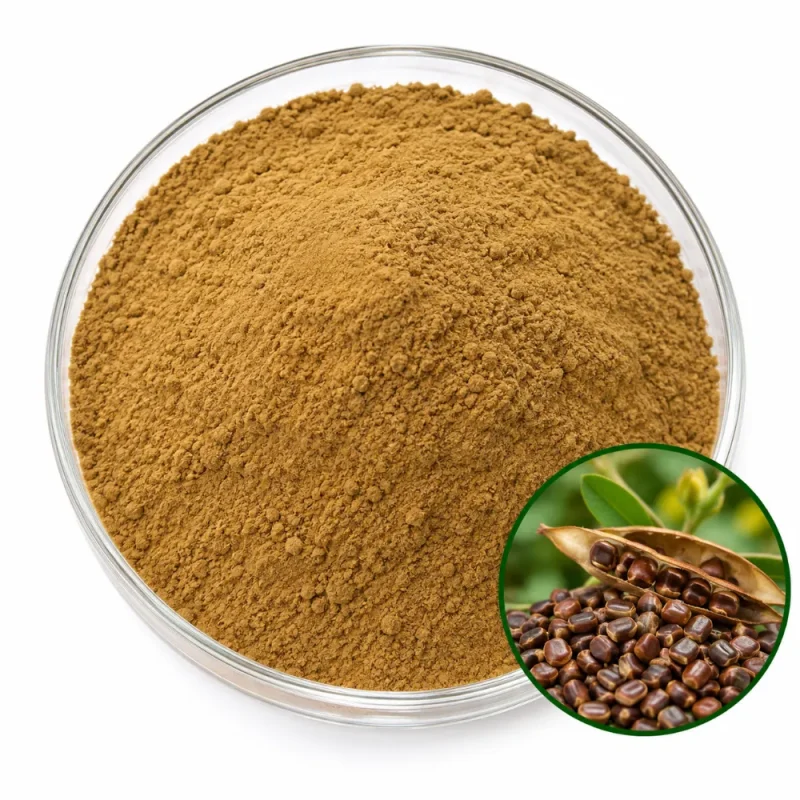
Cassia seed, the hard, glossy seed of Senna obtusifolia, is cleaned and milled into a light brown powder with a toasty, beany odor and a bitter-sweet taste. Only the seed is used, so the pods, leaves and roots of the senna plant are not part of the material.

Cassia seed powder is supplied at 80 mesh, with 40, 60 and 100 mesh optional, and has a mild, beany and faintly bitter flavor with a dry, gritty texture. It is raw milled seed rather than an extract, so inclusion rates are higher and the fibrous seed character is stronger than in the extract forms.

Senna obtusifolia Raw Material & Plant Part

The botanical name is Senna obtusifolia (L.) H.S.Irwin & Barneby, family Fabaceae, also written Cassia obtusifolia in older sources, and known as sicklepod or by its herbal name jue ming zi. The raw material is the dried seed, a small, hard, rhombic and glossy seed taken from the long, slender pods of the plant. Pods, leaves and roots are not part of the powder.

The word cassia causes confusion. Cassia bark is the bark of Cinnamomum cassia, a tree in the laurel family, and it has no relation to this seed. Within the senna genus, Senna tora, the sickle senna, produces a smaller seed that Chinese pharmacopoeial practice lists next to Senna obtusifolia, and the two seeds are traded as large and small cassia seed. The species name and the seed as the part define this ingredient.

The seed is known for anthraquinones such as chrysophanol, physcion, obtusin and aurantio-obtusin, and for naphthopyrone glycosides. Anthraquinones are strongly colored, and they are under regulatory attention in some markets, so formulators check local rules for the finished product.

Seeds are harvested when the pods turn dark and dry, threshed and cleaned, and the hard seed coat means that milling takes more energy than for leaf or flower materials.

The seed is glossy, brownish-green to dark brown and rhombic, with a pale line on each side. Once milled, the seed coat gives a light brown powder with darker flecks, and the endosperm contributes a pale, gummy fraction that holds water.
Cassia Seed Powder vs Extract

FormWhat It IsChoose It When
Cassia Seed PowderMilled dried seed with its coat and fiberWhole-seed inclusion in blends and capsules
Cassia Seed Extract PowderWater-extracted seed with the fiber removedA soluble format at a lower inclusion rate
Cassia Seed Extract 1–5% Total AnthraquinonesSeed extract standardized to an anthraquinone rangeA defined marker content is required
Aurantio-Obtusin 98%Purified single anthraquinone reference gradeAn isolated compound is needed

The seed powder keeps the seed coat, the endosperm gum and the pigments at their natural, lower concentration. Inclusion rates are higher than for an extract, the texture is dry and gritty, and the powder only disperses in liquids.

The extract powder is darker, more soluble and milder in seed flavor, because most of the fiber and gum stays behind. The standardized extract is selected for its anthraquinone marker, and aurantio-obtusin is a purified compound. Choose the seed powder when the whole milled seed is the material of the specification.

Color and flavor confirm the difference. The seed powder is light brown and beany, whereas the extract powder is deeper brown to orange-brown, because the water-soluble pigments are concentrated.

Cassia seed powder is therefore the choice for blends in which the seed itself is visible or in which its gum and fiber matter, and the extract is the choice where a soluble, concentrated pigment profile is wanted.

Typical Specifications

Specification ItemProduct Information
Latin NameSenna obtusifolia
Plant PartSeed & Grain
ProcessingMilled
Common NameCassia seed, sicklepod, jue ming zi
Raw MaterialDried seed
Ingredient TypeMilled Powder
AppearanceLight Brown powder (natural color of the dried material)
Odor & TasteMild, beany odor; faintly bitter, dry taste
Solubility / DispersibilityWater Dispersible
Quality Parameters
Moisture (LOD)≤8.0%
Particle Size80 mesh (40 / 60 / 100 mesh optional)
Heavy MetalsLead ≤2 ppm · Arsenic ≤1 ppm · Cadmium ≤1 ppm · Mercury ≤0.1 ppm
MicrobiologyTPC ≤10,000 cfu/g · Yeast & Mold ≤1,000 cfu/g · E. coli Negative · Salmonella Negative/25 g
Shelf Life24 months in unopened original packaging, cool and dry storage

Application Areas

Herbal tea-style seed blends

Cassia seed powder is used in dry seed blends with chrysanthemum, goji or barley tea. Coarser 40 or 60 mesh grades give a stronger color in the infusion, and the beany note is softened by floral partners.

Capsule and tablet blends

Fills use the powder as a dense, fibrous material with fair flow. The seed gum binds water, which slows disintegration, so dissolution and hardness are checked in trial batches before the formula is fixed. Fill weight is confirmed in a short pilot run.

Bakery and cereal inclusions

Seed powders are used in multigrain breads, crackers and cereal bars for a toasty note and a darker crumb. The seed colors the dough light brown, and the inclusion rate is limited by its bitter edge. A baking trial shows how far the toasty note carries.

Powder sticks with toasty bases

Powder sticks combine the powder with roasted grain, malt or cocoa, where the toasty note blends well. The gum thickens the drink slightly, and the grit settles unless the stick is stirred. A fine mesh gives the smoothest cup.

Handling & Blending Notes

Seed powders behave differently from leaf and root powders. Cassia seed powder is relatively dense and flows fairly well, but the seed gum and fiber hold water, so open packs take up moisture and cake after a few days at high humidity. Barrier bags, dry weighing rooms and prompt resealing keep the powder free-flowing.

Milling a hard seed generates heat, so milling conditions are controlled to avoid scorching, which would darken the powder and add a burnt note. The coat leaves fine fibrous particles that dust at open transfers, and local extraction handles them. Fine grades pack tighter in hoppers.

Mesh follows the format. The 80 mesh grade suits capsules and dry blends, the 40 and 60 mesh grades give a visible, rustic texture in teas and cereals, and the 100 mesh grade disperses best in sticks. Anthraquinone pigments darken in alkaline liquids, so color is checked at the pH of the finished product. Opened containers are resealed and stored cool and dry.

Because the seed coat is hard, coarse particles wear screens and mills, and metal detection is part of the line. Fine fractions from the endosperm stick together when damp, so screened lots are used promptly.

Packaging & Commercial Supply

Essencefield supports product evaluation, formulation trials, commercial orders, and ongoing ingredient supply. Packaging, storage, and shipping arrangements are determined by product characteristics, order quantity, stability requirements, and destination-market needs.

Supply ItemGeneral Information
SampleAvailable upon request for formulation, testing, and supplier evaluation
Order Quantities100 g · 1 kg · 5 kg · 25 kg · 100 kg · 500 kg · Bulk
Sample Lead TimeTypically 5–7 days after sample confirmation
Production Lead TimeTypically 15–30 days after order and specification confirmation
PackagingSuitable protective inner packaging with bags, cartons, drums, or other appropriate outer packaging
StorageStore in tightly sealed, suitable protective packaging in a cool, dry environment. Protect from moisture, heat, and direct sunlight. Specific storage conditions follow the approved product specification.
DocumentationCOA · Product Specification · TDS · SDS · Applicable declarations (as applicable)

Final order quantities, lead times, packaging, documentation, and shipping arrangements are confirmed according to the selected product and commercial requirements.

Request Ingredient Specifications & Quote

Share your target specification, application, quantity, and documentation needs. We’ll help confirm suitable options, samples, and commercial supply details.