Lemon Powder

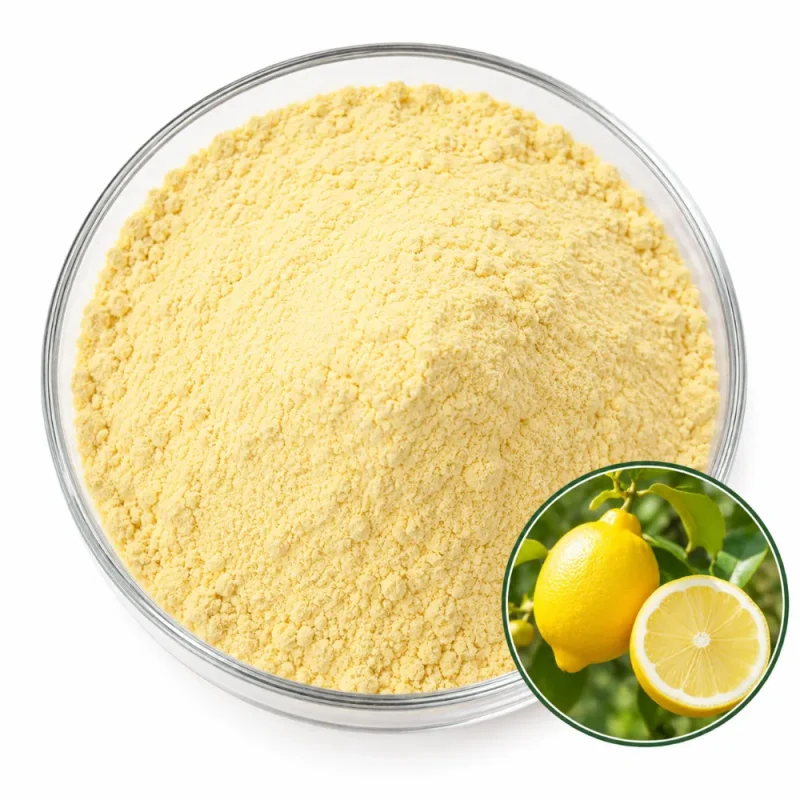
Pressed juice from Citrus limon fruit is concentrated and spray-dried on a maltodextrin carrier to give lemon powder. It is a light yellow, water-soluble powder with a sharp, clean sourness. Peel, pith and seeds stay out of the juice, so the powder carries fruit acid and little of the peel oil that gives lemon zest its perfume.

The point that separates lemon from every other citrus powder is acidity. Lemon juice is far more acidic and far less sweet than orange or grapefruit juice, and that acid load drives both the flavor of the powder and its handling.

Lemon Juice Powder Processing

The species is Citrus limon (L.) Osbeck, the lemon, a small evergreen tree of the rue family (Rutaceae) that is generally treated as a hybrid of citron and sour orange ancestry. It is not the lime, Citrus aurantiifolia, whose juice is also sour but has a different aroma. It is not the Meyer lemon, a sweeter citrus hybrid grown mainly as an ornamental and garden fruit. Buyers searching for “lemon powder” also meet dried lemon peel powder, a different product based on a different part.

The raw material is lemon juice concentrate pressed from the fruit, with peel and seeds excluded. The concentrate is mixed with maltodextrin and atomized in a spray dryer. Because lemon juice solids are dominated by citric acid and contain relatively little sugar, the carrier does most of the work of forming a stable particle. The finished powder is a diluted form of the original concentrate.

Lemon trees flower and fruit across much of the year, and juice composition shifts a little with growing region and season, so a concentrate may blend fruit from several lots to hold an even acid level.

Harvest timing changes the balance of the fruit. Lemons picked at full yellow color have more sugar and a rounder flavor than green-tinged fruit, which is sharper and more bitter. A powder made from a blend of ripe lots tastes cleaner and less harsh than one from underripe fruit, even though both are sour.
Lemon Flavor, Color & Forms

The powder is light yellow and dissolves to a pale yellow, slightly cloudy solution in water. The taste is a strong, direct sour with a faint bitterness and the fresh edge of lemon juice. Because the peel oil is mostly absent, the fragrance is less perfumed than lemon zest or lemon oil, and formulas that need a strong lemon nose often add a natural flavor, which is a decision for the buyer’s own blend.

Lemon works as a seasoning more than a flavor in the usual fruit-powder sense. A small inclusion lifts a savory dish, brightens a sweet one and balances fat, and the powder is dosed by acidity target as well as by taste.

Characteristic constituents are citric acid, small amounts of malic acid, sugars, vitamin C and flavanone glycosides such as eriocitrin. No figure is given for any of them. Eriocitrin is a concentrated compound sold as a separate high-purity product, and the juice powder is not a source defined by it.

FormWhat It IsChoose It When
Lemon Juice PowderSpray-dried juice on a maltodextrin carrierA soluble sour base is wanted
Freeze-Dried Lemon PowderWhole fruit dried under vacuumPulp solids and no added carrier are wanted
Lemon Peel Extract PowderRatio extract of the peelThe peel, not the juice, is the specified part

Typical Specifications

Specification ItemProduct Information
Latin NameCitrus limon
Plant PartFruit & Berry
ProcessingSpray-Dried Juice
Common NameLemon
Raw MaterialLemon juice concentrate
Ingredient TypeJuice Powder
CarrierMaltodextrin
AppearanceLight Yellow powder
FlavorSharply sour, clean citrus
Solubility / DispersibilityWater Soluble
Quality Parameters
Moisture (LOD)≤5.0%
Heavy MetalsLead ≤2 ppm · Arsenic ≤1 ppm · Cadmium ≤1 ppm · Mercury ≤0.1 ppm
MicrobiologyTPC ≤10,000 cfu/g · Yeast & Mold ≤1,000 cfu/g · E. coli Negative · Salmonella Negative/25 g
Shelf Life24 months in unopened original packaging, cool and dry storage

Application Areas

Instant Lemonade and Iced Tea Mixes

Dry lemonade and iced-tea mixes use lemon powder as the acid and flavor base with sugar and tea solids. It dissolves in cold water within seconds, and its high acid load means the sweetener ratio needs balance. Lemon powder replaces juice concentrate without the cost of freight and cold storage.

Seasoning Dusts and Citrus Salts

Savory dusts for seafood, chicken, popcorn and snack chips combine lemon powder with salt, pepper and herbs for a bright acid note. The powder spreads evenly in a dry blend, and because acid draws moisture, seasoning bags need good barrier film to keep the dust free-flowing.

Sour Candy Sanding

Confectioners use lemon powder in the sour sanding for gummy rings and chews, where it adds both acid and a lemon flavor in one ingredient. It is blended with sugar and a little citric acid, and the sanding must be applied while it is dry or it will bleed.

Bakery Glazes and Cake Mixes

Dry glaze and cake mixes take lemon powder to deliver acid and a lemon note without adding water. Baked in a cake it loses some brightness, so bakers often add it to the glaze or topping, where heat does not reach it.

Salad Dressing and Marinade Premixes

Dry dressing and marinade mixes use lemon powder as a stable alternative to fresh juice. It dissolves into oil-and-vinegar blends after stirring, and its acid supports flavor balance without the browning that fresh juice can cause during storage.

Moisture Pickup & Stability

Citric acid is strongly hygroscopic, and lemon powder is built from acid and carrier. In normal air it softens, then clumps, then cakes into a hard mass that can be difficult to scoop. Weigh it in a dry area and close the liner after every draw; the tolerance for open time is shorter than for most other fruit powders.

Acidity affects the equipment as well as the powder. Lemon powder attacks bare iron, aluminum and some coatings in contact with moisture, and mixing vessels and scoops should be stainless steel or food-grade plastic. In dry blends, sodium bicarbonate and carbonates react with the acid once moisture is present, releasing carbon dioxide, so keep them apart.

Flavor ages through oxidation of the small volatile fraction. The fresh note fades with warmth and air, and a flat, slightly stale acid remains. Cool storage and short open times keep the profile close to the received taste. Color moves from light yellow toward cream or tan through slow browning of the trace sugars.

Because the powder is so sour, a lump formed by moisture is more than a cosmetic problem: the clumped acid dissolves unevenly and leaves hot spots of sourness in a blend. Sieve any suspect material before weighing, and set aside drums that have formed a hard crust.

Packaging & Commercial Supply

Essencefield supports product evaluation, formulation trials, commercial orders, and ongoing ingredient supply. Packaging, storage, and shipping arrangements are determined by product characteristics, order quantity, stability requirements, and destination-market needs.

Supply ItemGeneral Information
SampleAvailable upon request for formulation, testing, and supplier evaluation
Order Quantities100 g · 1 kg · 5 kg · 25 kg · 100 kg · 500 kg · Bulk
Sample Lead TimeTypically 5–7 days after sample confirmation
Production Lead TimeTypically 15–30 days after order and specification confirmation
PackagingSuitable protective inner packaging with bags, cartons, drums, or other appropriate outer packaging
StorageStore in tightly sealed, suitable protective packaging in a cool, dry environment. Protect from moisture, heat, and direct sunlight. Specific storage conditions follow the approved product specification.
DocumentationCOA · Product Specification · TDS · SDS · Applicable declarations (as applicable)

Final order quantities, lead times, packaging, documentation, and shipping arrangements are confirmed according to the selected product and commercial requirements.

Request Ingredient Specifications & Quote

Share your target specification, application, quantity, and documentation needs. We’ll help confirm suitable options, samples, and commercial supply details.