Pear Powder

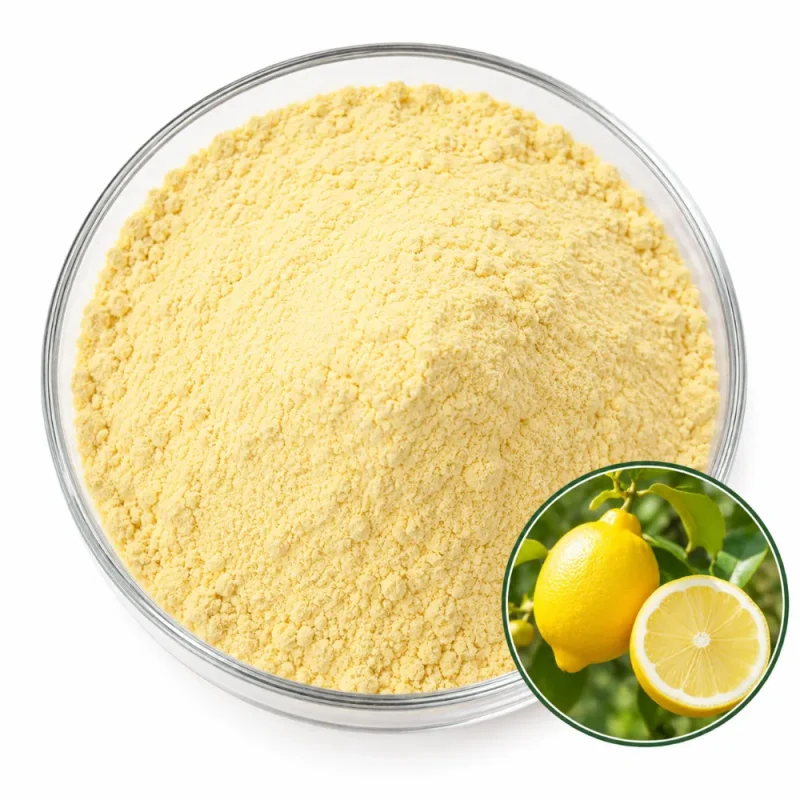
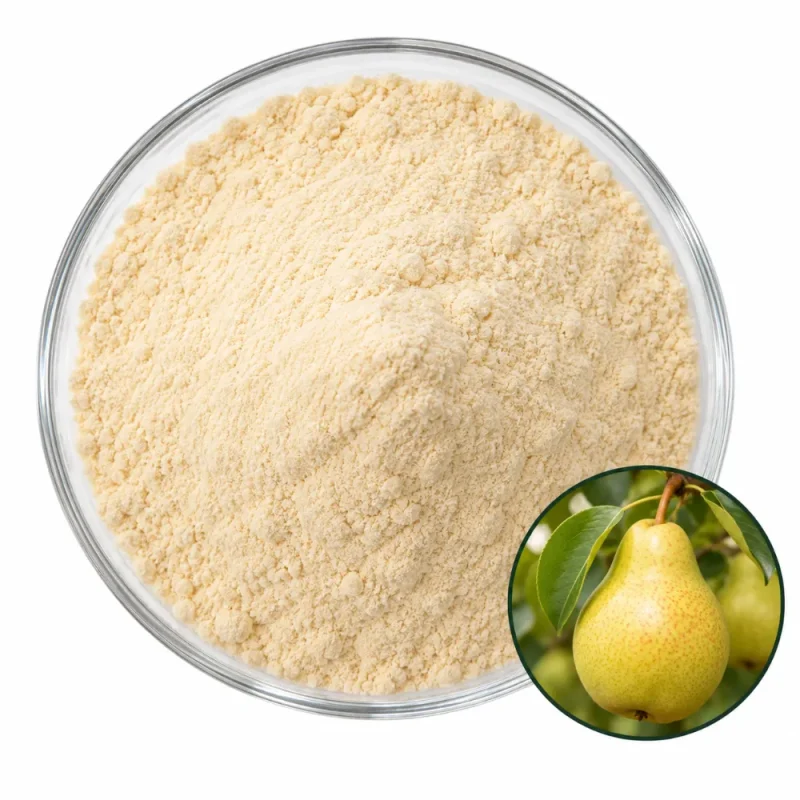
Pear powder is spray-dried from the pressed juice of Pyrus communis fruit, the European pear, on a maltodextrin carrier. It is a light yellow, water-soluble powder with a mild, sweet, slightly grainy-fresh flavor and almost no acidity. Core, peel and seeds stay out of the juice.

Pear is one of the mildest fruit flavors in the powder range, and its sugar chemistry is unusual: besides fructose and glucose, pear juice carries a notable share of the sugar alcohol sorbitol. That mix shapes how the powder sweetens, how sticky it is and how it behaves in a dry blend.

Pear Juice Powder Processing

The species is Pyrus communis L., the European or common pear, a tree of the rose family (Rosaceae) with soft-fleshed, bell-shaped fruit such as Bartlett and Conference. Asian pears, including Pyrus pyrifolia and Pyrus bretschneideri, the crisp “snow pear” of Chinese cuisine, are different species with a gritty, watery flesh. The master data names P. communis, and this name governs the identity of the powder.

The raw material is pear juice concentrate pressed from ripe fruit. Pears contain stone cells, hard gritty clusters in the flesh, and pressing leaves most of them in the pomace along with the skin and core. The juice is concentrated, blended with maltodextrin and atomized in a spray dryer, and the carrier produces a soluble, free-flowing powder.

Pears are picked firm and ripen off the tree, and the quality of the juice depends on the ripening stage. Underripe fruit is hard and astringent, while overripe fruit browns quickly. Processors press at the soft, aromatic stage, and the powder carries the clean, sweet side of the fruit.

Pear production concentrates in China, Europe and North America, and juice-processing grades are often fruit that falls outside fresh-market size or appearance standards. Quality for pressing depends on ripeness and storage, since pears held cold for months develop a flatter flavor. The powder reflects the juice at the point of pressing.
Pear Flavor, Color & Forms

The powder is light yellow and gives a nearly clear, pale straw solution in water. The taste is sweet, soft and watery-fresh with a faint floral note, and acidity is low, so pear works as a neutral sweet base that blends with stronger flavors. The aroma is gentle, built from esters that give pear its fresh, slightly green character.

Characteristic constituents are fructose, glucose and sorbitol, malic acid in low amounts, phenolic acids such as chlorogenic acid, and the glycoside arbutin. No figure is given for any of them. Sorbitol is a hygroscopic sugar alcohol, and its presence is a reason pear powder takes up water faster than powders from sucrose-rich fruits.

FormWhat It IsChoose It When
Pear Juice PowderSpray-dried juice on a maltodextrin carrierA soluble, mild pear base is wanted
Freeze-Dried Pear PowderWhole fruit dried under vacuumPulp solids and fresh-fruit character matter
Pear Extract PowderRatio extract of the fruitA concentrated extract is specified

Typical Specifications

Specification ItemProduct Information
Latin NamePyrus communis
Plant PartFruit & Berry
ProcessingSpray-Dried Juice
Common NamePear
Raw MaterialPear juice concentrate
Ingredient TypeJuice Powder
CarrierMaltodextrin
AppearanceLight Yellow powder
FlavorSweet, mild, fresh
Solubility / DispersibilityWater Soluble
Quality Parameters
Moisture (LOD)≤5.0%
Heavy MetalsLead ≤2 ppm · Arsenic ≤1 ppm · Cadmium ≤1 ppm · Mercury ≤0.1 ppm
MicrobiologyTPC ≤10,000 cfu/g · Yeast & Mold ≤1,000 cfu/g · E. coli Negative · Salmonella Negative/25 g
Shelf Life24 months in unopened original packaging, cool and dry storage

Application Areas

Neutral Fruit Drink Bases

Dry drink bases use pear powder as a sweet, neutral fruit component that rounds out sharper juices. Its low acidity and gentle flavor let it lift a blend with apple, ginger or elderflower without taking over the taste.

Sweetener-Reduced Bar and Cereal Binders

Bars and cereal clusters can use pear powder as part of a fruit-sugar binder system for sweetness and mild flavor. The sorbitol content adds humectant behavior, which keeps the bar soft, and recipes then trim added sugar to compensate.

Yogurt and Dessert Preparations

Fruit preps and dessert mixes use pear powder where a pale, mild flavor is wanted. It pairs well with vanilla, cinnamon, caramel and almond, and it does not tint dairy, which keeps white products white.

Bakery Fillings and Glazes

Dry fillings and glazes take pear powder for gentle sweetness and a fresh fruit note. Heat dulls the aroma, so bakers add it to cooled fillings and toppings, and the humectant sugars help keep fillings moist after baking.

Ice Cream and Sorbet Bases

Frozen bases use pear powder for a clean, delicate fruit flavor. Sorbitol and fructose lower the freezing point, so the full sugar system needs balancing, and the pale color supports pastel products with natural tints.

Moisture Pickup & Stability

Pear powder is among the more hygroscopic fruit powders. The glucose, fructose and sorbitol in the solids hold water strongly, so the powder softens and clumps after short exposure to humid air. A drum left open can become tacky at the surface in an hour and form a crust within a shift.

Handle it in a dry room, reseal the liner after every draw and avoid scooping with damp tools. In dry mixes, add pear powder after bulking agents such as sugar or starch so it disperses into a drier matrix. Small pack sizes help, since a half-used drum stays exposed.

Flavor and color change slowly. The delicate ester notes fade with warmth and air, leaving a sweeter but flatter taste, and browning reactions shift the pale yellow toward tan. Sorbitol and fructose speed these reactions in warm storage, so a cool, steady store keeps the powder closer to the received profile.

Pear powder shares the browning tendencies of other sorbitol-rich powders. Even in sealed storage, color drifts from light yellow toward tan over a long shelf life, and the drift is faster if the drum is stored above room temperature. A first-in, first-out rotation keeps shade differences between batches small.

Packaging & Commercial Supply

Essencefield supports product evaluation, formulation trials, commercial orders, and ongoing ingredient supply. Packaging, storage, and shipping arrangements are determined by product characteristics, order quantity, stability requirements, and destination-market needs.

Supply ItemGeneral Information
SampleAvailable upon request for formulation, testing, and supplier evaluation
Order Quantities100 g · 1 kg · 5 kg · 25 kg · 100 kg · 500 kg · Bulk
Sample Lead TimeTypically 5–7 days after sample confirmation
Production Lead TimeTypically 15–30 days after order and specification confirmation
PackagingSuitable protective inner packaging with bags, cartons, drums, or other appropriate outer packaging
StorageStore in tightly sealed, suitable protective packaging in a cool, dry environment. Protect from moisture, heat, and direct sunlight. Specific storage conditions follow the approved product specification.
DocumentationCOA · Product Specification · TDS · SDS · Applicable declarations (as applicable)

Final order quantities, lead times, packaging, documentation, and shipping arrangements are confirmed according to the selected product and commercial requirements.

Request Ingredient Specifications & Quote

Share your target specification, application, quantity, and documentation needs. We’ll help confirm suitable options, samples, and commercial supply details.