Sea Buckthorn Powder

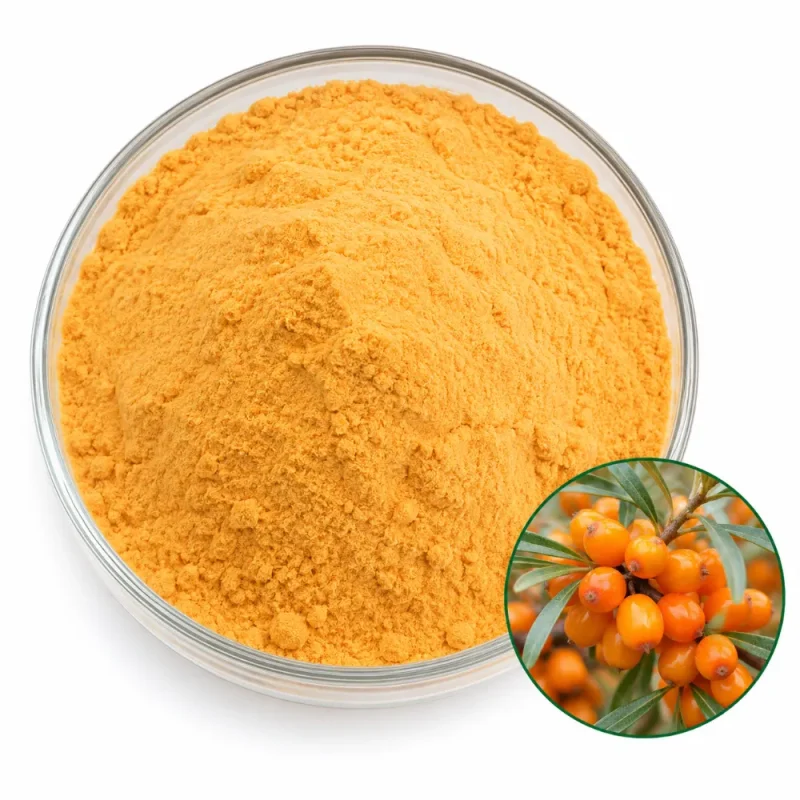
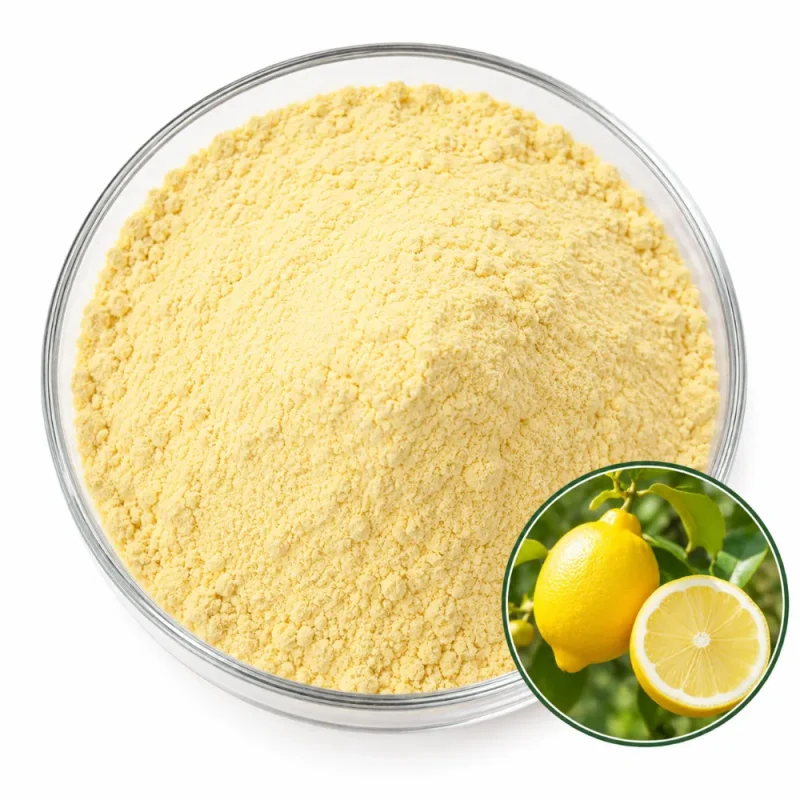
Sea buckthorn powder is spray-dried from the pressed juice of Hippophae rhamnoides berries on a maltodextrin carrier. It is a yellow-orange, water-soluble powder with a sharp, sour, fruity taste and an unusual rich undertone. Leaves, twigs and the seed oil of the shrub are separate materials and are not part of this product.

Sea buckthorn berries are unusual because they hold oil in both the pulp and the seed. The juice powder reflects the water-soluble fraction, so it is a sour, carotenoid-tinted fruit powder and not an oil-based product.

Sea Buckthorn Juice Powder Processing

The species is Hippophae rhamnoides L., the sea buckthorn or seaberry, a thorny deciduous shrub of the oleaster family (Elaeagnaceae) that grows on coasts and mountain slopes across Europe and Asia. Its orange berries cling tightly to the branches in dense clusters and are hard to pick by hand. Sea buckthorn is unrelated to the true buckthorns of the genus Rhamnus, although the common names overlap.

The raw material is sea buckthorn juice concentrate. Berries are pressed, the juice is separated from the oily pomace, concentrated and blended with maltodextrin, and the mixture is atomized in a spray dryer. The carrier makes the powder soluble and free-flowing, and it softens the strong sourness of the berry juice.

Because much of the berry oil stays in the pomace, the juice powder carries a smaller share of the fat-soluble material than the whole fruit does. Buyers who want the oil fraction look at separate oil products, and those who want fruit solids look at whole-berry forms, so this powder fits where soluble sourness and color are the target.

Plantations in China, Russia, Mongolia and northern Europe supply most of the fruit, and cutting branches and freezing them is common because the berries are hard to detach by hand. Fruit frozen on the branch releases from the stem more cleanly, which helps keep leaf and twig fragments out of the press.

Fruit is harvested in autumn, often after the first frost, when the berries have lost some of their sharpness. Berry quality varies with the harvest date, and the concentrate used here comes from fully colored fruit.
Sea Buckthorn Flavor, Color & Forms

The powder is yellow-orange, a color from carotenoids that stay dispersed in water as a golden cloud. The taste is strongly sour, with fruity, slightly pineapple-like notes and a faint bitterness or resinous finish. Malic and quinic acids give the berry its sharpness, and vitamin C is also present.

Characteristic constituents are organic acids, carotenoids, flavonols such as isorhamnetin glycosides, vitamin C and sugars. No figure is given for any of them. The sourness makes the powder most useful in small amounts or in sweetened formulas.

FormWhat It IsChoose It When
Sea Buckthorn Juice PowderSpray-dried juice on a maltodextrin carrierA soluble, sour berry base is wanted
Freeze-Dried Sea Buckthorn PowderWhole berries dried under vacuumPulp solids and the full berry matrix are wanted
Sea Buckthorn Berry Extract PowderRatio extract of the berriesA concentrated extract is specified
Sea Buckthorn Extract PowderRatio extract of sea buckthornA concentrated extract is specified

Typical Specifications

Specification ItemProduct Information
Latin NameHippophae rhamnoides
Plant PartFruit & Berry
ProcessingSpray-Dried Juice
Common NameSea buckthorn
Raw MaterialSea buckthorn juice concentrate
Ingredient TypeJuice Powder
CarrierMaltodextrin
AppearanceYellow-Orange powder
FlavorSour, fruity, slightly resinous
Solubility / DispersibilityWater Soluble
Quality Parameters
Moisture (LOD)≤5.0%
Heavy MetalsLead ≤2 ppm · Arsenic ≤1 ppm · Cadmium ≤1 ppm · Mercury ≤0.1 ppm
MicrobiologyTPC ≤10,000 cfu/g · Yeast & Mold ≤1,000 cfu/g · E. coli Negative · Salmonella Negative/25 g
Shelf Life24 months in unopened original packaging, cool and dry storage

Application Areas

Sour Drink Mixes

Drink mixes use sea buckthorn powder as a tart, orange-tinted base that pairs with honey, ginger and apple. Its high acidity means sweetener levels run higher than in milder fruit mixes, and the powder dissolves readily in warm or cold water.

Sour Candy and Gummy Coatings

Confectioners use sea buckthorn powder in sanding and gummy masses where tartness and an orange tint are wanted together. It blends with sugar and a little acid, and the layer must be applied dry because the powder softens in humid air.

Yogurt and Cereal Preparations

Yogurt fruit preps and cereal coatings take sea buckthorn powder for sharp fruit flavor and a warm orange color. The carotenoid tint is stable at yogurt pH, and the sourness cuts through sweet and creamy bases.

Bakery Glazes and Fillings

Dry glazes, fruit bars and fillings use sea buckthorn powder to add acid and color. Baking dulls some of the sharpness, and the orange tint holds well compared with anthocyanin colors, so it suits products that go through the oven.

Seasoning and Sauce Blends

Savory dry blends for fish, poultry and sauces use sea buckthorn powder as a sour fruit note in place of lemon. It dissolves in hot liquids, adds a faint orange tone and works with ginger, garlic and chili in dry premixes.

Moisture Pickup & Stability

Sea buckthorn powder pairs acid with a sugar-bearing carrier and is highly moisture-active. In humid air it becomes sticky within minutes and sets into a hard mass that clings to the drum wall. Weigh in a dry room, close the liner after every draw and sieve lumps before use.

Carotenoid color fades under light and oxygen, and the process is faster at warm storage temperatures. Opaque, sealed packaging and a cool store keep the orange closer to the received shade, and opened containers are best used within a short window. Fat-rich systems pull the pigment into the oil phase, which can deepen the color of creamy products.

The sharp acid attacks bare iron and aluminum, so use stainless steel or food-grade plastic tools. In dry blends with carbonates the acid reacts once moisture is present, releasing gas, so keep those ingredients apart. Aroma volatiles fade with heat and air, and the resinous edge of aged powder becomes more noticeable than its fruity top notes.

The strong acid makes sea buckthorn powder a poor match for sensitive bases. In milk-protein drinks it can cause thickening or flocculation at high levels, so dose it into the dry mix and test the finished drink for stability across its shelf life.

Packaging & Commercial Supply

Essencefield supports product evaluation, formulation trials, commercial orders, and ongoing ingredient supply. Packaging, storage, and shipping arrangements are determined by product characteristics, order quantity, stability requirements, and destination-market needs.

Supply ItemGeneral Information
SampleAvailable upon request for formulation, testing, and supplier evaluation
Order Quantities100 g · 1 kg · 5 kg · 25 kg · 100 kg · 500 kg · Bulk
Sample Lead TimeTypically 5–7 days after sample confirmation
Production Lead TimeTypically 15–30 days after order and specification confirmation
PackagingSuitable protective inner packaging with bags, cartons, drums, or other appropriate outer packaging
StorageStore in tightly sealed, suitable protective packaging in a cool, dry environment. Protect from moisture, heat, and direct sunlight. Specific storage conditions follow the approved product specification.
DocumentationCOA · Product Specification · TDS · SDS · Applicable declarations (as applicable)

Final order quantities, lead times, packaging, documentation, and shipping arrangements are confirmed according to the selected product and commercial requirements.

Request Ingredient Specifications & Quote

Share your target specification, application, quantity, and documentation needs. We’ll help confirm suitable options, samples, and commercial supply details.