Amla Juice Powder Processing
The species is Phyllanthus emblica L., family Phyllanthaceae, known as amla, amalaki and Indian gooseberry. The word gooseberry also names Ribes uva-crispa, a European berry with no botanical link, and Phyllanthus niruri is a small unrelated herb. Emblica officinalis is an older synonym that still appears on some labels for the same fruit.
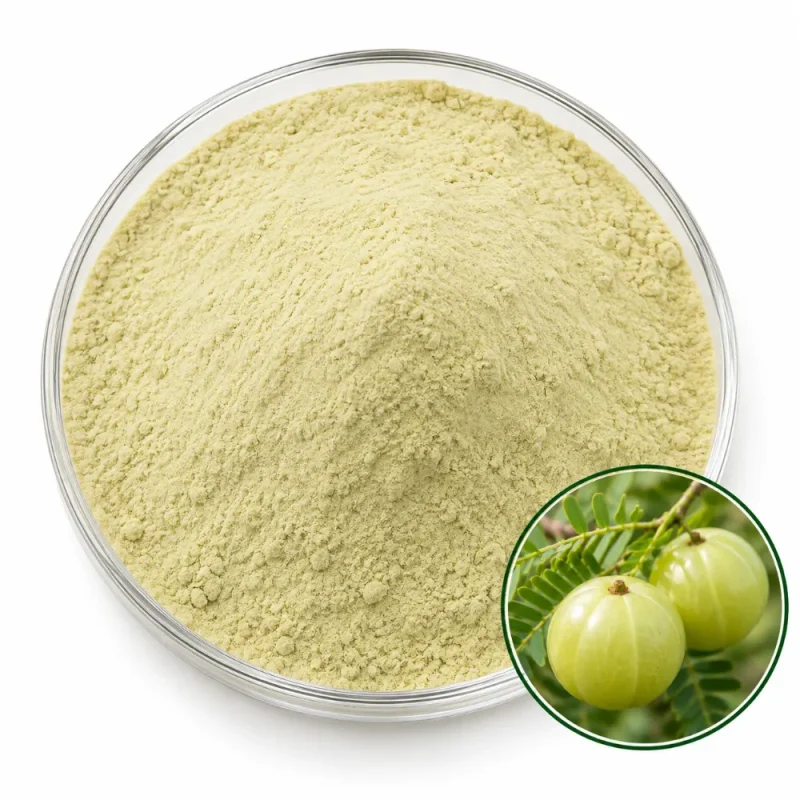
The raw material is amla juice concentrate. The juice is mixed with maltodextrin and spray-dried, a process that removes the water quickly and leaves a fine, free-flowing powder. The maltodextrin carrier does the work of keeping the powder soluble and dry, and it also softens the color and taste of the fruit solids without removing the sour, astringent character.
Because the fiber and pulp are not part of a juice powder, the result is soluble and smooth, but it holds less of the whole-fruit texture than a freeze-dried powder.
The fruit is firm, round and pale green to yellow, with six shallow lobes and a hard stone that is removed before pressing. Size, fiber and sourness shift with cultivar and harvest, so the juice powder is defined by its fruit and its process and not by a fixed taste score. Seeds, stones and leaves do not belong to this raw material.