Apricot Juice Powder Processing
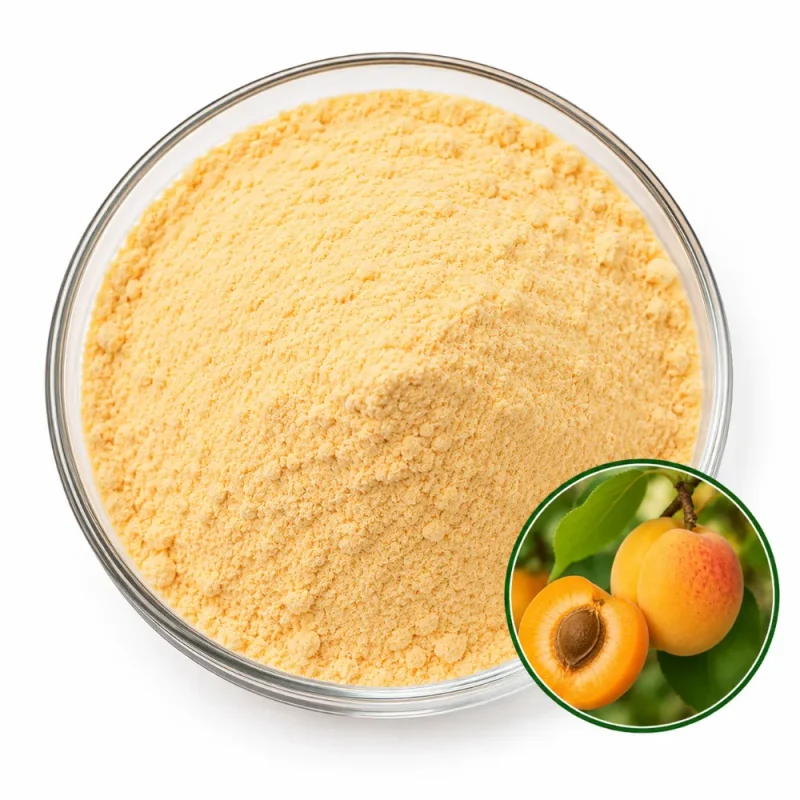
The species is Prunus armeniaca L., family Rosaceae, the apricot, a relative of the peach, plum and cherry. The fruit is a stone fruit, so the flesh surrounds a hard stone that contains the kernel. The edible, juicy flesh is the raw material of the powder, and the kernel, which has its own chemistry and its own regulatory attention, never enters it.
The raw material is apricot juice concentrate. Ripe apricots are pulped and pressed, the juice is concentrated and mixed with maltodextrin, and the mixture is spray-dried to a fine powder. The carrier prevents the sticky sugars and acids from fusing, so the powder flows and dissolves, and it lowers the intensity of the fruit sugars per gram.
Apricots vary a good deal by cultivar and ripeness. Fruit harvested fully ripe gives a darker orange and a sweeter, more aromatic juice, while earlier harvests give a paler and more acidic one. The powder reflects that natural variation in color and sweetness, and it is defined by its fruit and process and not by a fixed taste score.
Ripe apricots are soft, fragrant and quick to spoil, so the juice is extracted soon after harvest to hold the flavor. Fruit that is too ripe loses its acidity and tastes flat, while under-ripe fruit tastes sharp, so a stage between the two gives a balanced juice.